Mariner 2
Shape built from published dimensions and pictures; details simplified.
Turn it in 3D
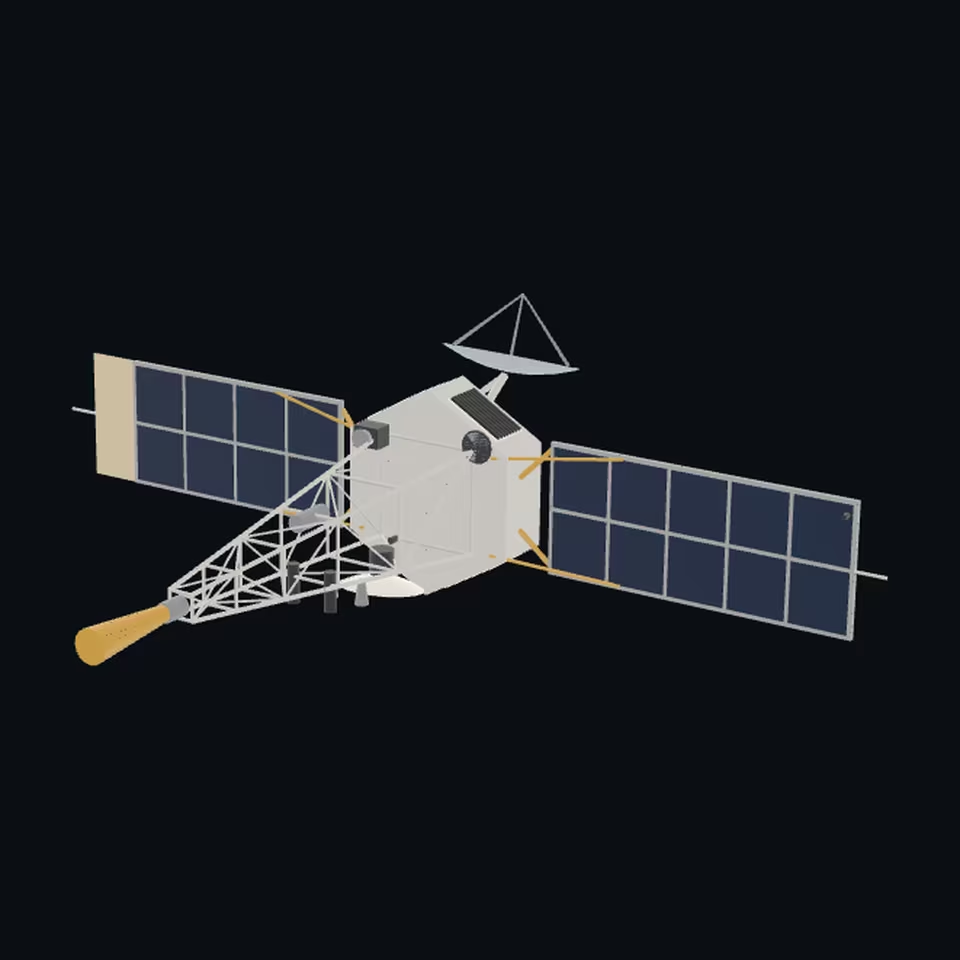
Open the 3D viewer (www.spaceradar.ai).
The viewer loads when you ask: about 700 kB the first time (three.js and the model), much less after.
Pictures 4
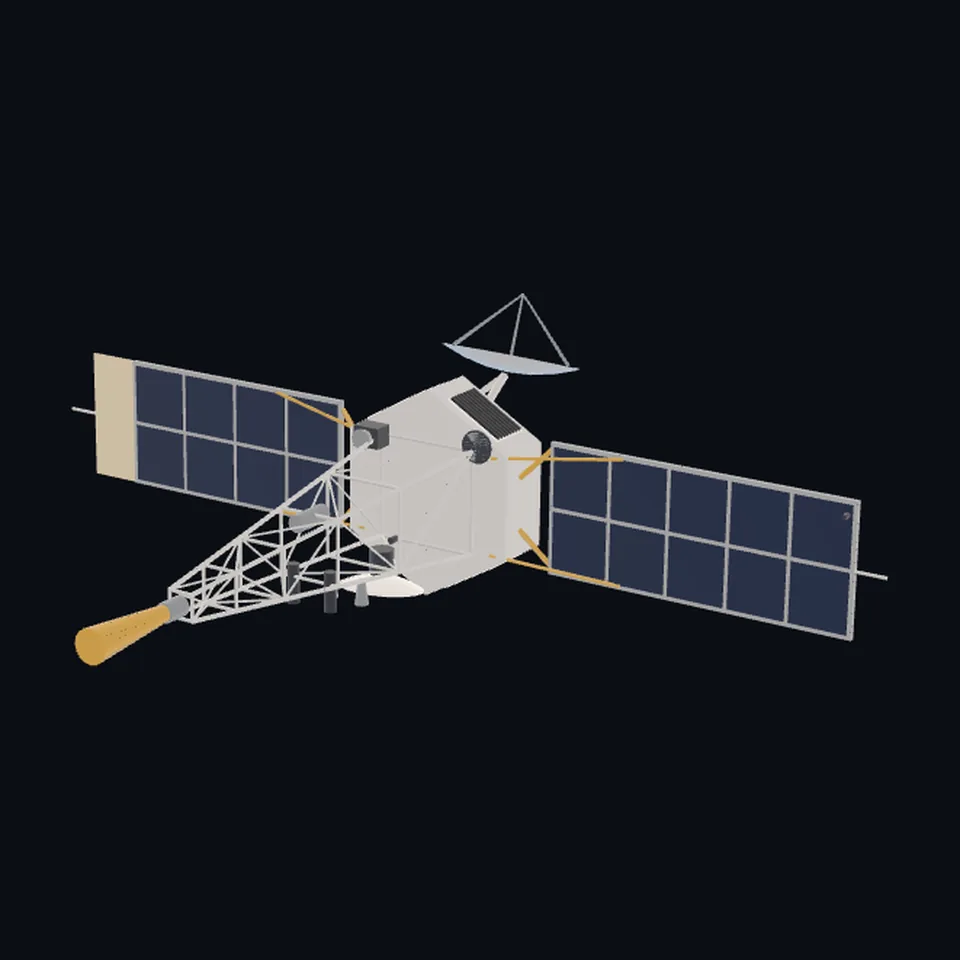 Three-quarter view
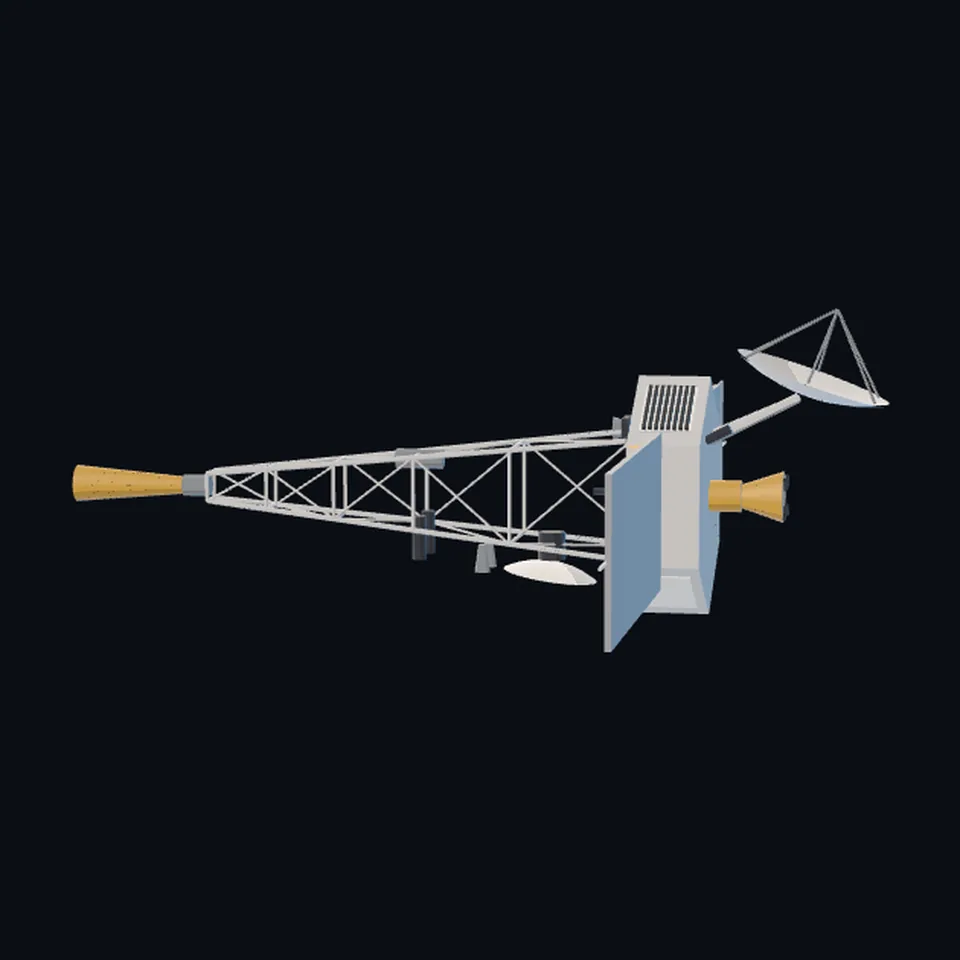 From the side
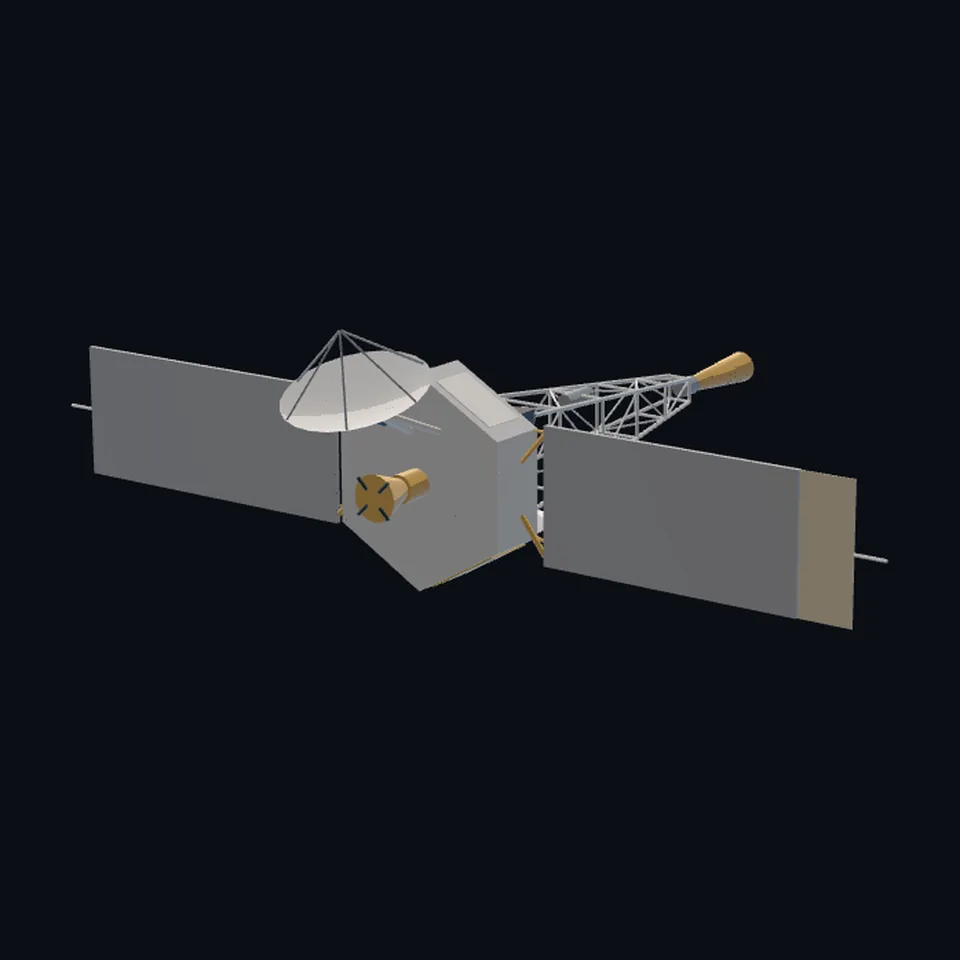 From behind
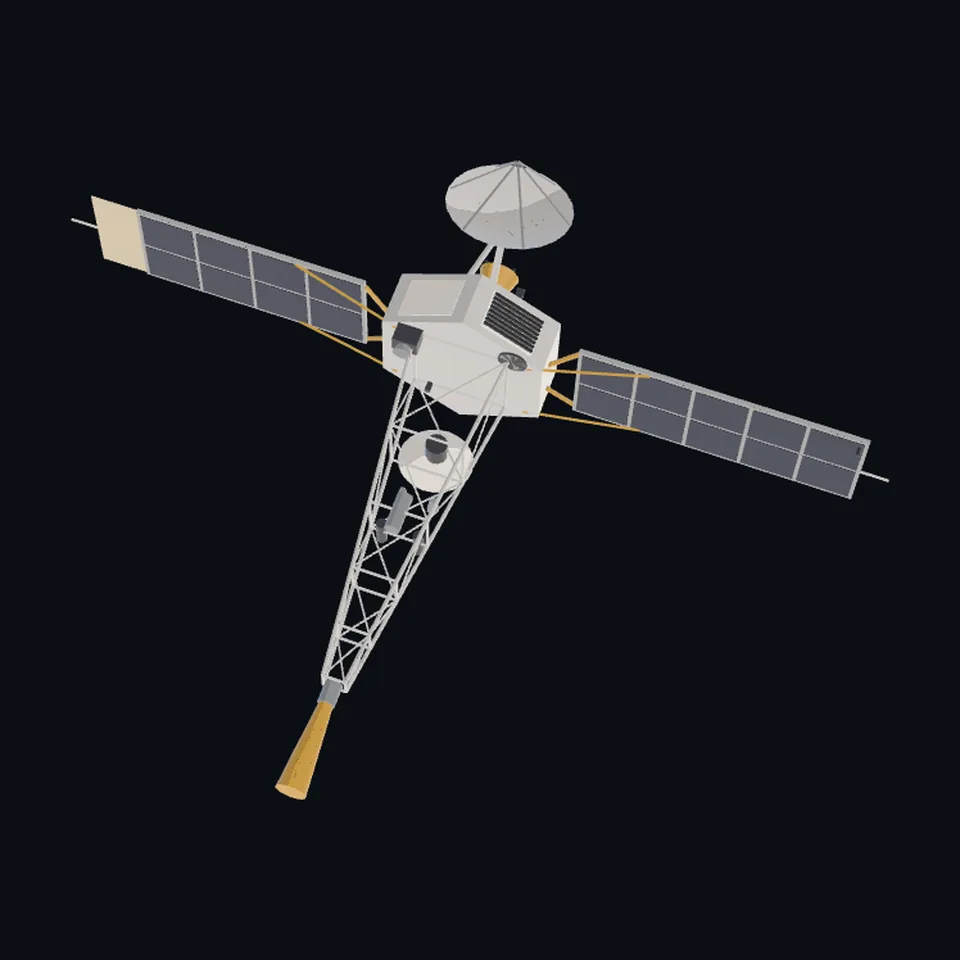 From above
About this model
Mariner 2 is one of the 203 3D models Space Radar made itself: a deep-space probe, built in code from published dimensions and photographs, with no image-to-3D generator and no one else’s mesh.
Shape built from published dimensions and pictures; details simplified. It has 5,398 triangles in a 45 kB glTF file, and is 5.0 m across at full scale.
On Space Radar’s live map it is drawn where the craft is today. Open it on the map.
Dimensions and their sources
| Measure | Value |
|---|---|
| Base across | 1.04 m |
| Base thick | 0.36 m |
| Height | 3.66 m |
| Span | 5.05 m |
| Wing width | 0.76 m |
| Wing long | 1.83 m |
| Wing short | 1.52 m |
| Dacron | 0.31 m |
| Radiometer dish | 0.48 m |
NASA NSSDCA, 'Mariner 2', nssdc.gsfc.nasa.gov/nmc/spacecraft/display.action?id=1962-041A, OPENED 2026-11-03: 'a hexagonal base, 1.04 meters across and 0.36 meters thick'; 'a tall pyramid-shaped mast on which the science experiments were mounted which brought the total height of the spacecraft to 3.66 meters'; 'rectangular solar panel wings with a total span of 5.05 meters and width of 0.76 meters'; 'one 183 cm by 76 cm and the other 152 cm by 76 cm (with a 31 cm dacron extension (a solar sail) to balance the solar pressure on the panels)'; 'Attached by an arm to one side of the base and extending below the spacecraft was a large directional dish antenna'; 'a cylindrical omnidirectional antenna at the top of the instrument mast'; 'two command antennas, one on the end of either solar panel'; 'a monopropellant (anhydrous hydrazine) 225 N retro-rocket' and 'four jet vanes situated below the thrust chamber'; 'A magnetometer was attached to the top of the mast below the omnidirectional antenna. Particle detectors were mounted halfway up the mast, along with the cosmic ray detector. A cosmic dust detector and solar plasma spectrometer detector were attached to the top edges of the spacecraft base. A microwave radiometer and an infrared radiometer and the radiometer reference horns were rigidly mounted to a 48 cm diameter parabolic radiometer antenna mounted near the bottom of the mast.' JPL Horizons' header for -2 (OPENED 2026-11-03) gives the same figures. DERIVED: each wing stands off the base on a yoke 0.175 m long, the 0.35 m that 5.05 m leaves after the base, the two panels and the extension. NOT CITED, read off JPL's pictures: the mast's taper (0.60 m across at its foot, 0.14 m at its top) and its five bays, the high-gain antenna's size (0.8 m across, an ESTIMATE from the drawing: no page opened gives it) and its ring-and-spoke look, the places of the louvers, the shield and the covers, the sizes of the detectors, sensors and horns, and where along the 3.66 m the engine's bell ends (z = -0.55 m). (read 2026-11-03)
How it was made
Built in code from published dimensions and photographs, with no image-to-3D generator and no one else’s mesh. 3D model: built by Space Radar from NASA NSSDCA's published dimensions and NASA/JPL's pictures of Mariner 2 (public domain).
The full record
built by this project in code (the private tool model-from-images: assemble.py, from a yaml of primitives), from the cited dimensions and the pictures under `references`; no image-to-3D model was used, and no published mesh (NASA's 3D Resources on GitHub, 1 583 paths, and science.nasa.gov/3d-resources, read 2026-11-03: none of this craft)
Where the map uses it. JPL Horizons -2, Mariner 2 (1962 to 1963: drawn only inside the years of its own path, data/sample.js `deep-mariner-2`, site/data/eph): the first spacecraft to fly past another planet. It had no shape of its own; public #267, internal #1076
Licence note. Public domain (NASA/JPL's painting PIA04594, JPL's labelled drawing of the Mariner spacecraft and NASA Glenn's photograph of the model, all read as the shape is drawn: looked at, with credit; nothing of them is in the file). The shape is this project's, under this repository's licence, built from NASA's published numbers (facts). NO LOGO AND NO LETTERING is on the mesh.
References 3
What the shape was compared with. None of these pictures is in the file.
- Mariner 2NASA/JPLPublic domain (NASA/Jet Propulsion Laboratory, PIA04594; Commons' LicenseShortName, read 2026-11-03)
- Diagram of Mariner 1 and 2 with Atlas-Agena launch vehicleNASA/JPLPublic domain (NASA/JPL; Commons' LicenseShortName, read 2026-11-03)
- Model of Mariner 2 spacecraft (GRC-1964-C-70182)NASAPublic domain (NASA Glenn Research Center; Commons' LicenseShortName, read 2026-11-03)


Use it
The model is under the MIT licence: use it, change it and share it, in any project, also a paid one. Keep the credit:
Mariner 2 3D model by Space Radar (spaceradar.ai), MIT LicenseAny glTF 2.0 loader that reads meshopt compression (EXT_meshopt_compression) opens the file: three.js with its MeshoptDecoder, Babylon.js, model-viewer. Tools such as glTF-Transform can write an uncompressed copy.
Or embed the viewer in your page:
<iframe src="https://www.spaceradar.ai/model/?id=mariner-2" title="Mariner 2, 3D model by Space Radar" width="600" height="450" loading="lazy" style="border:0;max-width:100%"></iframe>Related models
Galileo's atmospheric probe
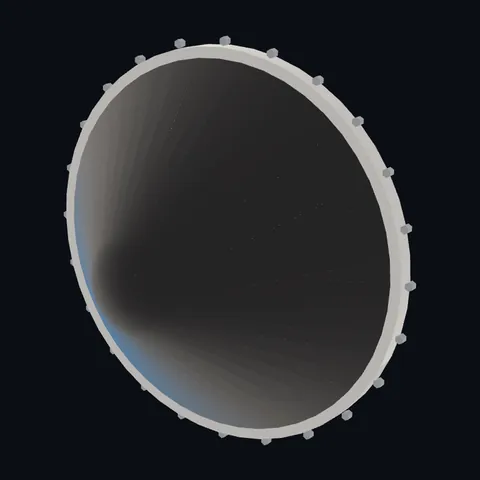
Shape built from published dimensions and pictures; details simplified.