
Galileo's atmospheric probe
Shape built from published dimensions and pictures; details simplified.
Turn it in 3D
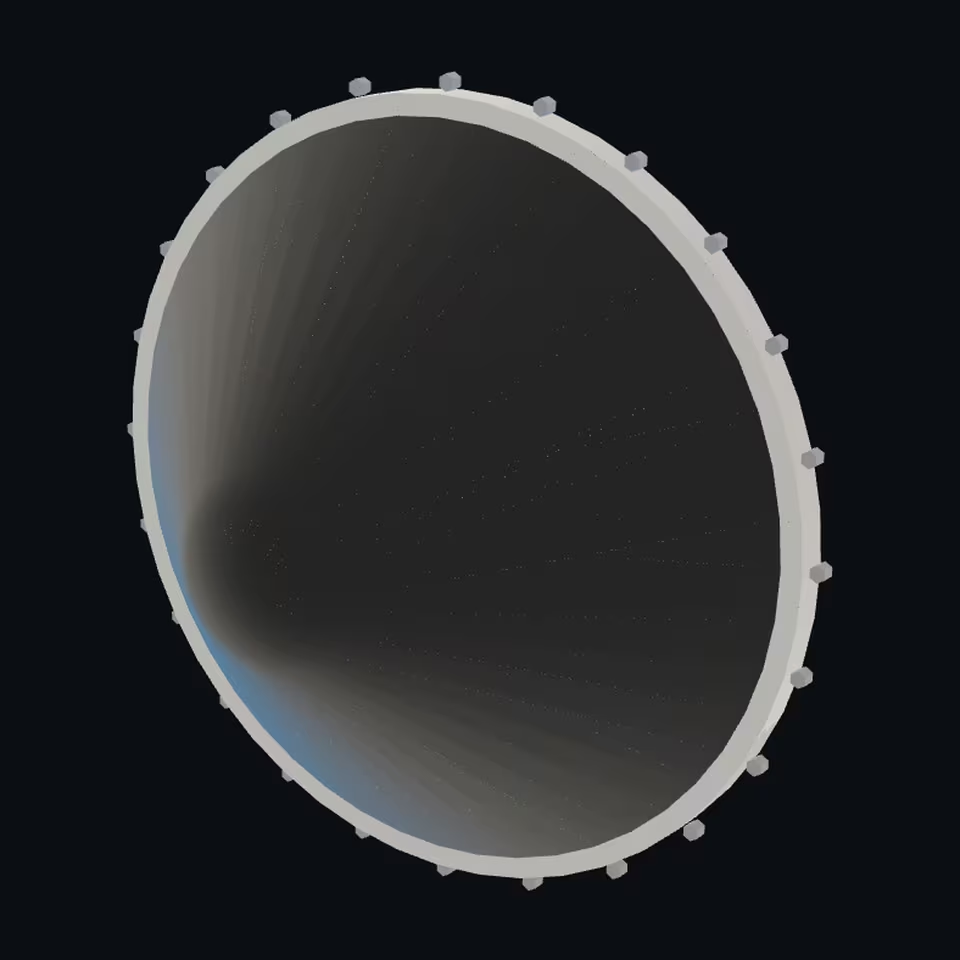
Open the 3D viewer (www.spaceradar.ai).
The viewer loads when you ask: about 700 kB the first time (three.js and the model), much less after.
Pictures 4
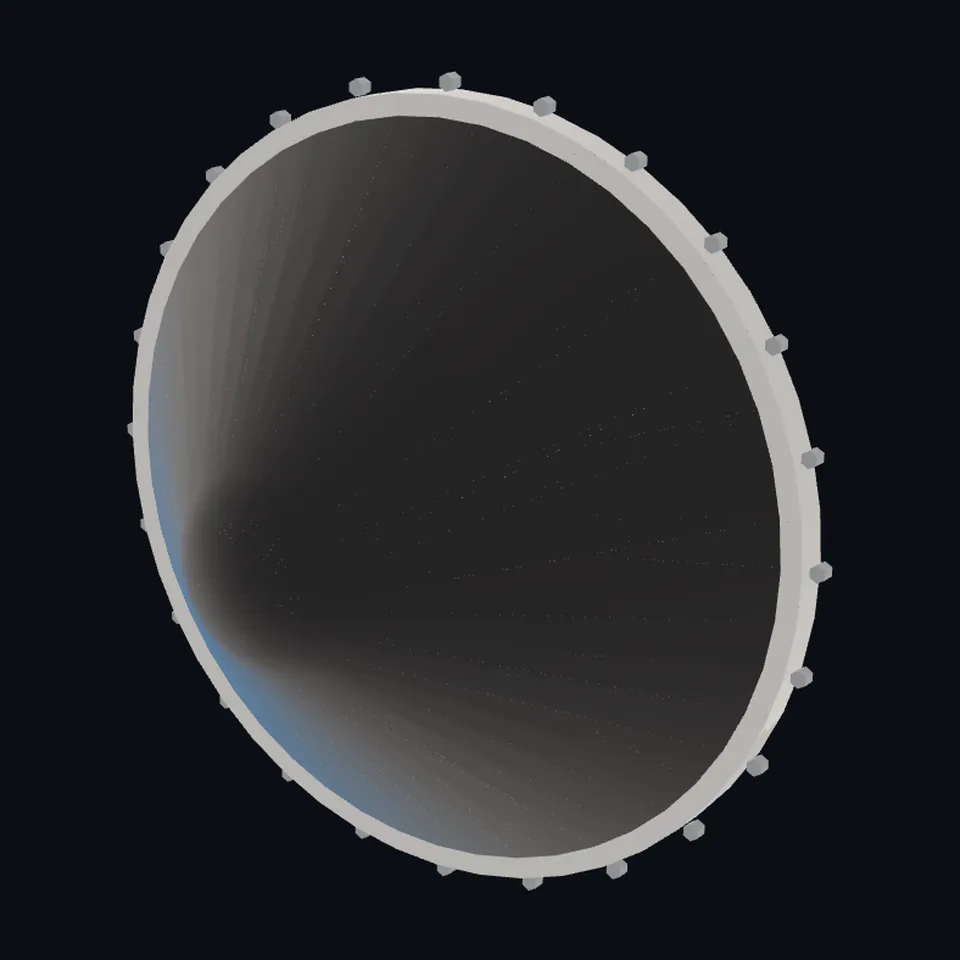 Three-quarter view
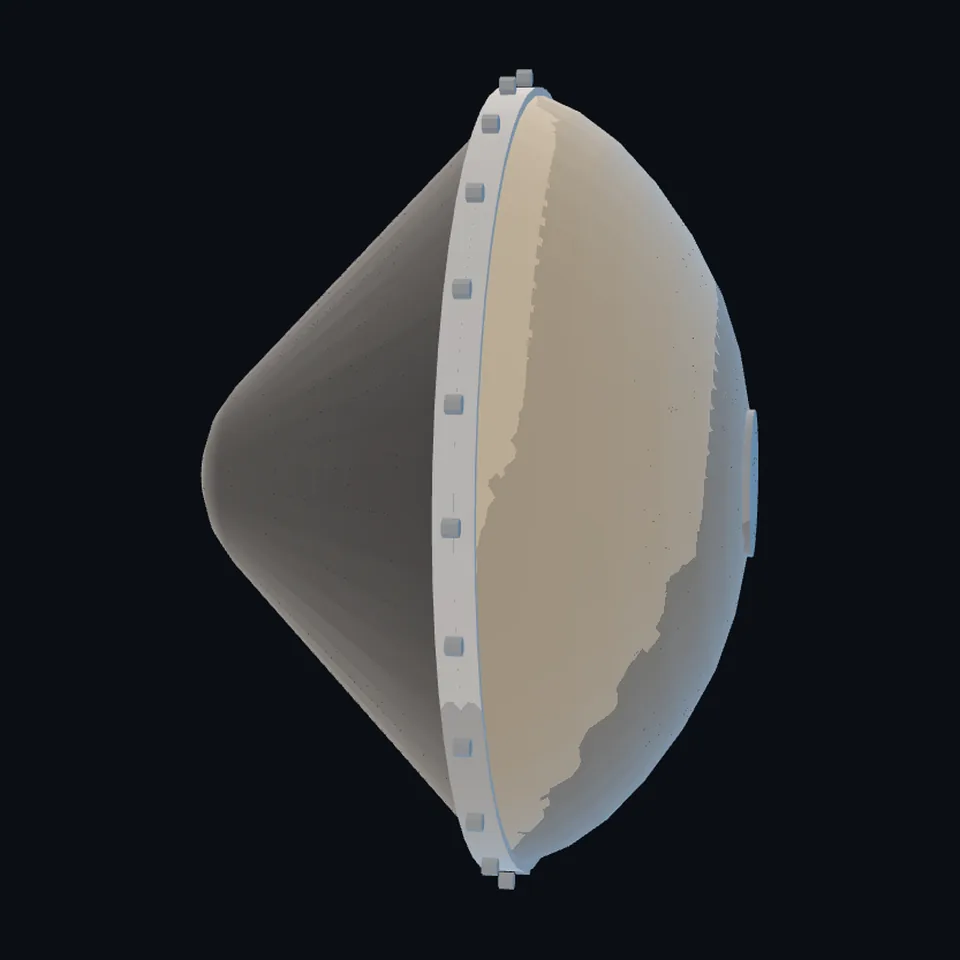 From the side
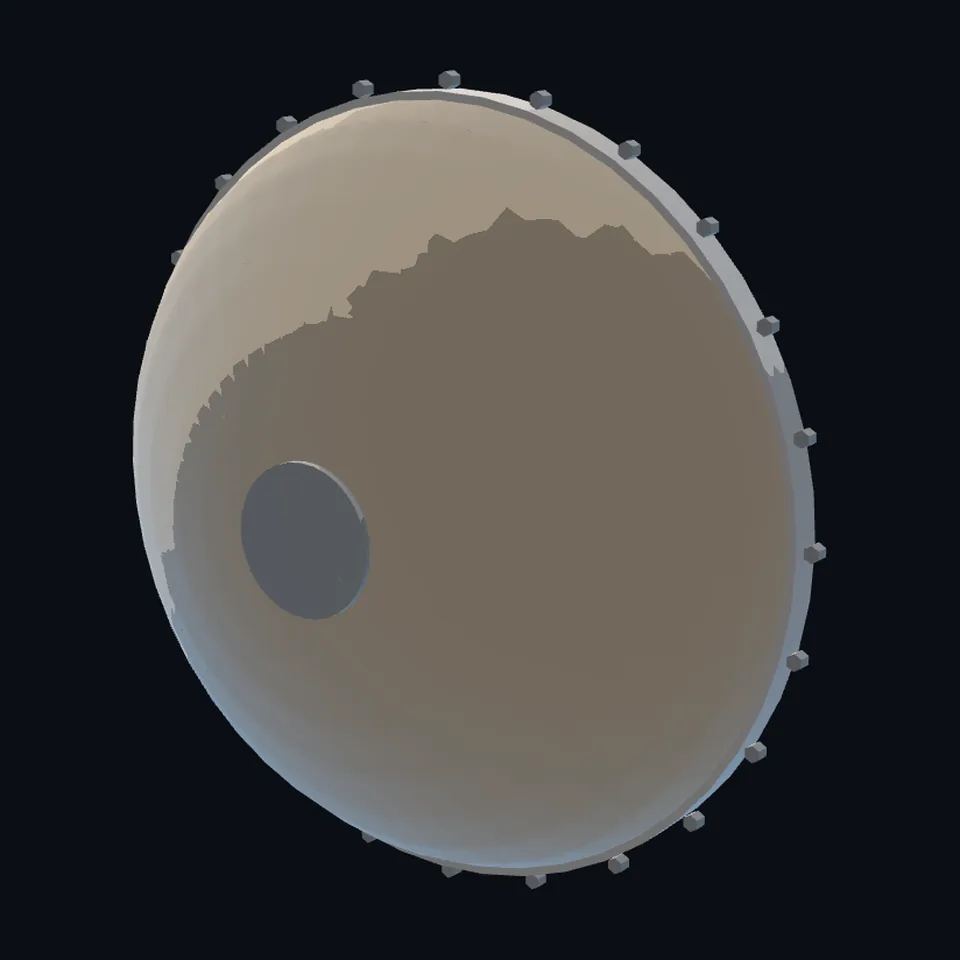 From behind
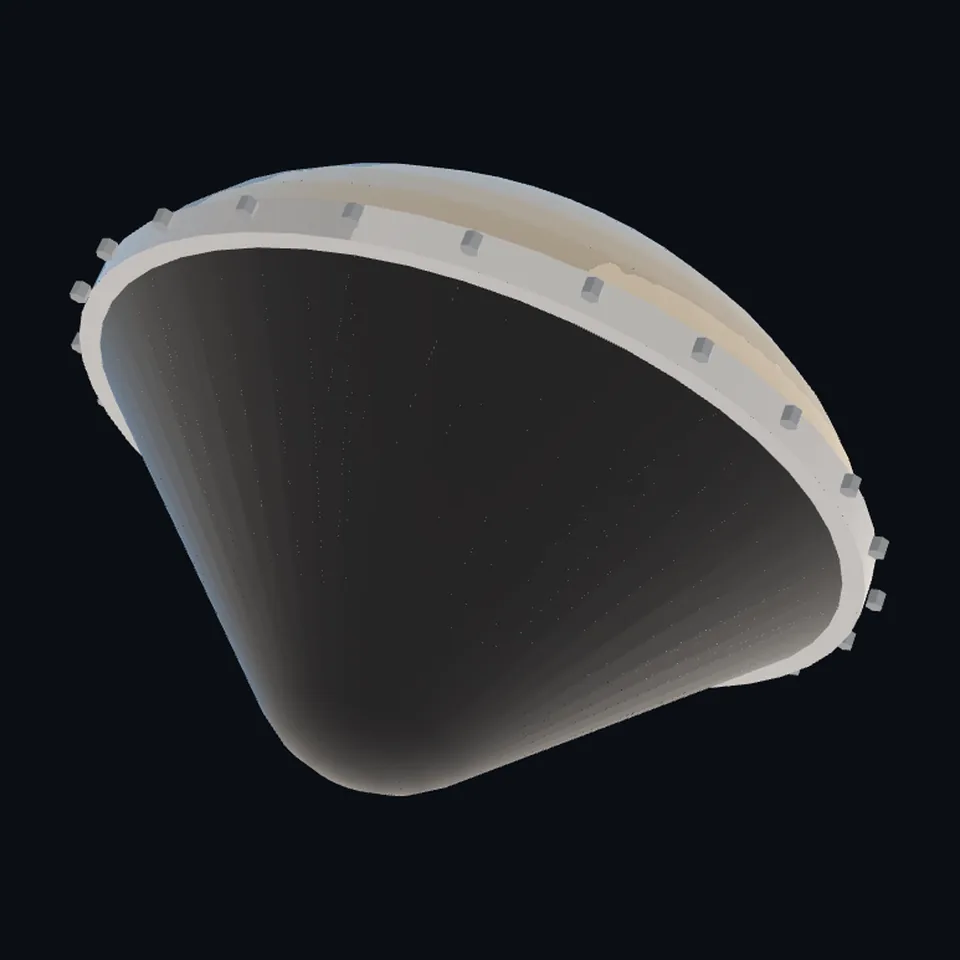 From above
About this model
Galileo's atmospheric probe is one of the 203 3D models Space Radar made itself: a deep-space probe, built in code from published dimensions and photographs, with no image-to-3D generator and no one else’s mesh.
Shape built from published dimensions and pictures; details simplified. It has 12,736 triangles in a 63 kB glTF file, and is 1.3 m across at full scale.
On Space Radar’s live map it is drawn where the craft is today. Open it on the map.
Dimensions and their sources
| Measure | Value |
|---|---|
| Diameter | 1.27 m |
| Height | 0.91 m |
| Mass | 339 kg |
| Spin | 10.5 rpm |
JPL Horizons, the header for -344 'Galileo Probe', ssd.jpl.nasa.gov/api/horizons.api?COMMAND=%27-344%27&OBJ_DAT…, OPENED 2026-11-03: 'Probe : conical, 1.27m x .91m'; 'Mass: 339 kg'; 'Two main structures : deceleration module and (parachute) descent module'; 'spin-stabilized : 10.5 rpm'; 'no engines, no thrusters'; 'RELEASED : Jul 13, 1995'; 'ATMOSPHERIC ENTRY: Dec 07, 1995'. NASA Science, 'Galileo', science.nasa.gov/mission/galileo, OPENED 2026-11-03: 'The deceleration module consisted of an aeroshell and an aft cover designed to block heat generated by friction during atmospheric entry'; 'Probe speed into Jupiter's atmosphere : 47.6 km per second'. NOT CITED, read off the NASA Ames drawing: the forebody's 45 degree cone with a 0.22 m rounded nose, the split of the 0.91 m into a 0.54 m forebody and a 0.37 m aft cover, the aft cover's rounded profile, the places and sizes of the mortar and access covers, the 24 bolts. THE CLOSED AFT COVER'S COLOUR IS NOT SHOWN BY ANY FREE PHOTOGRAPH FOUND: a pale tan (#BDB6A8) was chosen for the ablative cover the drawing shows, and it is an assumption. (read 2026-11-03)
How it was made
Built in code from published dimensions and photographs, with no image-to-3D generator and no one else’s mesh. 3D model: built by Space Radar from JPL Horizons' dimensions of the Galileo probe and NASA Ames's drawing and photograph (public domain).
The full record
built by this project in code (the private tool model-from-images: assemble.py, from a yaml of primitives), from the cited dimensions and the pictures under `references`; no image-to-3D model was used, and no published mesh of the probe (NASA's 3D Resources on GitHub, 1 583 paths, and science.nasa.gov/3d-resources, read 2026-11-03: its Galileo model is the orbiter)
Where the map uses it. JPL Horizons -344, the Galileo atmospheric probe (13 July to 7 December 1995: drawn only inside the days of its own path, data/sample.js `deep-galileo-probe`, site/data/eph): the probe closed in its aeroshell, as it flew alone for five months and entered Jupiter. NASA's model of Galileo (`galileo`) is the orbiter and carries no probe; public #267, internal #1076
Licence note. Public domain (NASA Ames Research Center's labelled drawing of the probe and NASA's photograph of the descent module and the open forebody: looked at, with credit; nothing of them is in the file). The shape is this project's, under this repository's licence, built from NASA's published numbers (facts). NO LOGO AND NO LETTERING is on the mesh.
References 3
What the shape was compared with. None of these pictures is in the file.
- Galileo Probe diagramNASA Ames Research CenterPublic domain (NASA Ames Research Center; Commons' LicenseShortName, read 2026-11-03)
- Galileo Jupiter Atmospheric Probe in a spacecraft processing room (AC84-0228-3)NASAPublic domain (NASA, ARC-1984-AC84-0228-3; Commons' LicenseShortName, read 2026-11-03)
- Galileo Probe - AC81-0174NASA Ames Research Center / Ken HodgesPublic domain (NASA Ames Research Center / Ken Hodges; Commons' LicenseShortName, read 2026-11-03)


Use it
The model is under the MIT licence: use it, change it and share it, in any project, also a paid one. Keep the credit:
Galileo's atmospheric probe 3D model by Space Radar (spaceradar.ai), MIT LicenseAny glTF 2.0 loader that reads meshopt compression (EXT_meshopt_compression) opens the file: three.js with its MeshoptDecoder, Babylon.js, model-viewer. Tools such as glTF-Transform can write an uncompressed copy.
Or embed the viewer in your page:
<iframe src="https://www.spaceradar.ai/model/?id=galileo-probe" title="Galileo's atmospheric probe, 3D model by Space Radar" width="600" height="450" loading="lazy" style="border:0;max-width:100%"></iframe>Related models
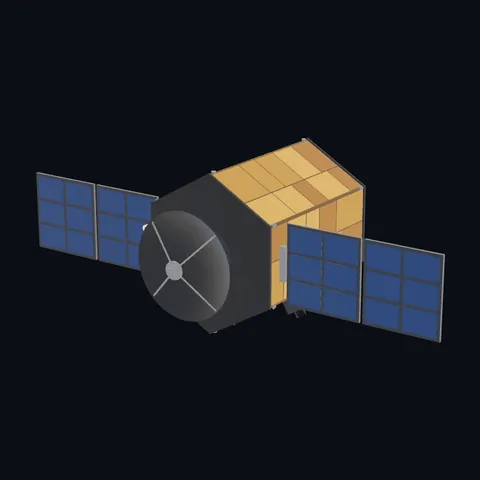
Hope (Emirates Mars Mission)
Shape built from published dimensions and pictures; details simplified.