
Hubble at release (STS-31, 1990)
Shape built from published dimensions and pictures; details simplified.
Turn it in 3D
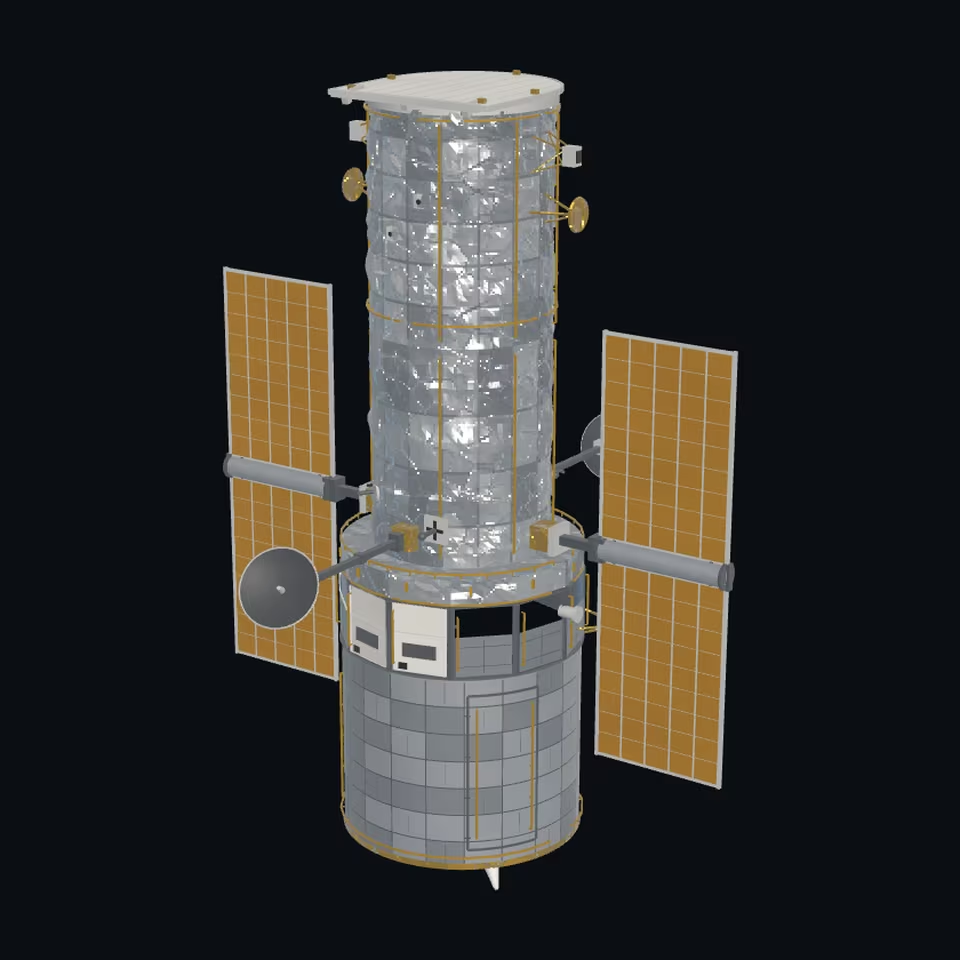
Open the 3D viewer (www.spaceradar.ai).
The viewer loads when you ask: about 700 kB the first time (three.js and the model), much less after.
Pictures 4
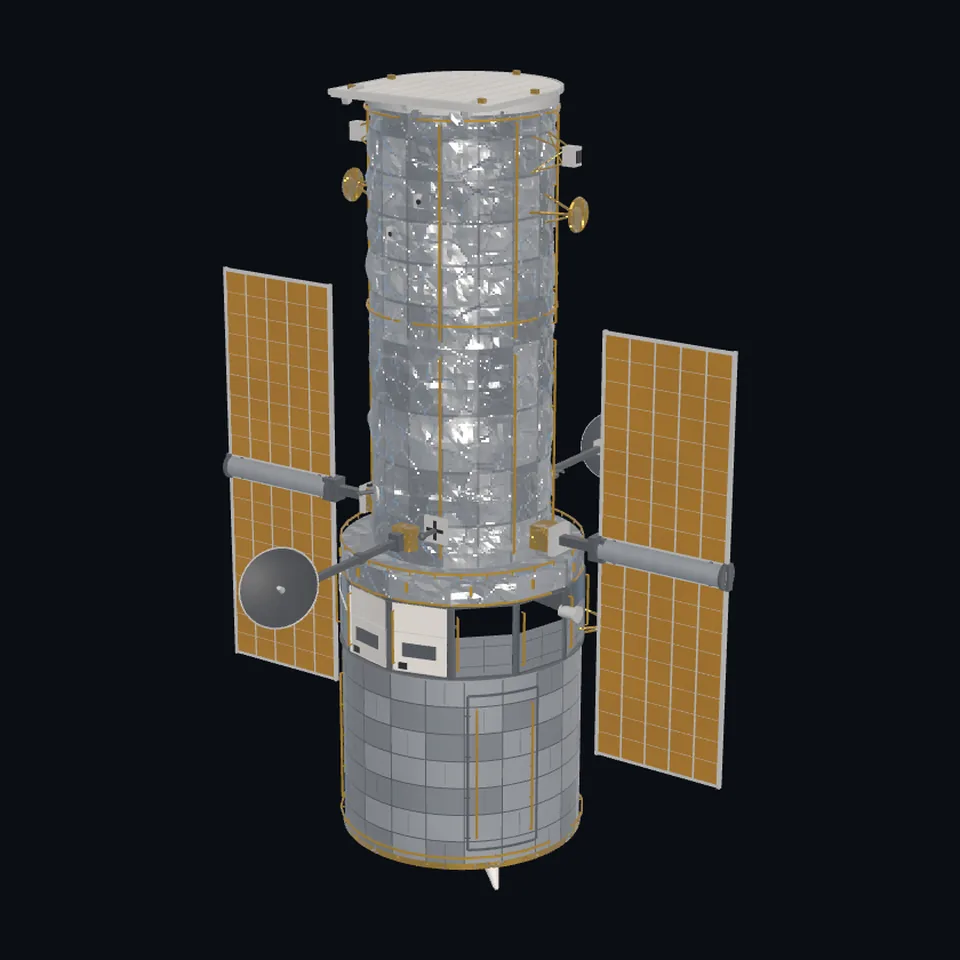 Three-quarter view
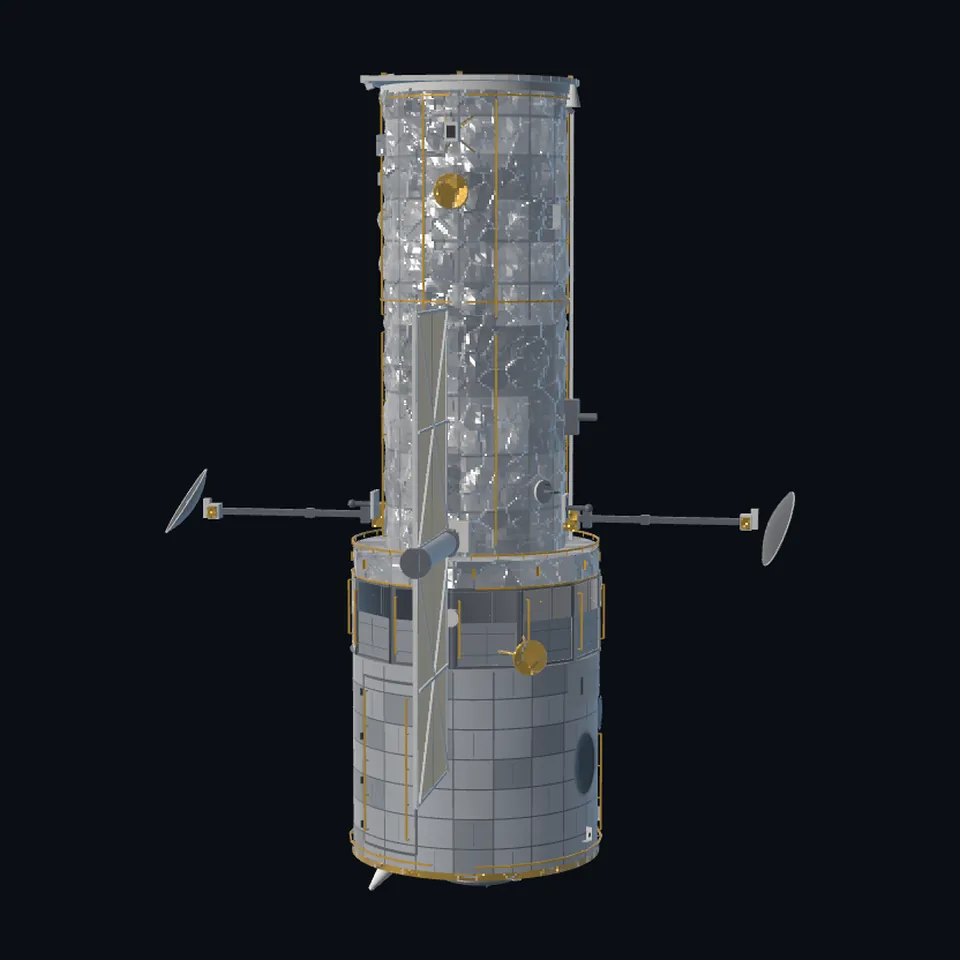 From the side
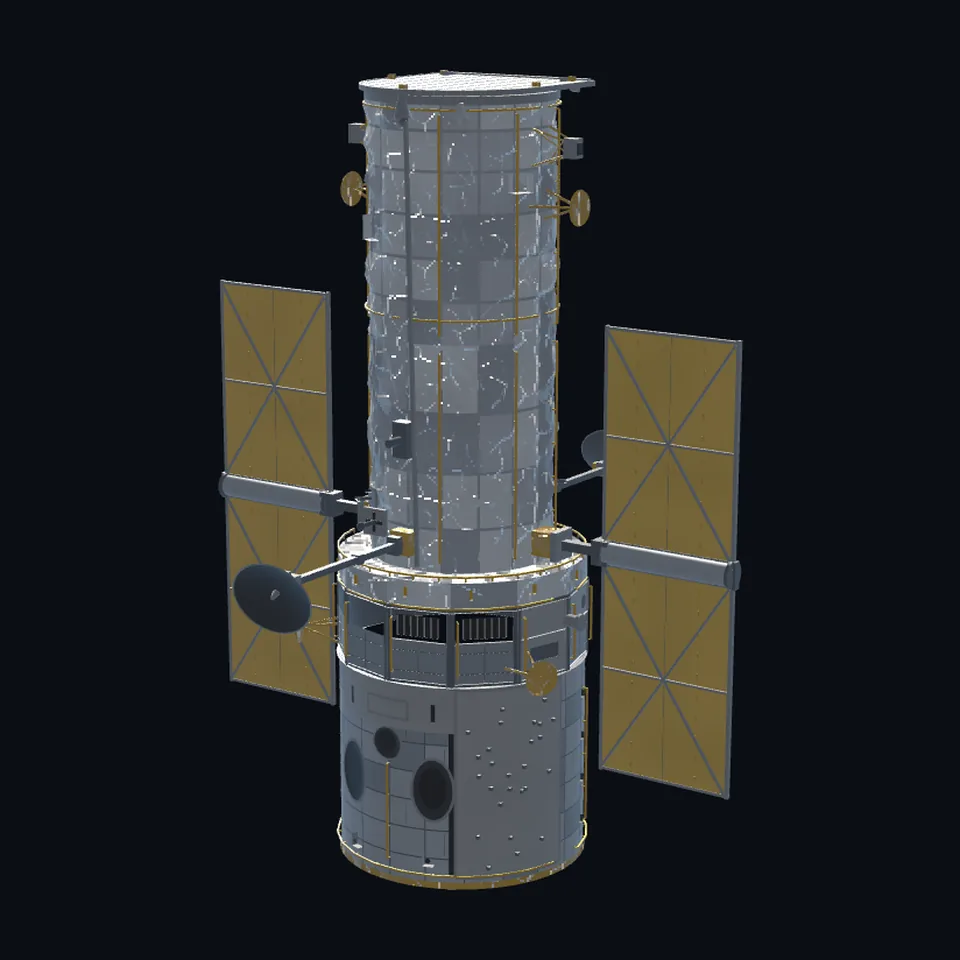 From behind
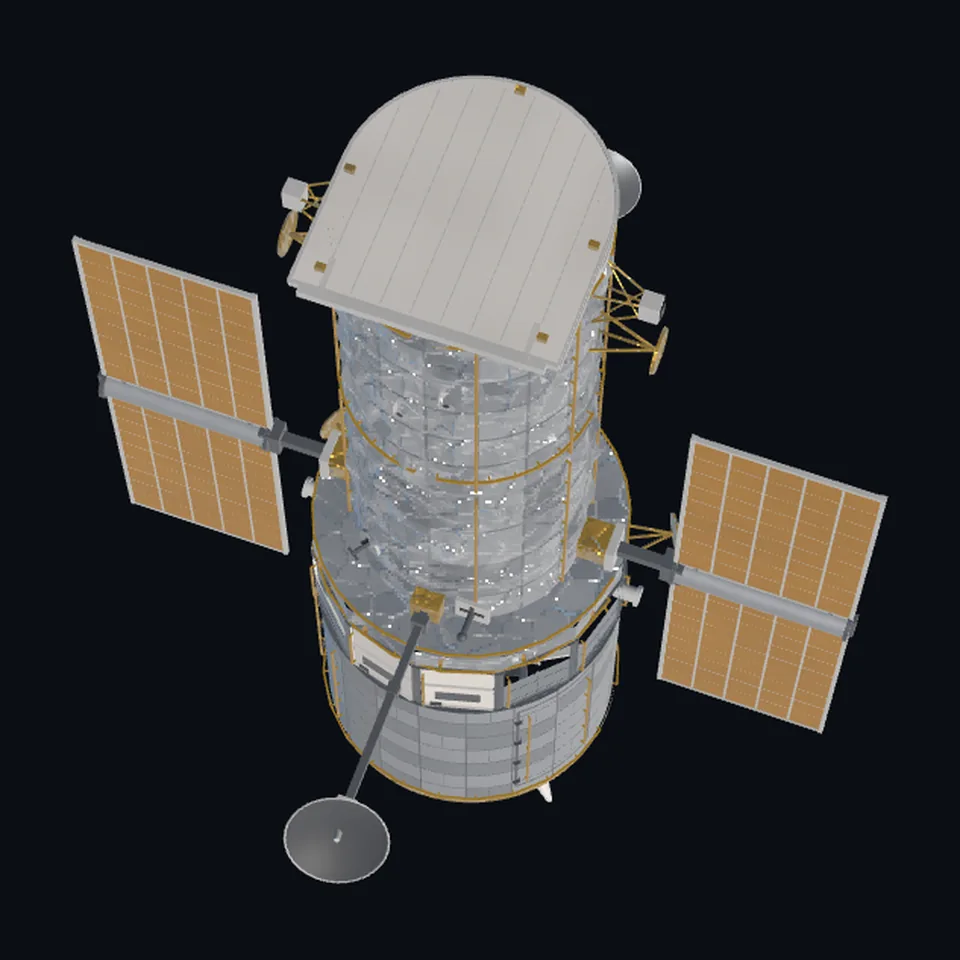 From above
About this model
Hubble at release (STS-31, 1990) is one of the 203 3D models Space Radar made itself: a space telescope, built in code from published dimensions and photographs, with no image-to-3D generator and no one else’s mesh.
Shape built from published dimensions and pictures; details simplified. It has 44,097 triangles in a 439 kB glTF file, and is 13 m across at full scale.
It is part of the map’s library; no object on the live map is drawn with it today.
Dimensions and their sources
| Measure | Value |
|---|---|
| Length | 13.2 m |
| Diameter | 4.2 m |
| Array length | 7.56 m |
| Array width | 2.45 m |
as `hubble` (ESA/Hubble fact sheet, opened 2026-10-20; NASA's media guide section 5); the arrays here are built to ESA's 2.45 x 7.56 m, NASA gives 7.1 x 2.6 m (read 2026-11-03)
How it was made
Built in code from published dimensions and photographs, with no image-to-3D generator and no one else’s mesh. 3D model: built by Space Radar from NASA's and ESA's published dimensions; compared with NASA's photographs of the release on 25 April 1990 (public domain).
The full record
built by this project in code (tools/hubble-builder/hubble_sts31.py, derived from release 1.3.0's builder of `hubble`, which is kept with that stage's notes); no image-to-3D model was used, and no published mesh: NASA's 3D Resources and NASA Science's 3D models have none of this craft (read 2026-10-20, again 2026-11-03)
Where the map uses it. NOTHING YET, as a route on the map (`hubble` is the telescope there): the Hubble Space Telescope as it left Discovery on 25 April 1990, in the `hubble-deployment` Moment (release 1.7.7): the aperture door shut, the first (golden-yellow, ESA-built) solar arrays as their own parts, which the Moment poses stowed (scaled down along the tube, the masts folded along it) and unrolled, and the two high gain antenna booms as parts it folds along the tube and lets spring out. Loaded by id; NOT the model of the craft on the map (that is `hubble`, as it flew after Servicing Mission 4). Frame of this file: the long axis on +Y, the aperture door at +Y (here shut), the array masts on X, the antenna booms and the grapple fixtures on Z, metres, the origin on the tube's middle; stand it with keepXZ
Licence note. The shape is this project's, under this repository's licence, built from published numbers (facts). Every photograph it was compared with is NASA's (public domain).
References 3
What the shape was compared with. None of these pictures is in the file.
- Hubble Solar Array Deployment STS-31NASAPublic domain (NASA; Commons LicenseShortName, read 2026-11-03)
- 1990 s31 IMAX view of HST releaseNASA (IMAX Cargo Bay Camera, STS-31)Public domain (NASA; Commons LicenseShortName, read 2026-11-03)
- 1990 s31 IMAX view of HST in payload bayNASA (IMAX Cargo Bay Camera, STS-31)Public domain (NASA; Commons LicenseShortName, read 2026-11-03)


Use it
The model is under the MIT licence: use it, change it and share it, in any project, also a paid one. Keep the credit:
Hubble at release (STS-31, 1990) 3D model by Space Radar (spaceradar.ai), MIT LicenseAny glTF 2.0 loader that reads meshopt compression (EXT_meshopt_compression) opens the file: three.js with its MeshoptDecoder, Babylon.js, model-viewer. Tools such as glTF-Transform can write an uncompressed copy.
Or embed the viewer in your page:
<iframe src="https://www.spaceradar.ai/model/?id=hubble-sts31" title="Hubble at release (STS-31, 1990), 3D model by Space Radar" width="600" height="450" loading="lazy" style="border:0;max-width:100%"></iframe>Related models
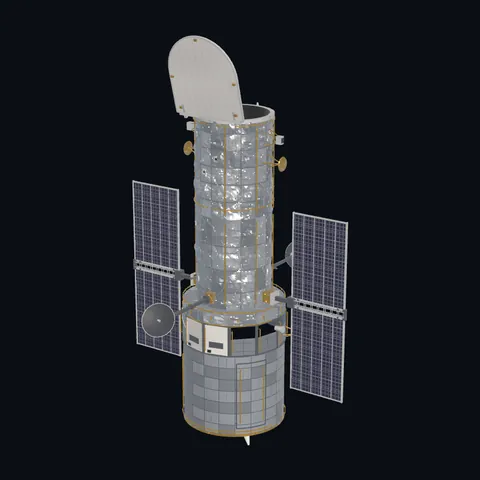
Hubble Space Telescope
Shape built from published dimensions and pictures; details simplified.
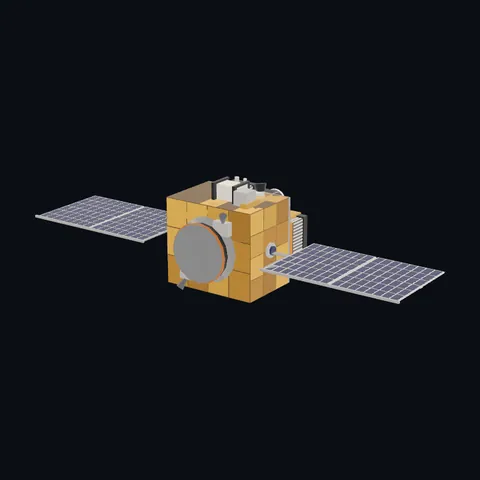
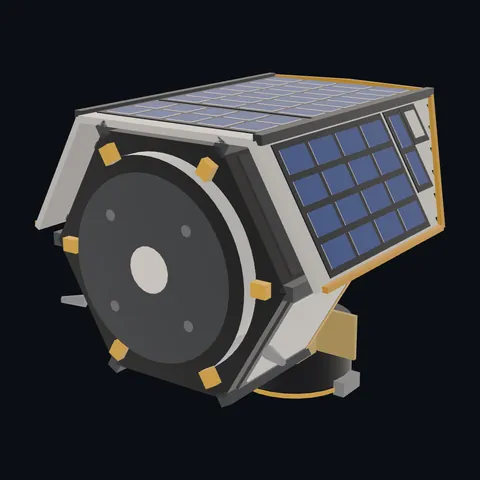
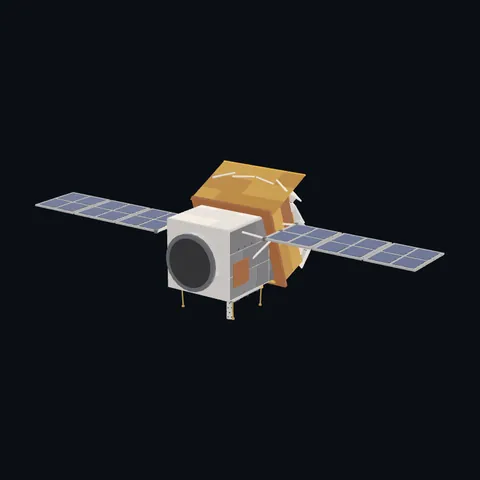
Einstein Probe
Shape built from published dimensions and pictures; details simplified.