BeiDou-3 IGSO
Shape built from published dimensions and pictures; details simplified.
Turn it in 3D
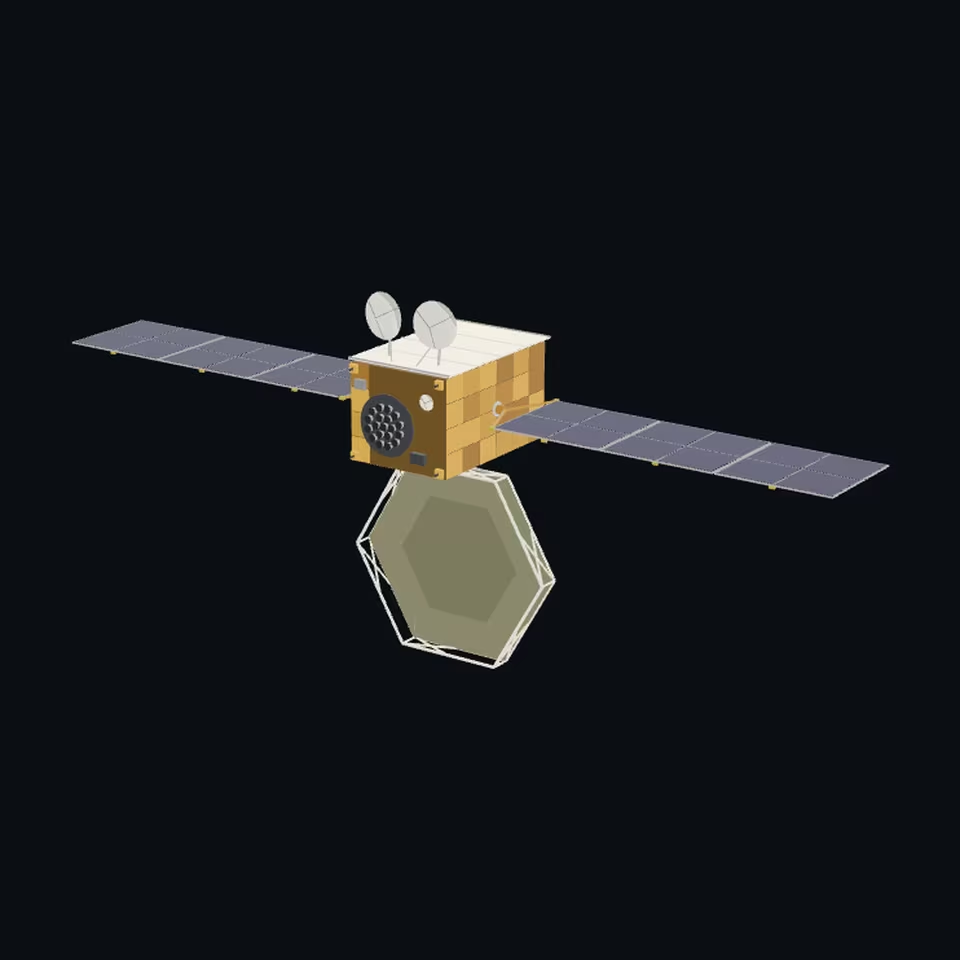
Open the 3D viewer (www.spaceradar.ai).
The viewer loads when you ask: about 700 kB the first time (three.js and the model), much less after.
Pictures 4
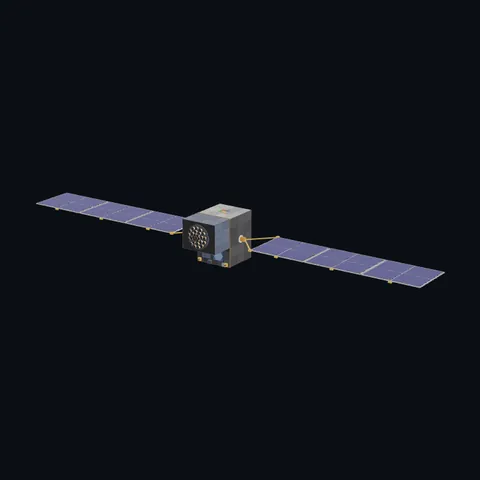
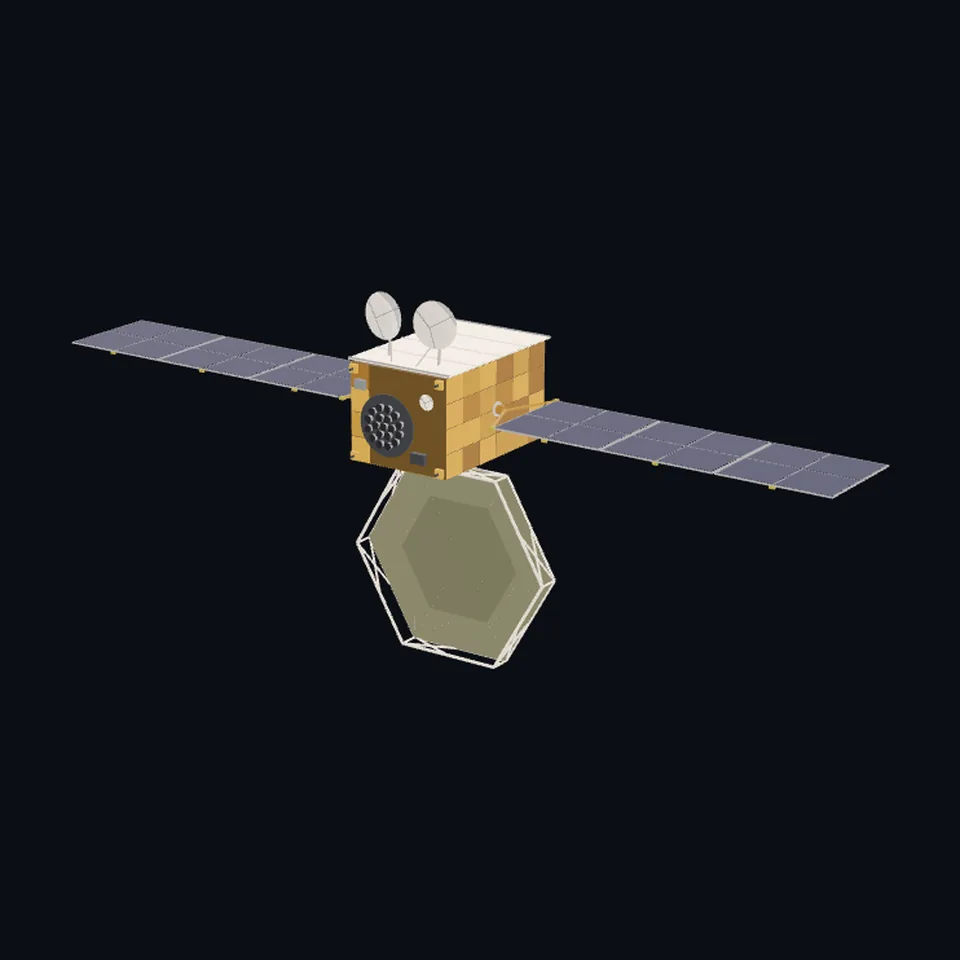 Three-quarter view
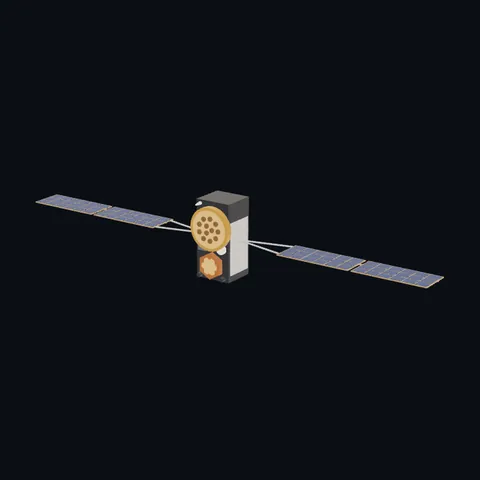
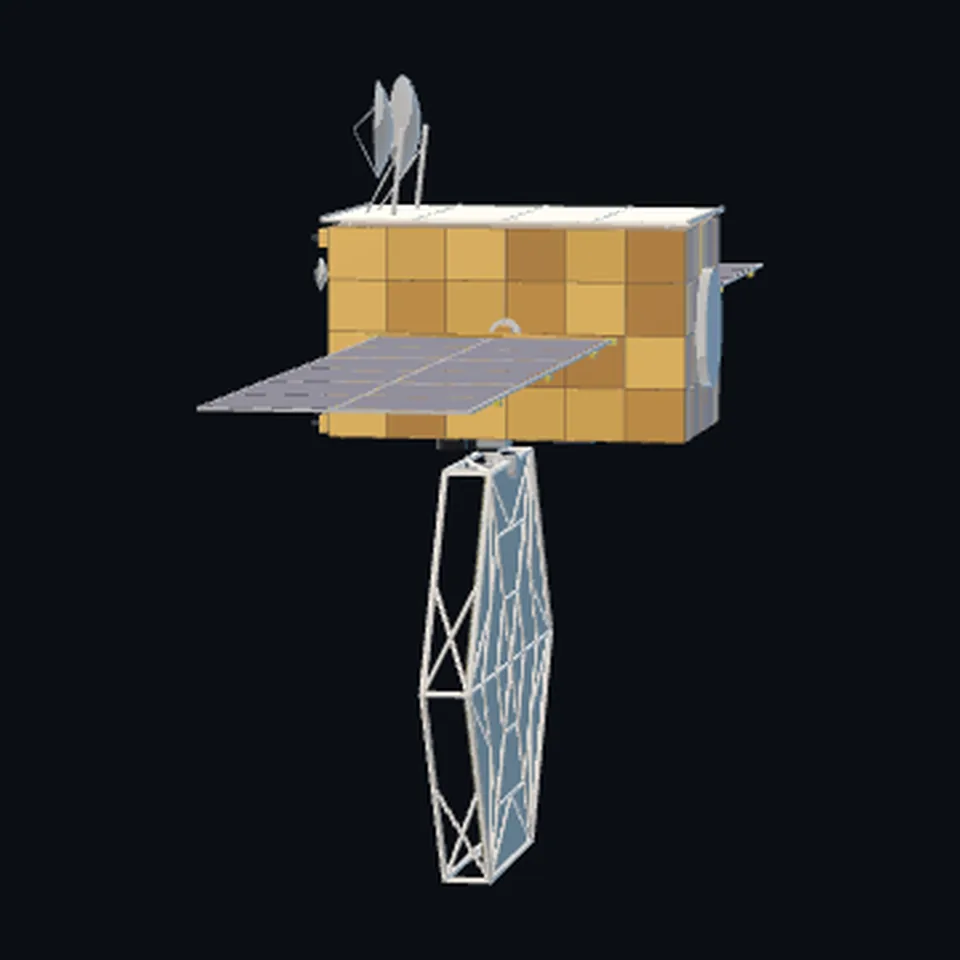 From the side
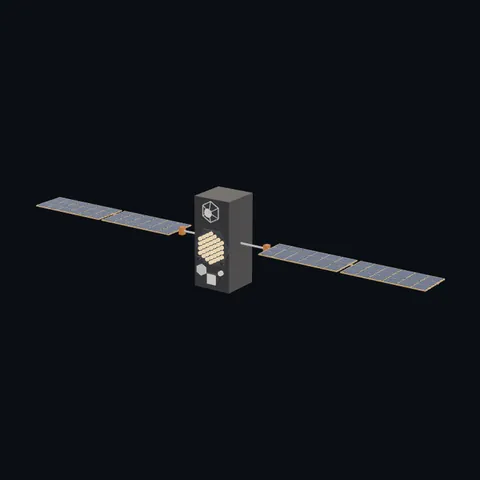
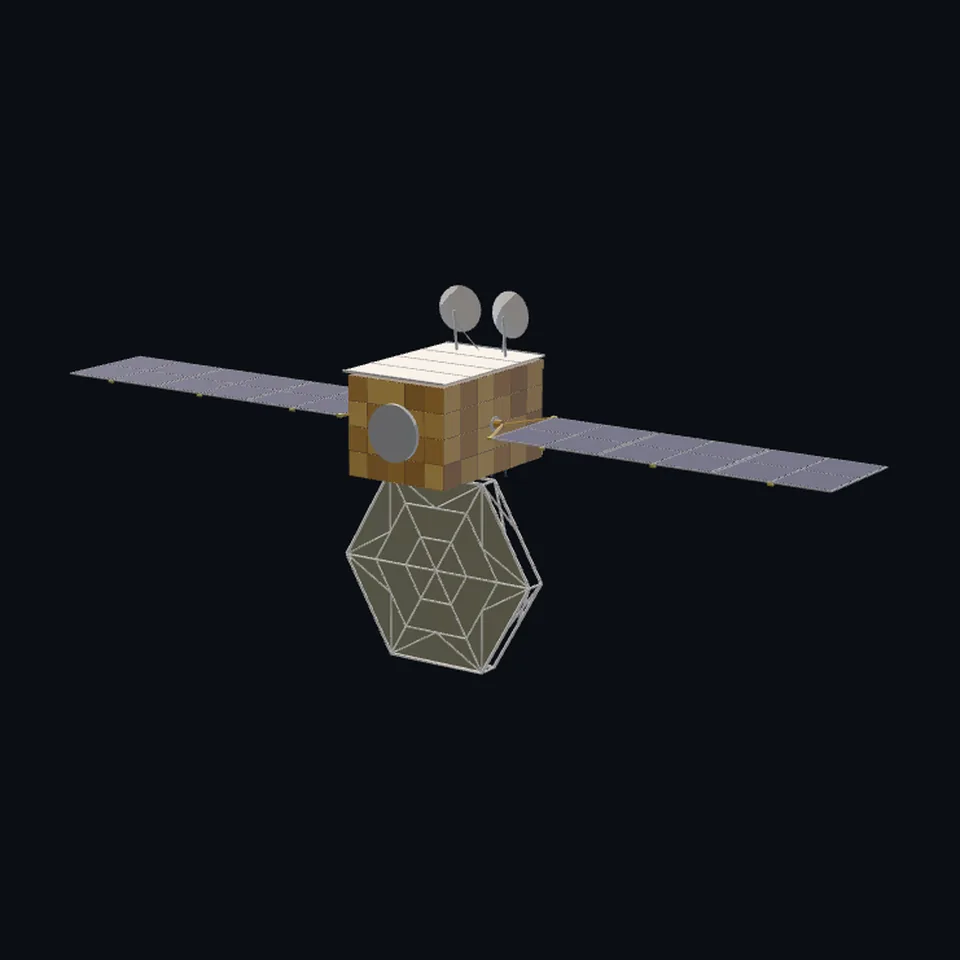 From behind
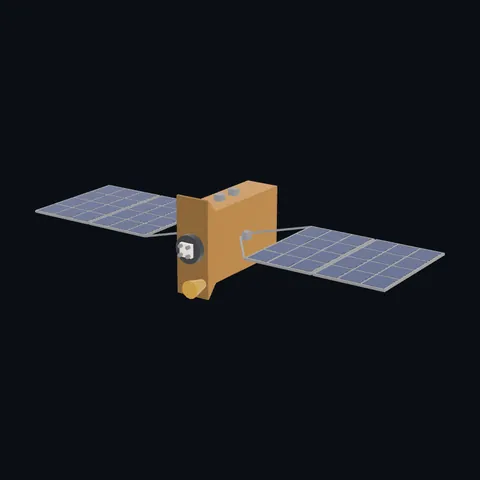
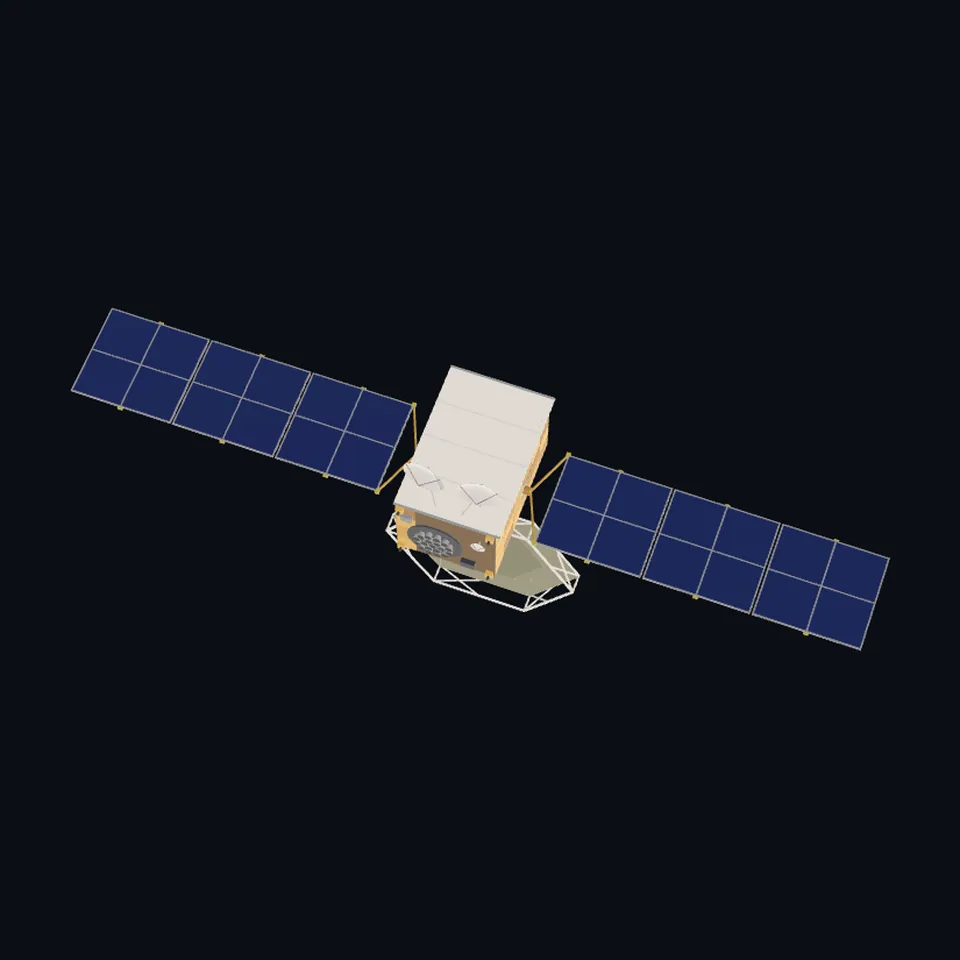 From above
About this model
BeiDou-3 IGSO is one of the 203 3D models Space Radar made itself: a satellite, built in code from published dimensions and photographs, with no image-to-3D generator and no one else’s mesh.
Shape built from published dimensions and pictures; details simplified. It has 13,806 triangles in a 110 kB glTF file, and is 3.6 m across at full scale.
On Space Radar’s live map it is drawn for 3 catalogued objects, each where its published orbit puts it now. Open it on the map.
Dimensions and their sources
| Measure | Value |
|---|---|
| Body | 2.358 × 2.098 × 3.602 m |
| Wing area | 17.7 m² |
| Wing panels | 3 |
| Panel | 2.5 × 2.358 m |
| Hexagon side | 2.358 m |
| Dish diameter | 1 m |
(1) Xia et al., 'Advancing the Solar Radiation Pressure Model for BeiDou-3 IGSO Satellites', Remote Sensing 14(6), 1460 (2022), doi.org/10.3390/rs14061460 (CC BY 4.0), OPENED 2026-11-04 as the PDF at depositonce.tu-berlin.de: 'From the BeiDou-3 metadata released by CSNO [17], the box-shaped body of BeiDou-3 IGSOs has, essentially, a rectangular cross-section of 2.098 x 2.358 m, and a length of 3.602 m.'; 'BeiDou-3 IGSOs carry a regular hexagon and two circular communication payloads on the ±X surfaces, as shown in Figure 1.'; 'the installation information (angle, location and distance relative to the spacecraft body) and dimensions for these payloads are not disclosed. ... The radius of the two circular payloads is 0.5 m, and the side length of the regular hexagon payload is the same as that of the Y side of the spacecraft's body' (THE AUTHORS' ASSUMPTIONS, used here for the same reason and found to agree with the mockups' proportions); its Table 1: '+X 8.496, +Z 20.871 (4.956), -Z 20.871 (4.956), SPs 17.700' m2 (2.358 x 3.602 = 8.494 and 2.098 x 2.358 = 4.947 reproduce the body areas; 4.956 + a hexagon of side 2.358 (14.44) + two discs of radius 0.5 (1.57) = 20.97, near 20.871). (2) 'Precise orbit determination for BDS satellites', Satellite Navigation 2, 2021, Table 2, link.springer.com/article/10.1186/s43020-021-00062-y/tables/2, OPENED 2026-11-04: 'BDS-3 GEO DFH-3B ~ 2970 kg, X 2.10, Y 2.36, Z 3.60 m, area of solar panels 35.4 m2' and the same for IGSO (~ 2910 kg): so a GEO craft is the same size and the 35.4 is TWO wings of 17.7. (3) keeptrack.space, a catalogue site (read through a search extract, NOT OPENED): span 18 m, which 2 x 7.5 m of panels and the hubs and yokes make 18.6 m (consistent, not a source). NOT CITED, READ OFF THE PICTURES AND ESTIMATED: the wing's split into three 2.5 x 2.358 m panels (the AREA is cited; 7.5 m x 2.358 m is exactly 17.7 m2, the width of 2.358 m is ours), where the Earth is (the side the array, reflector and dishes look to in the rendering; no page says it in words), the boom, its length and the hexagon's centre 2.35 m off the face, its depth (0.45 m) and the lattice, the dishes' places, tilt and depth, the array's 1.3 m and its 19 cups, the white panel's standoff, the star tracker, the boxes, the S-band dish and the far deck's ring (not seen in any picture), every colour. THE HEXAGON AND DISHES ARE DRAWN AS SEEN IN THE PICTURES, SO THEIR SIZES ARE THE AUTHORS' ASSUMPTIONS, NOT CSNO'S. (read 2026-11-04)
How it was made
Built in code from published dimensions and photographs, with no image-to-3D generator and no one else’s mesh. 3D model: built by Space Radar from the body dimensions CSNO published for BeiDou-3's IGSO craft (as quoted by Xia et al., CC BY 4.0) and from CSNO's rendering and museum mockups of the craft (looked at, not used).
The full record
built by this project in code (the private tool model-from-images: assemble.py, from a yaml of primitives, object `satellite-beidou-3-igso`), from the cited numbers and the pictures under `references`; no image-to-3D model was used, and no published mesh of the craft (CAST and CSNO publish none; NASA's 3D Resources carry none, read 2026-11-04)
Where the map uses it. NORAD 44204, 44337 and 44709 (CelesTrak's BEIDOU-3 IGSO-1, -2 and -3), BeiDou-3's inclined geosynchronous craft, as themselves; and, with `generic: true` (the kind of thing), 43683, 45344, 45807 and 56564 (BEIDOU-3 G1 to G4), the geostationary craft whose bus size is the same in Springer's table and whose layout no opened page shows; public #1153. NOT for BeiDou-2's craft (13 IGSO and GEO craft on DFH-3A, another bus, and BEIDOU-2 G8) or the MEO craft (beidou-3-meo.glb)
Licence note. None of the pictures is in the file and none was fetched into it. Figure 1 of Xia et al. 2022 (credit CSNO) is CC BY 4.0 as the paper's; the three mockup pictures are CC BY-SA 4.0 or CC BY 4.0 and were LOOKED AT ONLY. The shape is this project's, under this repository's licence, built from published numbers (facts). NO LOGO AND NO LETTERING is on the mesh.
References 3
What the shape was compared with. None of these pictures is in the file.
- Xia et al., 'Advancing the Solar Radiation Pressure Model for BeiDou-3 IGSO Satellites', Remote Sensing 14(6), 1460 (2022), Figure 1 (credit: China Satellite Navigation Office, csno-tarc.cn)Xia et al.; China Satellite Navigation OfficeCC BY 4.0 (the paper's licence; read 2026-11-04 in the copy at depositonce.tu-berlin.de); looked at, nothing taken from it
- Beidou satellite mockup at FING UNLP 01, 02 and 03.jpgBugWarpCC BY-SA 4.0 (01 and 02) and CC BY 4.0 (03) (Commons LicenseShortName, read 2026-11-04): looked at only
- Beidou-3 Satellite Mockup.jpgAKAMGO yalmsCC BY-SA 4.0 (Commons LicenseShortName, read 2026-11-04): looked at only


Use it
The model is under the MIT licence: use it, change it and share it, in any project, also a paid one. Keep the credit:
BeiDou-3 IGSO 3D model by Space Radar (spaceradar.ai), MIT LicenseAny glTF 2.0 loader that reads meshopt compression (EXT_meshopt_compression) opens the file: three.js with its MeshoptDecoder, Babylon.js, model-viewer. Tools such as glTF-Transform can write an uncompressed copy.
Or embed the viewer in your page:
<iframe src="https://www.spaceradar.ai/model/?id=beidou-3-igso" title="BeiDou-3 IGSO, 3D model by Space Radar" width="600" height="450" loading="lazy" style="border:0;max-width:100%"></iframe>Related models