Umbra
Shape built from published dimensions and pictures; details simplified.
Turn it in 3D
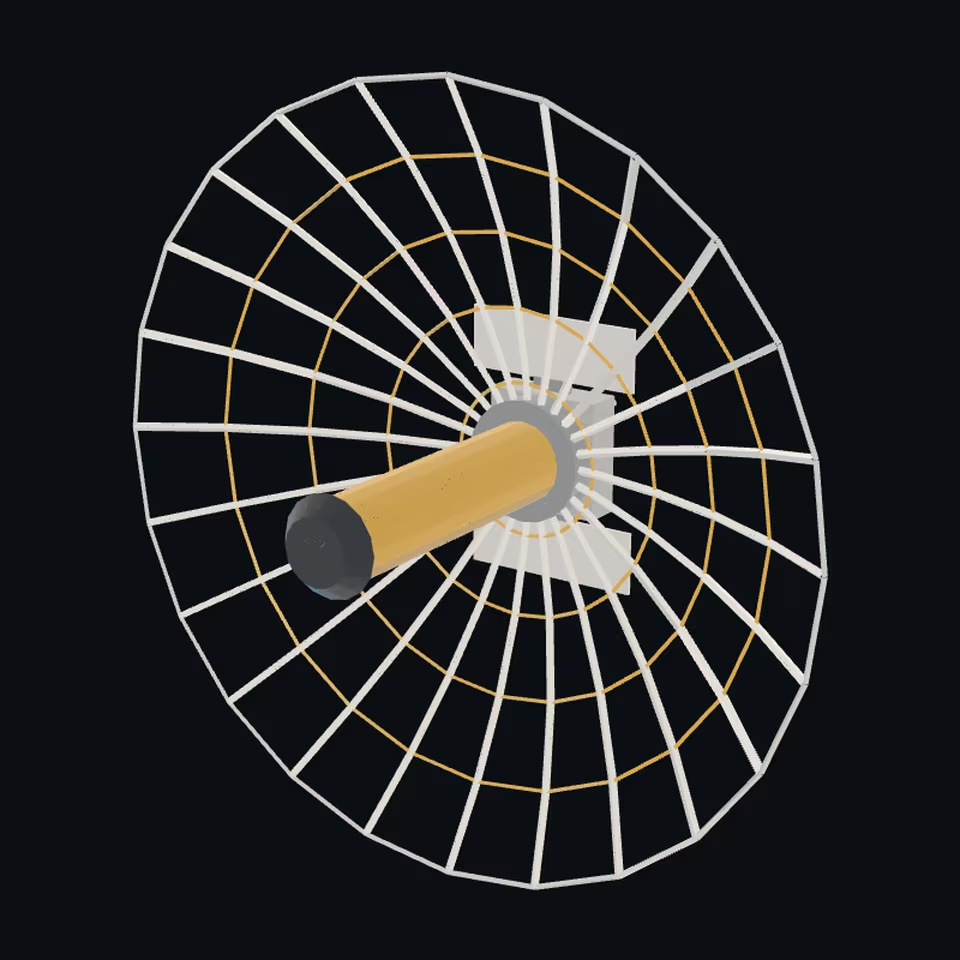
Open the 3D viewer (www.spaceradar.ai).
The viewer loads when you ask: about 700 kB the first time (three.js and the model), much less after.
Pictures 4
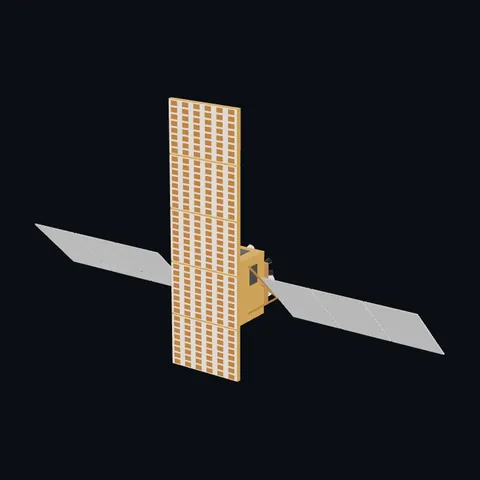
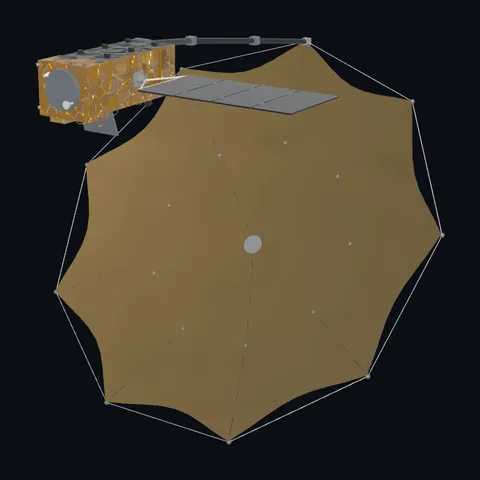
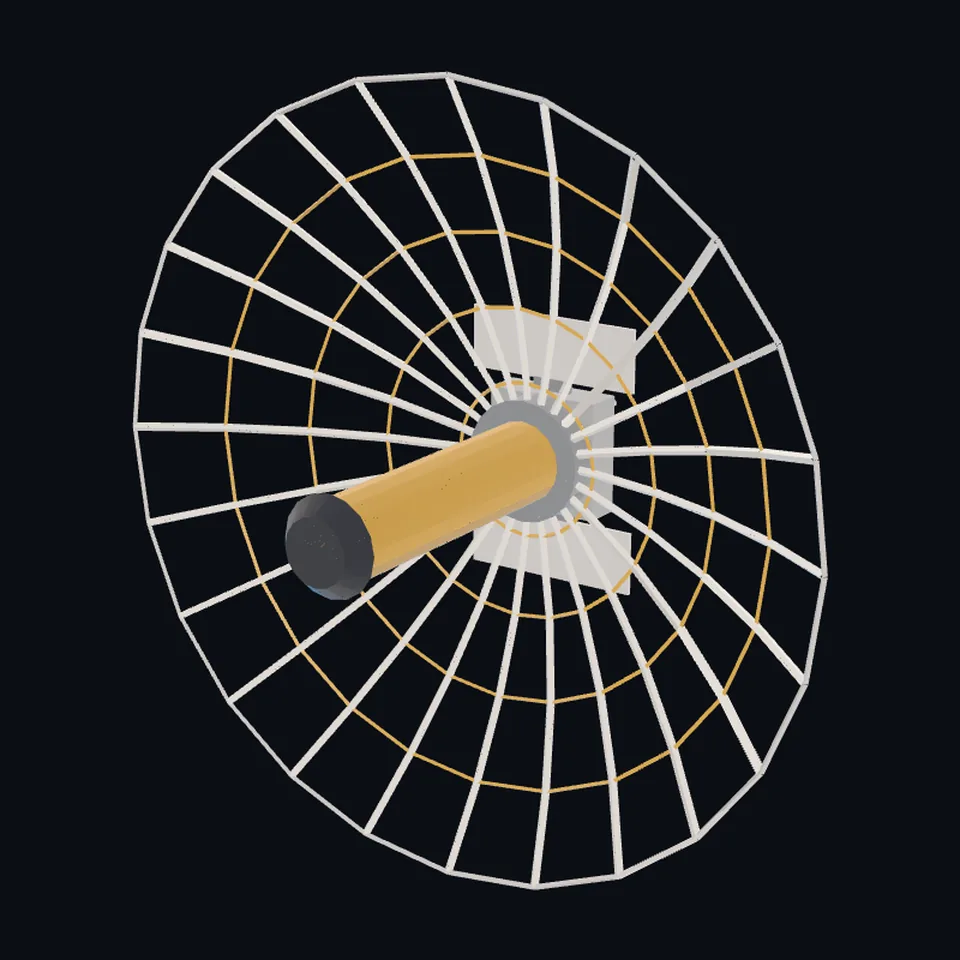 Three-quarter view
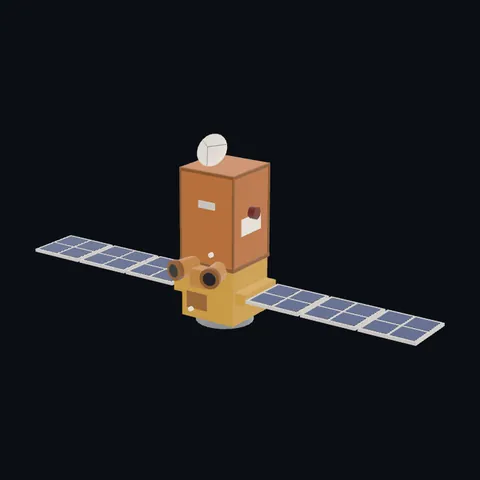
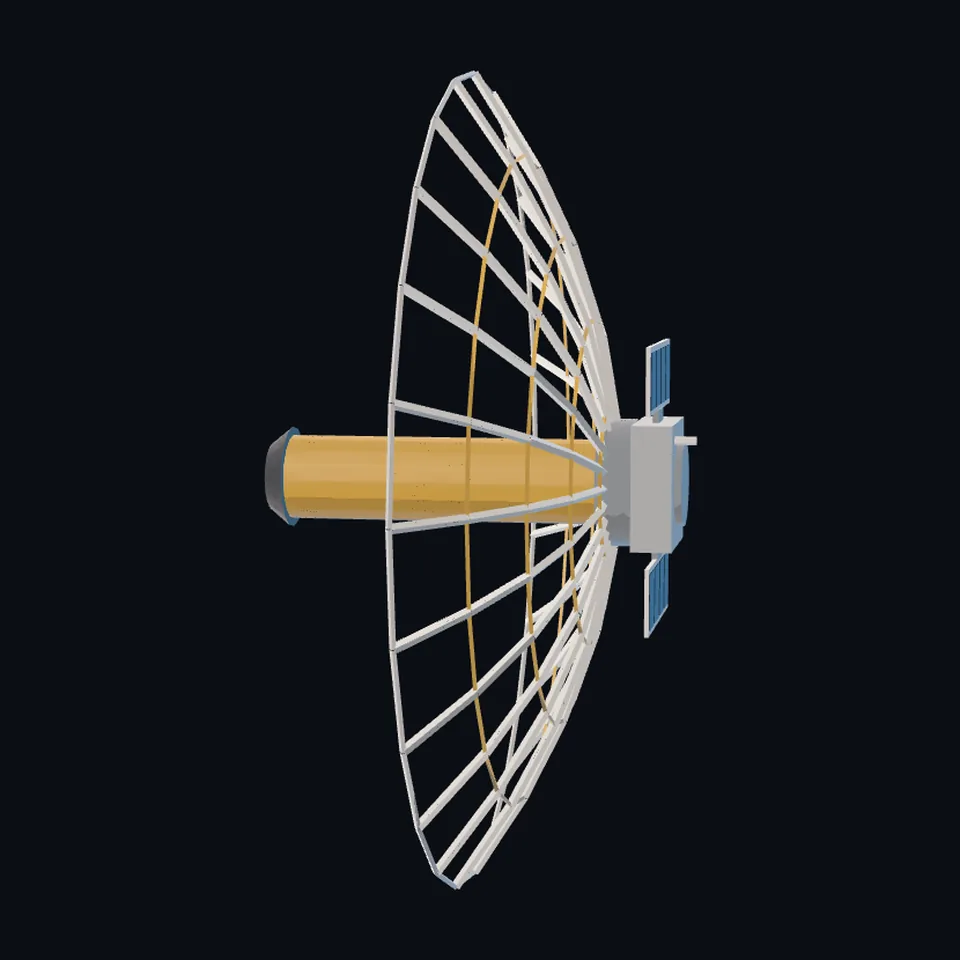 From the side
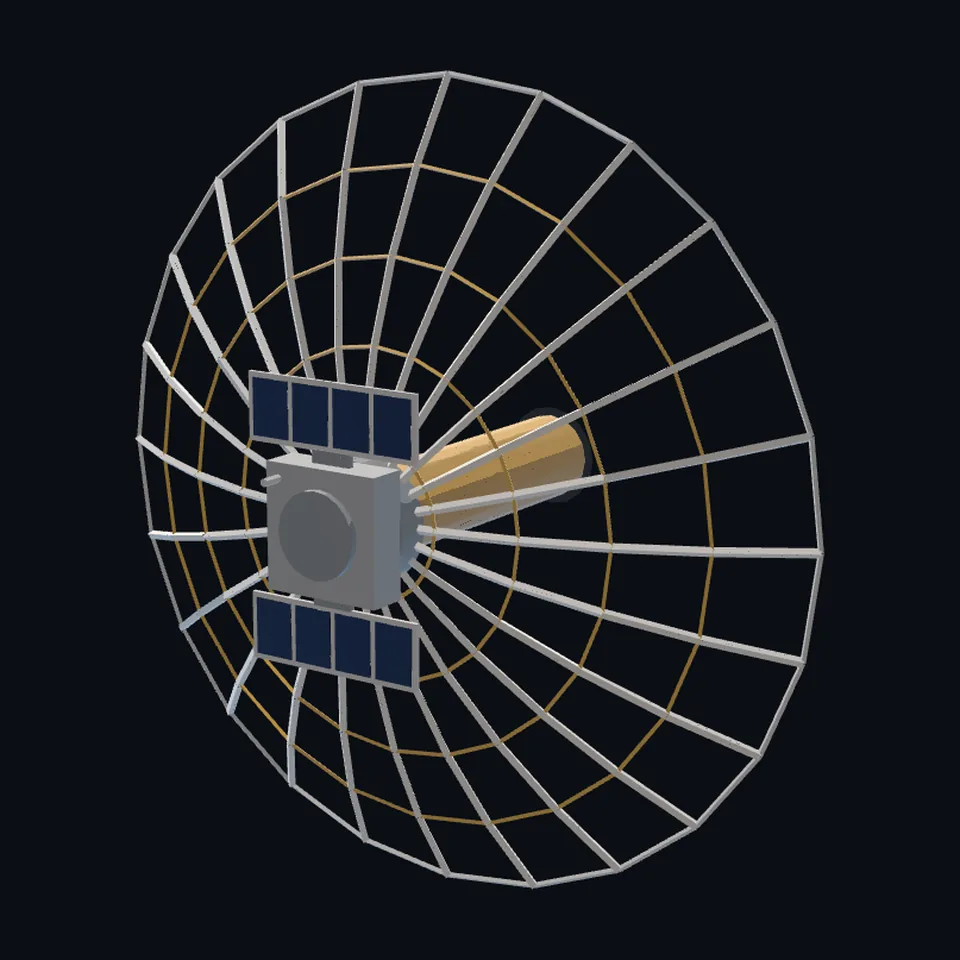 From behind
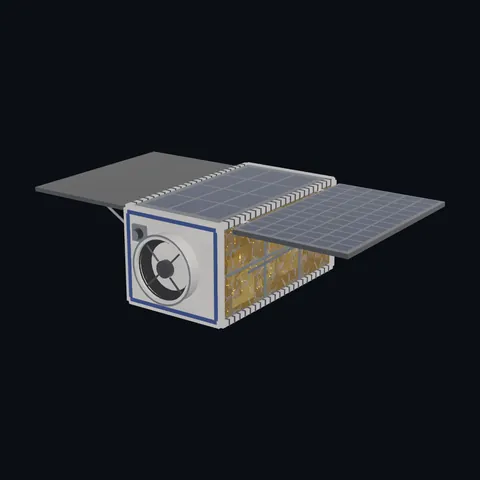
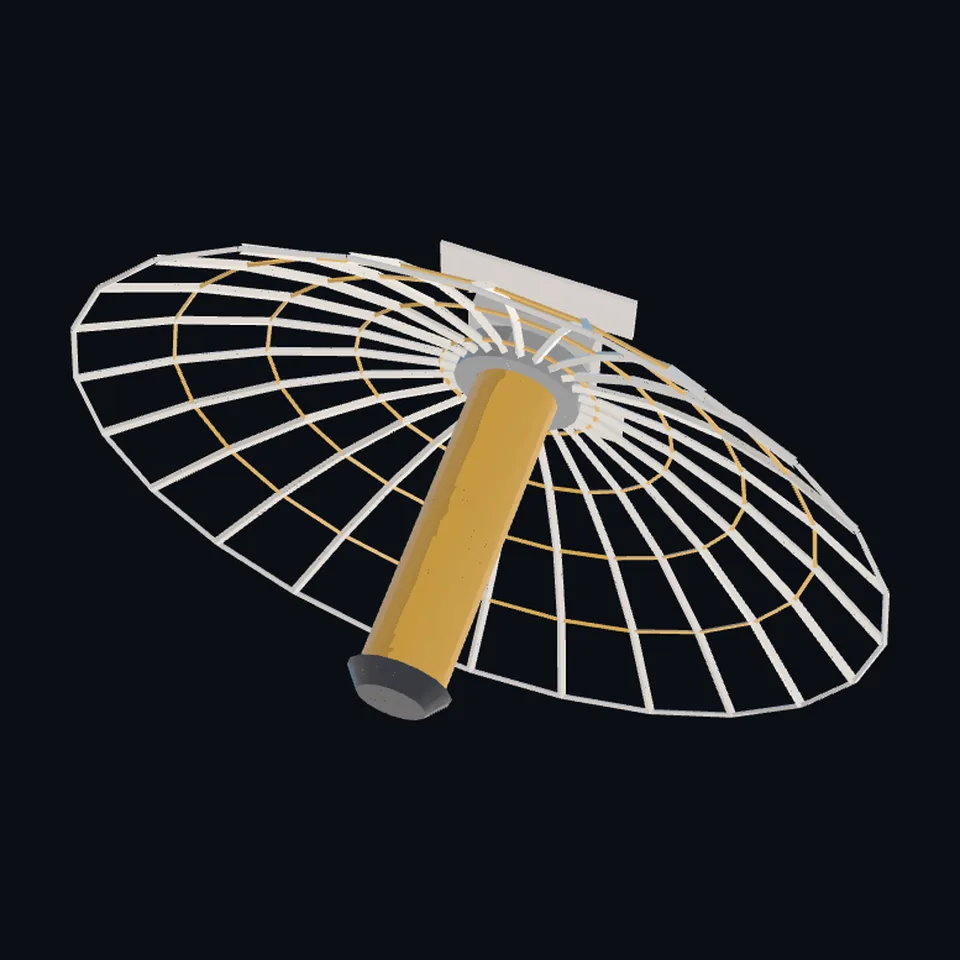 From above
About this model
Umbra is one of the 203 3D models Space Radar made itself: a satellite, built in code from published dimensions and photographs, with no image-to-3D generator and no one else’s mesh.
Shape built from published dimensions and pictures; details simplified. It has 7,836 triangles in a 62 kB glTF file, and is 3.8 m across at full scale.
It is part of the map’s library; no object on the live map is drawn with it today.
Dimensions and their sources
| Measure | Value |
|---|---|
| Bus side | 0.58 m |
| Bus height | 0.19 m |
| Deployed across | 3.8 m |
| Deployed height | 2 m |
Umbra Lab, Inc., 'Orbital Debris Assessment Report for Umbra SAR', document 1604D0048 revision 02 (under `references`), opened 2026-10-13 through a reader (the FCC's server refuses curl), section 2.1: 'The bus structure consists of an aluminum frame with machined aluminum panels and has dimensions of approximately 58 cm x 58 cm x 19 cm, not including the solar arrays which reside in a stowed condition on either side of the bus. The payload is approximately 74 cm x 53 cm diameter in the stowed position. When deployed into the operational configuration, the maximum physical dimensions of the space vehicle are approximately 3.8 m x 3.8 m x 2.0 m.'; section 2.6: 'The nominal attitude mode places the satellite in a “Nadir Pointing” orientation'; section 2.8: 'solar cells mounted on the two (2) deployable solar array wings extending from the bus structure'; its list of parts names a 'Root Rib' and 'Rib Fitting'. eoPortal, eoportal.org/satellite-missions/umbra-sar, opened 2026-10-13: 'Each Umbra satellite houses a centre-fed parabolic mesh reflector SAR antenna'; 'Deployed antenna size (square metres) 10' (a circle of 10 m2 is 3.57 m across; the filing's 3.8 m is built, over the rib tips). NOT CITED, read off the filing's drawing: the dish's depth (0.67 m), the column's 1.65 m, the solar arrays' 0.9 x 0.31 m and that they lie flat beside the bus. OURS: 24 ribs (the filing names ribs and no count), the net's five rings, which way the dish opens (toward the Earth: 'Nadir Pointing' names no face). THE FILING IS OF THE EARLY CRAFT (about 70 kg); later ones may differ (read 2026-10-13)
How it was made
Built in code from published dimensions and photographs, with no image-to-3D generator and no one else’s mesh. 3D model: built by Space Radar from the dimensions and the drawing in Umbra's orbital debris report filed with the FCC.
The full record
built by this project in code (the private tool model-from-images: assemble.py, from a yaml of primitives), from the cited dimensions and the pictures under `references`; no image-to-3D model was used, and no published mesh (NASA's 3D Resources on GitHub, 1 583 paths read 2026-10-13, has none of this craft; its operator is not known to publish one, and a model on a marketplace is somebody else's work)
Where the map uses it. any record of klass satellite whose name has the word UMBRA (UMBRA-07 to UMBRA-12 in the live saved data of 2026-10-12, five records): Umbra's radar microsatellite, a small flat bus behind a 3.8 m mesh umbrella. It was, and while this file is on its way still is, the shared umbrella (scene/models.js `radar-mesh`: Capella's plan, an offset feed on a boom and one wing); public #983
Licence note. The shape is this project's, under this repository's licence; the layout was read off a drawing in a public filing with the FCC, which is not reproduced. No free picture of the craft exists. NO LOGO AND NO LETTERING is on the mesh: the operator's marks are trademarks and are not drawn.
References 1
What the shape was compared with. None of these pictures is in the file.
- Umbra Lab, Inc., Orbital Debris Assessment Report for Umbra SAR (1604D0048 revision 02)Umbra Lab, Inc.a public filing with the FCC's experimental licensing system, read; the drawing is Umbra's and nothing of it is reproduced
Use it
The model is under the MIT licence: use it, change it and share it, in any project, also a paid one. Keep the credit:
Umbra 3D model by Space Radar (spaceradar.ai), MIT LicenseAny glTF 2.0 loader that reads meshopt compression (EXT_meshopt_compression) opens the file: three.js with its MeshoptDecoder, Babylon.js, model-viewer. Tools such as glTF-Transform can write an uncompressed copy.
Or embed the viewer in your page:
<iframe src="https://www.spaceradar.ai/model/?id=umbra" title="Umbra, 3D model by Space Radar" width="600" height="450" loading="lazy" style="border:0;max-width:100%"></iframe>Related models