ALOS-2
Shape built from published dimensions and pictures; details simplified.
Turn it in 3D
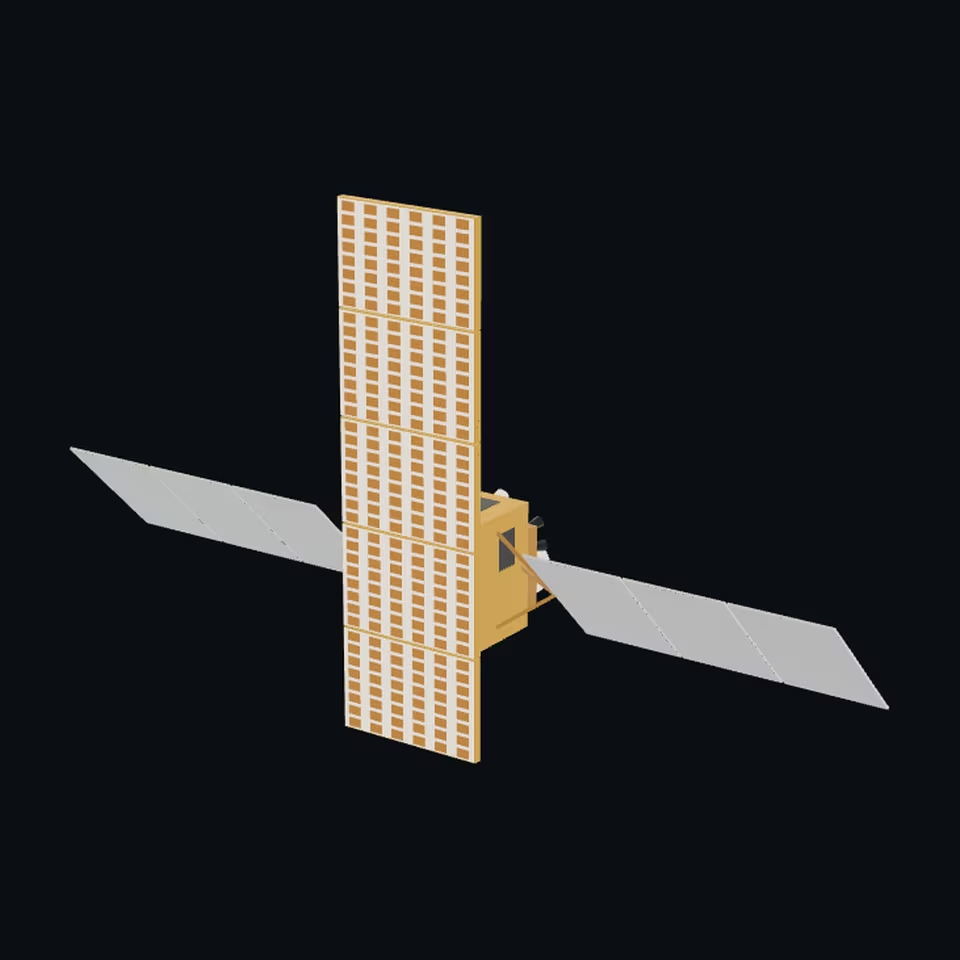
Open the 3D viewer (www.spaceradar.ai).
The viewer loads when you ask: about 700 kB the first time (three.js and the model), much less after.
Pictures 4
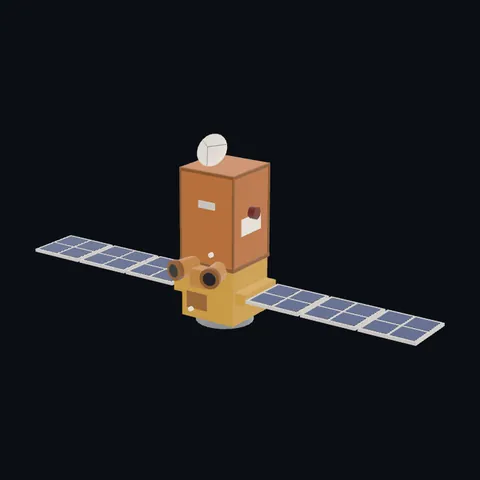
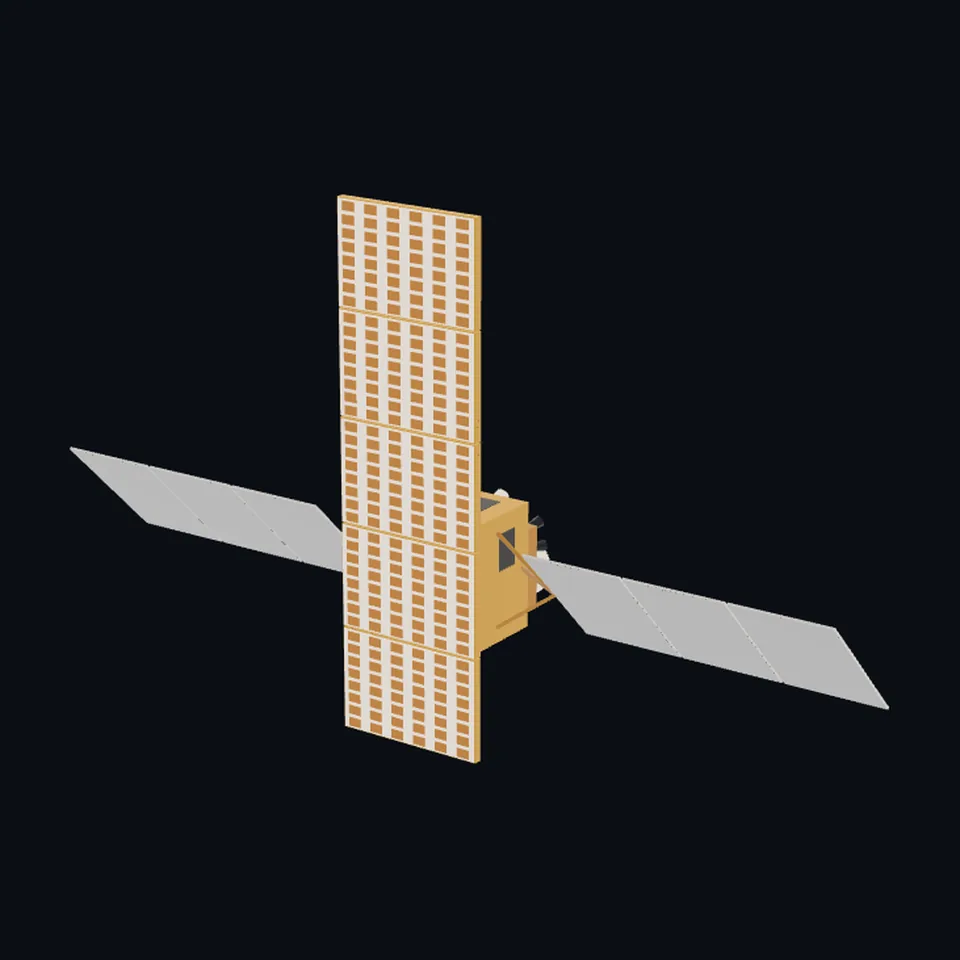 Three-quarter view
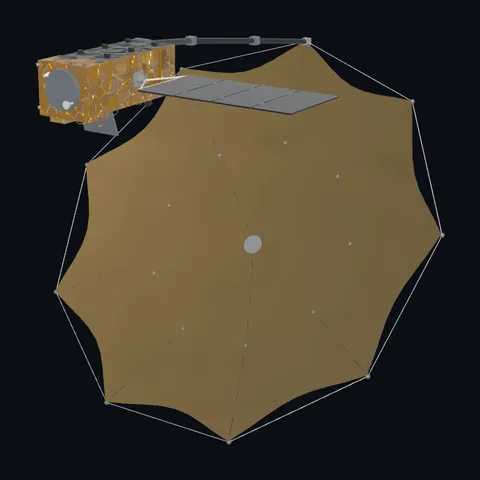
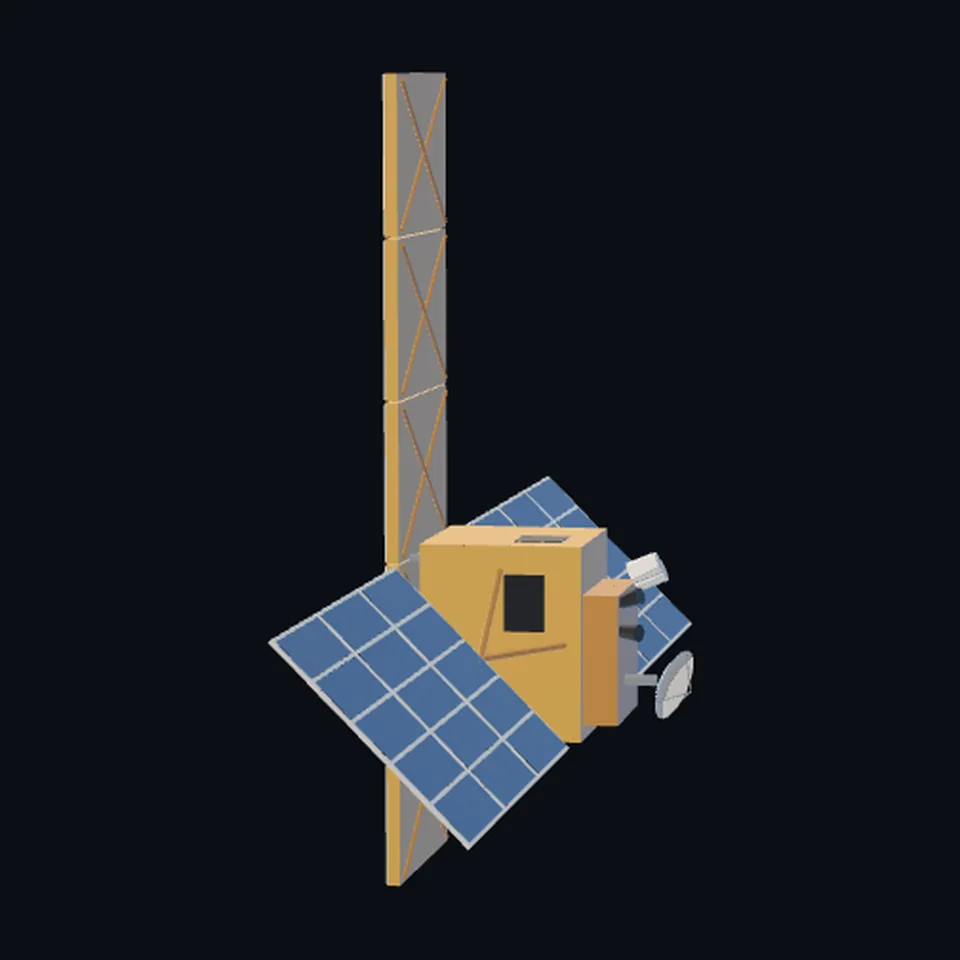 From the side
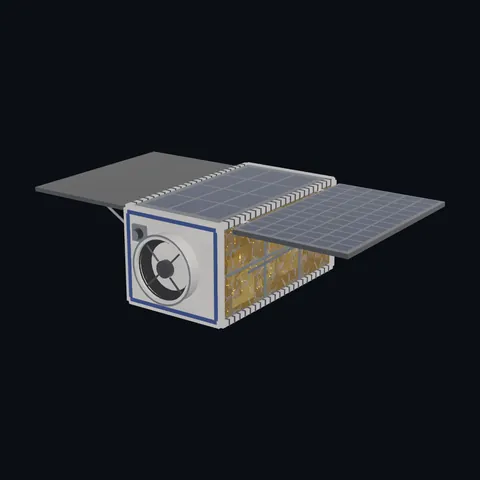
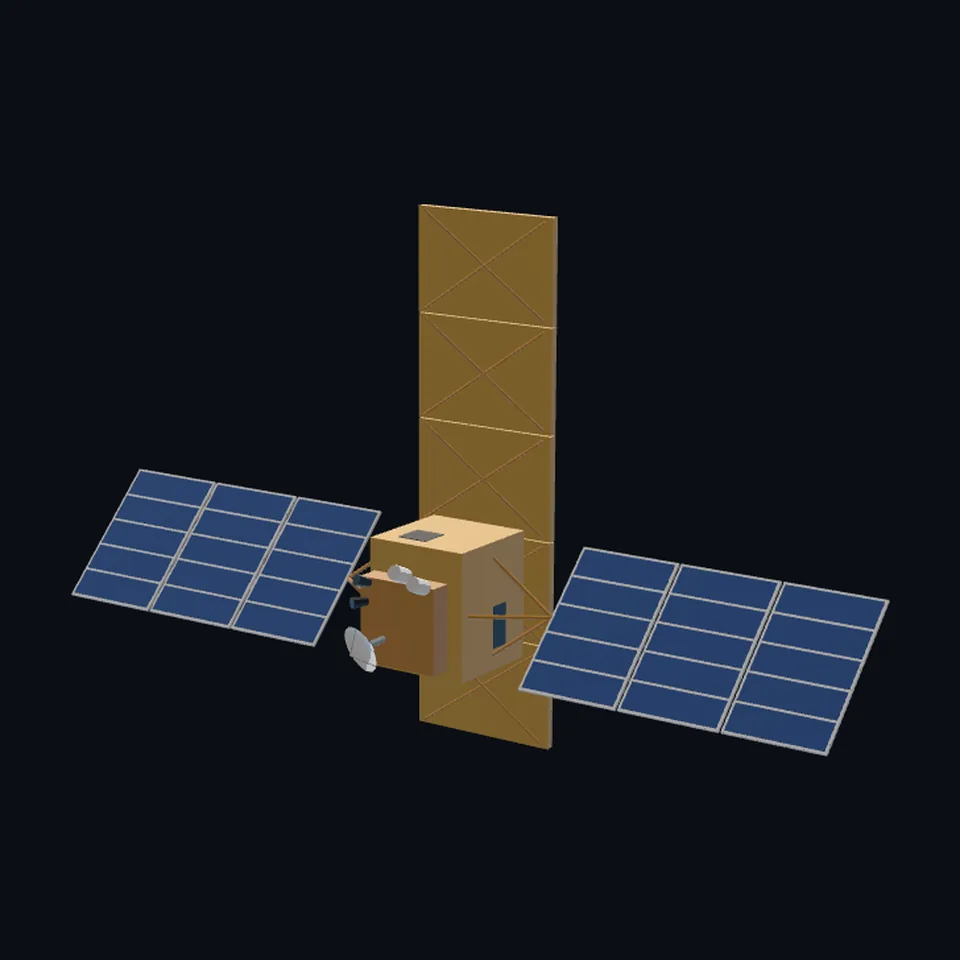 From behind
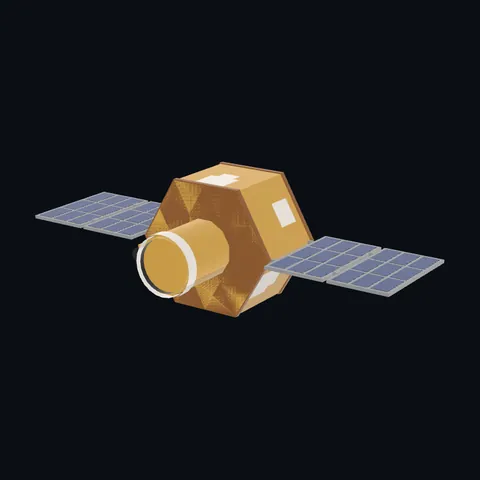
 From above
About this model
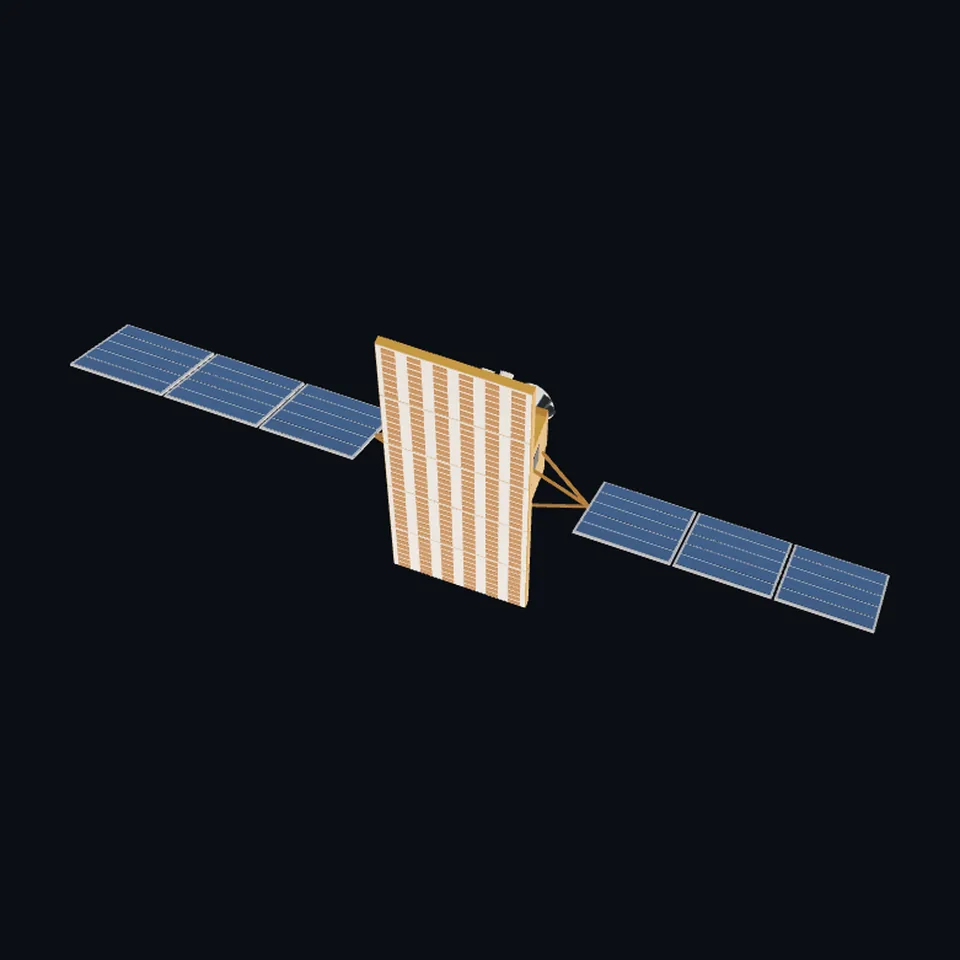
ALOS-2 is one of the 203 3D models Space Radar made itself: a satellite, built in code from published dimensions and photographs, with no image-to-3D generator and no one else’s mesh.
Shape built from published dimensions and pictures; details simplified. It has 9,632 triangles in a 74 kB glTF file, and is 17 m across at full scale.
On Space Radar’s live map it is drawn for the object with NORAD catalogue number 39766, where its published orbit puts it now. Open it on the map.
Dimensions and their sources
| Measure | Value |
|---|---|
| Span | 16.5 m |
| Height | 3.7 m |
| Antenna long | 9.9 m |
| Antenna wide | 2.9 m |
| Antenna panels | 5 |
| Paddles | 2 |
eoPortal, eoportal.org/satellite-missions/alos-2, OPENED 2026-10-14: 'Spacecraft mass 2120 kg'; 'Spacecraft size (deployed) 9.9 m (x) x 16.5 m (y) x 3.7 m (z)'; 'Spacecraft power generation 5.2 kW (EOL)'; 'It has a size of 9.9 m (azimuth) x 2.9 m (elevation) and is composed of 5 electrical panels. The antenna consists of 1,080 radiation elements which are driven by 180 TRMs'; 'Antenna width, length 2.9 m, 9.9 m'; 'Look direction Right or left'; 'Agile spacecraft: ALOS-2 has a body pointing function of ±30º in the roll axis.'; 'the requirement for attitude manoeuvring is up to 2 minutes from the Earth pointing attitude to right- or left-looking'; 'the required spacecraft maneuver for this observation change can be accomplished in about 2 minutes from the nominal nadir look direction'; 'Why does ALOS-2 have two solar array paddles, but ALOS only had one?'; 'ALOS-2's radar pointed towards the nadir direction (directly towards Earth), so a second paddle would not obstruct its view.'; 'Sun Acquisition Mode then began in which the solar array paddles extended and the satellite orientated itself such that the paddles faced the sun.'; 'LSDN (Local Sun time on Descending Node) = 12:00 hours ± 15 min'; 'The payload downlink is provided in Ka-band at 278 Mbit/s via the DRTS (Data Relay Technology Satellite) of JAXA'. READ: the antenna's 9.9 m is the craft's x (the same number twice), so x is along the track and the paddles' 16.5 m is across it. READ OFF A VISITOR'S PHOTOGRAPH OF JAXA'S 1/50 MODEL (CC0): the gold body on the antenna's back about a third of the way along it, a truss on the antenna's back, two paddles of three panels on gold yokes from the body's sides, a dish and white horns on the body's top. OURS: the bus's size, the paddles' split into panels and their width, the yoke's length, everything on the bus's top, the patches on the face (6 x 8 a panel for 216 elements). THE ROLL IS NOT DRAWN: the page gives ±30 degrees either way from a nominal Earth-pointing attitude, so there is no one angle to draw; the craft is level, the antenna's face to the Earth. (read 2026-10-14)
How it was made
Built in code from published dimensions and photographs, with no image-to-3D generator and no one else’s mesh. 3D model: built by Space Radar from published dimensions and a photograph of JAXA's model of ALOS-2 by Syced (CC0).
The full record
built by this project in code (the private tool model-from-images: assemble.py, from a yaml of primitives), from the cited dimensions and the pictures under `references`; no image-to-3D model was used, and no published mesh (NASA's 3D Resources has none of this craft; the survey of 2026-10-13 found no agency model of it under usable terms); JAXA's own pictures and models were NOT used: the one picture the layout was read off is a visitor's own photograph of JAXA's 1/50 model, given to the public domain
Where the map uses it. NORAD 39766 (ALOS-2, Daichi-2), the one record in the live saved data of 2026-10-12: JAXA's L-band radar satellite, launched in 2014. It was, and while this file is on its way still is, the shared radar blade (scene/models.js `radar`: Sentinel-1's 12.3 m antenna under a bus with two wings), which is not this craft. ALOS (DAICHI) and ALOS-4 are other craft and keep the blade; public #977
Licence note. Public domain (CC0: a visitor's own photograph of JAXA's 1/50 model in the Space Dome at Tsukuba, which the layout was read off; nothing of the picture is in the file); the shape is this project's, under this repository's licence, built from published numbers (facts). NO JAXA PICTURE WAS USED. NO LOGO AND NO LETTERING is on the mesh (the model's stand carries JAXA's name and logo; the file does not).
References 2
What the shape was compared with. None of these pictures is in the file.
- Inside JAXA Space Dome 8Syced (Wikimedia Commons)CC0 (Syced, own work; the Commons API's LicenseShortName, read 2026-10-14)
- ALOS-2-PALSAR-2テレストレラッソ (Wikimedia Commons)CC BY-SA 4.0 (テレストレラッソ, own work; read 2026-10-14): share-alike, LOOKED AT ONLY, never fetched by the tool and not on any sheet


Use it
The model is under the MIT licence: use it, change it and share it, in any project, also a paid one. Keep the credit:
ALOS-2 3D model by Space Radar (spaceradar.ai), MIT LicenseAny glTF 2.0 loader that reads meshopt compression (EXT_meshopt_compression) opens the file: three.js with its MeshoptDecoder, Babylon.js, model-viewer. Tools such as glTF-Transform can write an uncompressed copy.
Or embed the viewer in your page:
<iframe src="https://www.spaceradar.ai/model/?id=alos-2" title="ALOS-2, 3D model by Space Radar" width="600" height="450" loading="lazy" style="border:0;max-width:100%"></iframe>Related models