Swarm
Shape built from published dimensions and pictures; details simplified.
Turn it in 3D
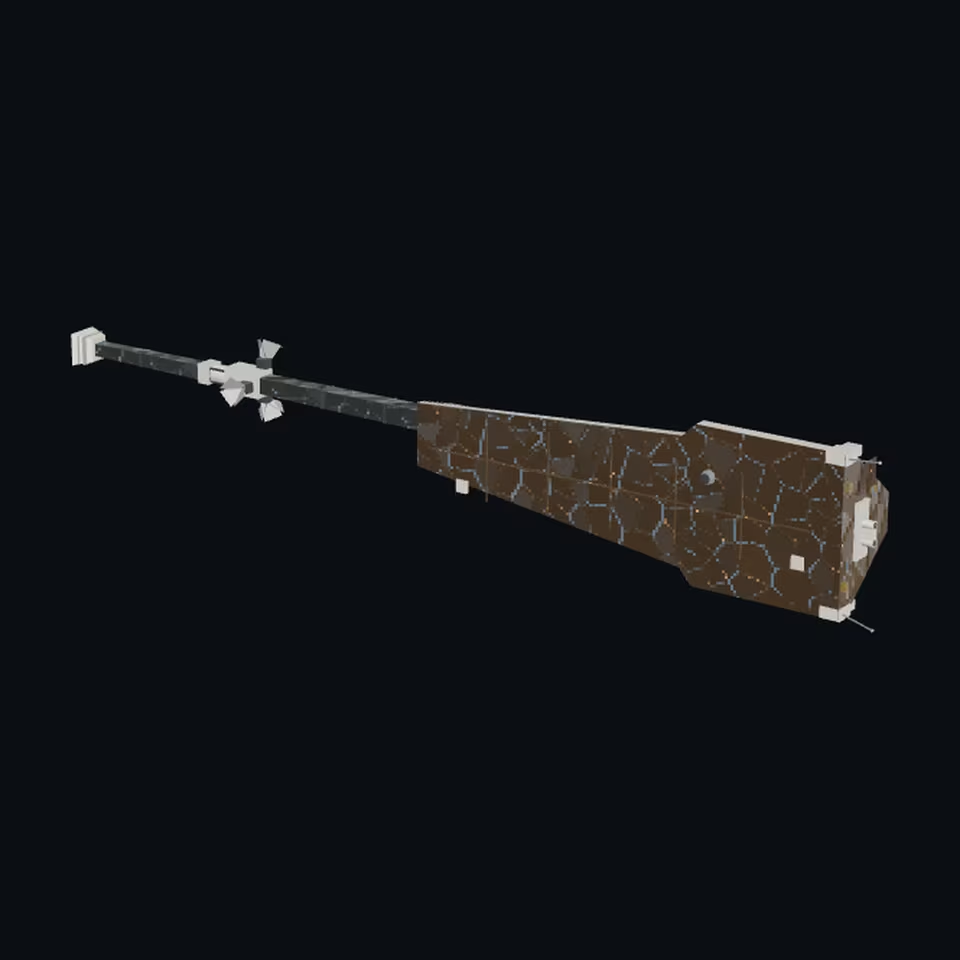
Open the 3D viewer (www.spaceradar.ai).
The viewer loads when you ask: about 700 kB the first time (three.js and the model), much less after.
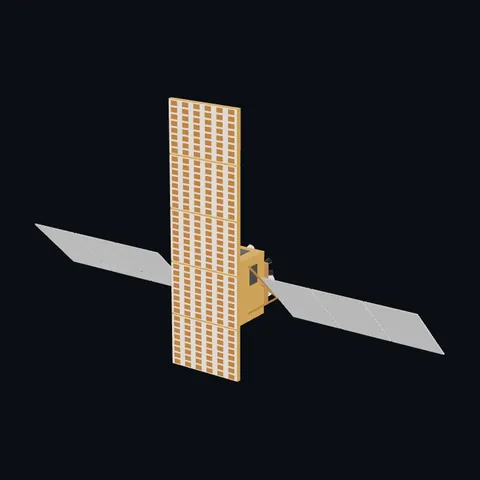
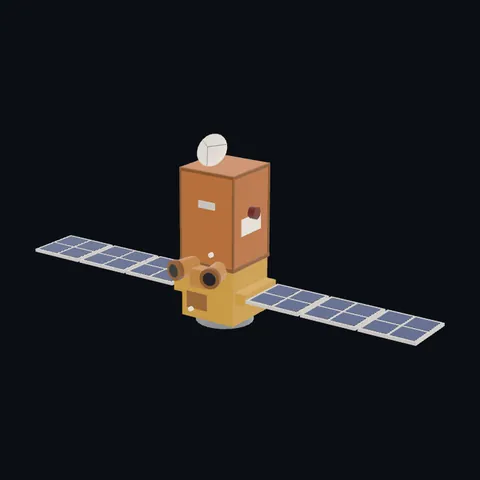
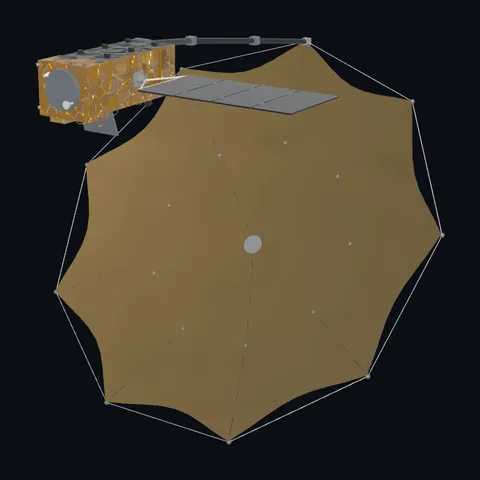
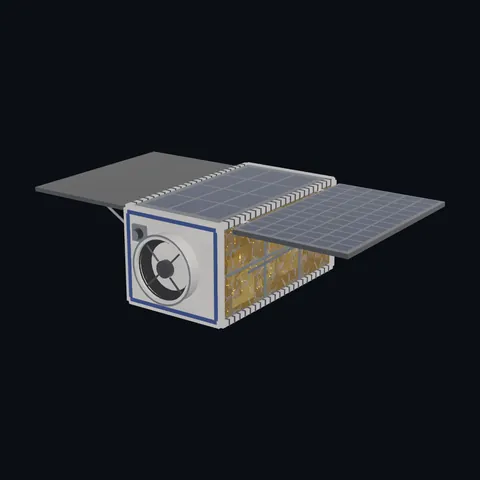
Pictures 4
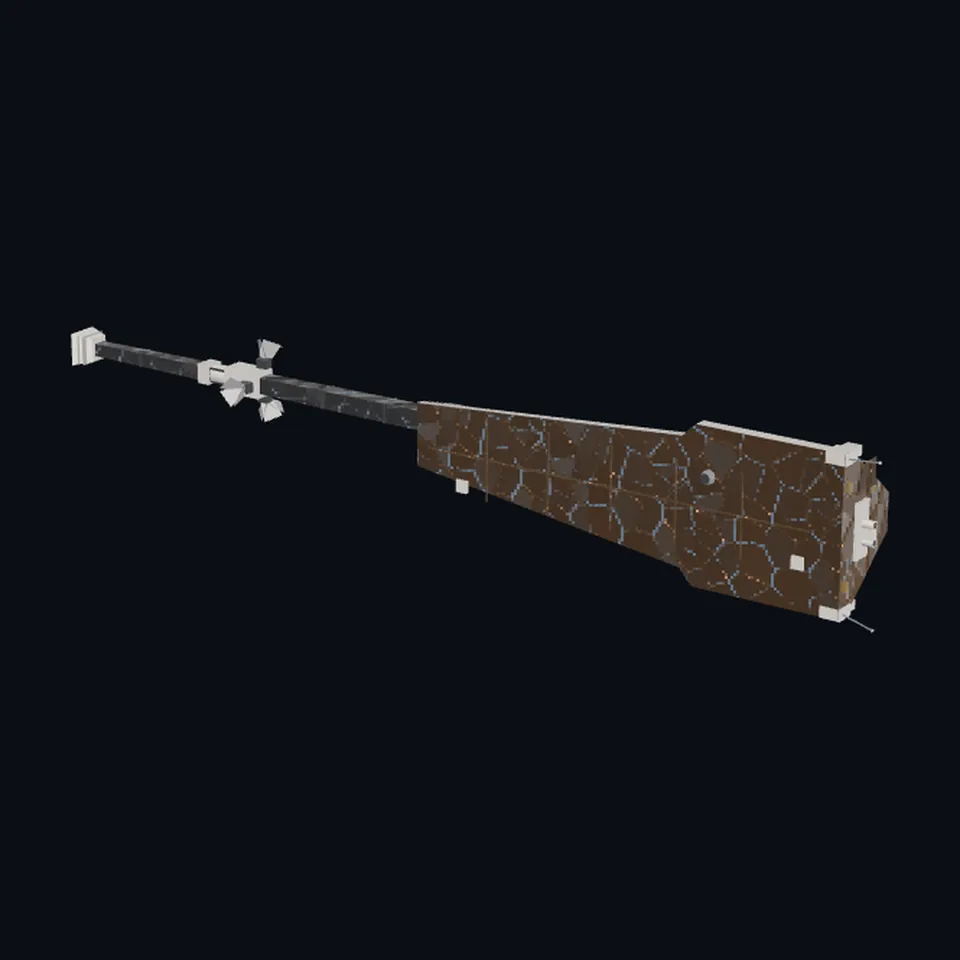 Three-quarter view
 From the side
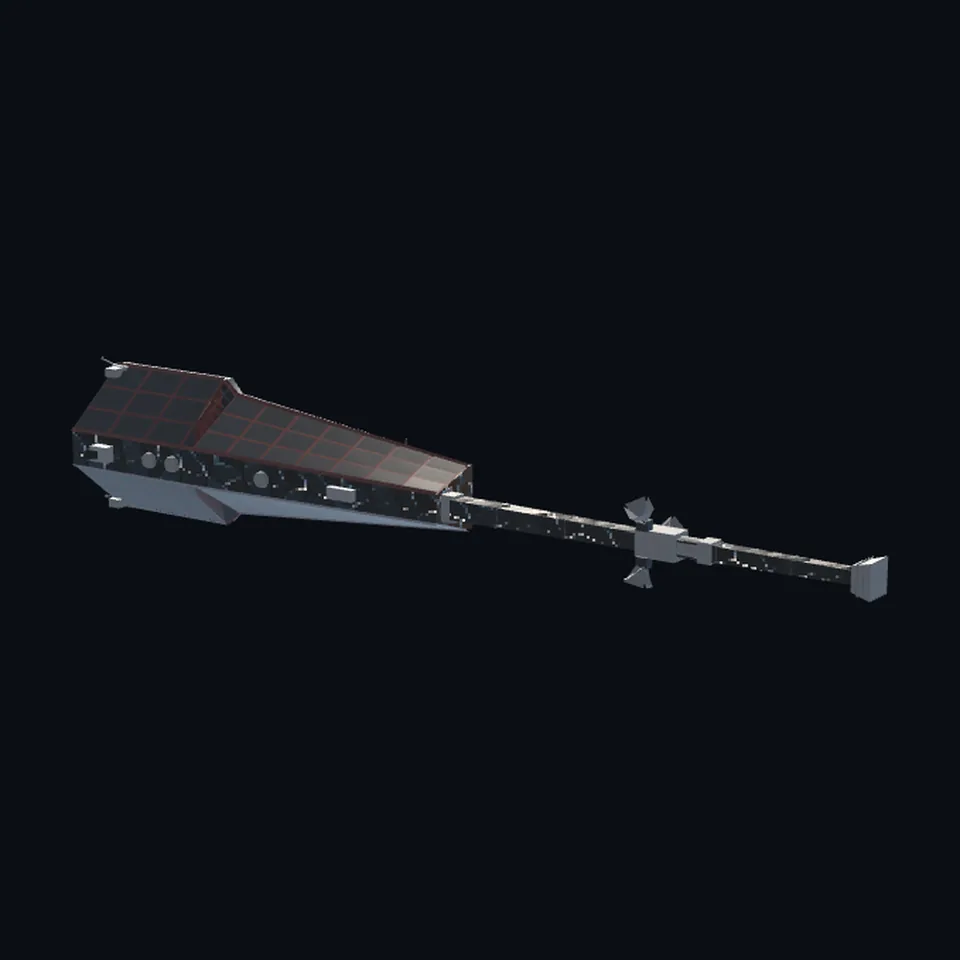 From behind
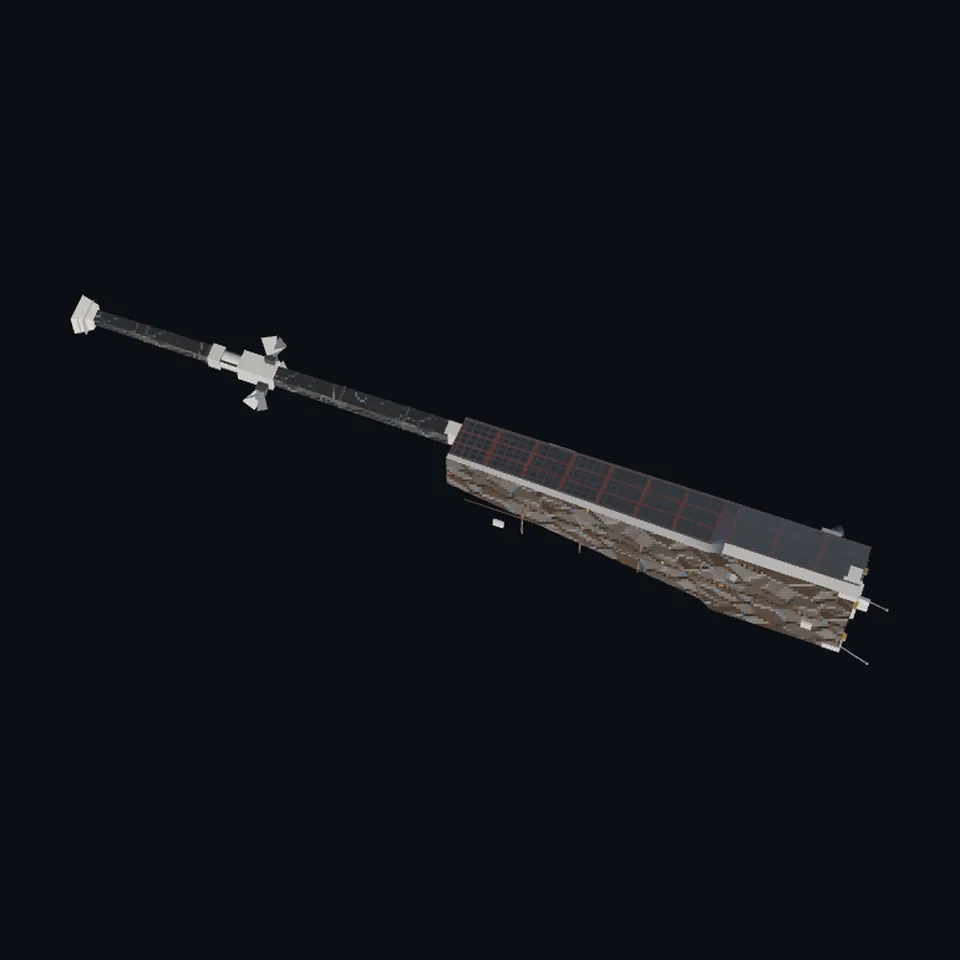 From above
About this model
Swarm is one of the 203 3D models Space Radar made itself: a satellite, built in code from published dimensions and photographs, with no image-to-3D generator and no one else’s mesh.
Shape built from published dimensions and pictures; details simplified. It has 1,770 triangles in a 32 kB glTF file, and is 9.1 m across at full scale.
On Space Radar’s live map it is drawn for 3 catalogued objects, each where its published orbit puts it now. Open it on the map.
Dimensions and their sources
| Measure | Value |
|---|---|
| Length | 9.1 m |
| Width | 1.5 m |
| Height | 0.85 m |
| Boom | 4.3 m |
eoPortal, Swarm, eoportal.org/satellite-missions/swarm, OPENED 2026-10-20: 'Length: 9.1 m; width: 1.5 m (S/C body); height: 0.85 m; ram surface: ~0.7 m2'; 'a 4.3m long CFRP tube' (its table says 5.1 m for the boom: we built 4.3 m, the deployable section's own figure); 'The scalar magnetometer and optical bench are fixed to a deployable large beam of square cross section'; the 'ultra-stable connection between VFM (Vector Field Magnetometer) and STR (Star Tracker) assembly on the optical bench'; 'The two body-mounted solar arrays'. Wikipedia, Swarm (spacecraft), OPENED 2026-10-14 by the issue: '9.1 m x 1.5 m x 0.85 m'. OURS: the body 4.6 m of the 9.15 m drawn, its taper (1.5 m wide at the ram face to 0.62 m at the back), the step in the arrays' lower edge, the ridge, the bench 55 percent along the boom, every instrument's size (read 2026-10-20)
How it was made
Built in code from published dimensions and photographs, with no image-to-3D generator and no one else’s mesh. 3D model: built by Space Radar from eoPortal's published dimensions.
The full record
built by this project in code (release 1.3.0 stage W3-b's part library, lib.py and parts.py, and one script a craft, kept with the stage's notes in ~/space-radar-handoff/release-1.3/W3-b/build), from the cited dimensions, the layout read off the pictures under `references`, which are not in the file and were not traced; no image-to-3D model was used, and no published mesh: NASA's 3D Resources and NASA Science have none of these craft; ESA publishes no model of them under terms that allow a derivative (its multimedia terms, the ESA Standard Licence, allow use for information and education, not an altered model); EUMETSAT publishes none (read 2026-10-20)
Where the map uses it. NORAD 39451, 39452 and 39453, Swarm B, A and C, ESA's three magnetic-field satellites (one design, launched together in November 2013): a long tent of solar cells on a flat floor, narrowing to the back, with a 4.3 m boom trailing the magnetometers. It was the class shape of a satellite; public #1101
Licence note. No ESA picture or model is in the file, and none was found under a free licence: ESA's photographs and pictures of Swarm are under the ESA Standard Licence and were looked at only (named under `references`); the issue asked the same ('ESA's pictures only. Numbers.'). The shape is this project's, under this repository's licence, built from published numbers (facts).
References 3
What the shape was compared with. None of these pictures is in the file.
- Swarm constellation in IABG cleanroomESAESA Standard Licence; looked at only
- Swarm with boom openESAESA Standard Licence; looked at only
- Front of Swarm satelliteESAESA Standard Licence; looked at only
Use it
The model is under the MIT licence: use it, change it and share it, in any project, also a paid one. Keep the credit:
Swarm 3D model by Space Radar (spaceradar.ai), MIT LicenseAny glTF 2.0 loader that reads meshopt compression (EXT_meshopt_compression) opens the file: three.js with its MeshoptDecoder, Babylon.js, model-viewer. Tools such as glTF-Transform can write an uncompressed copy.
Or embed the viewer in your page:
<iframe src="https://www.spaceradar.ai/model/?id=swarm" title="Swarm, 3D model by Space Radar" width="600" height="450" loading="lazy" style="border:0;max-width:100%"></iframe>Related models