SPOT 6 and 7
Shape built from published dimensions and pictures; details simplified.
Turn it in 3D
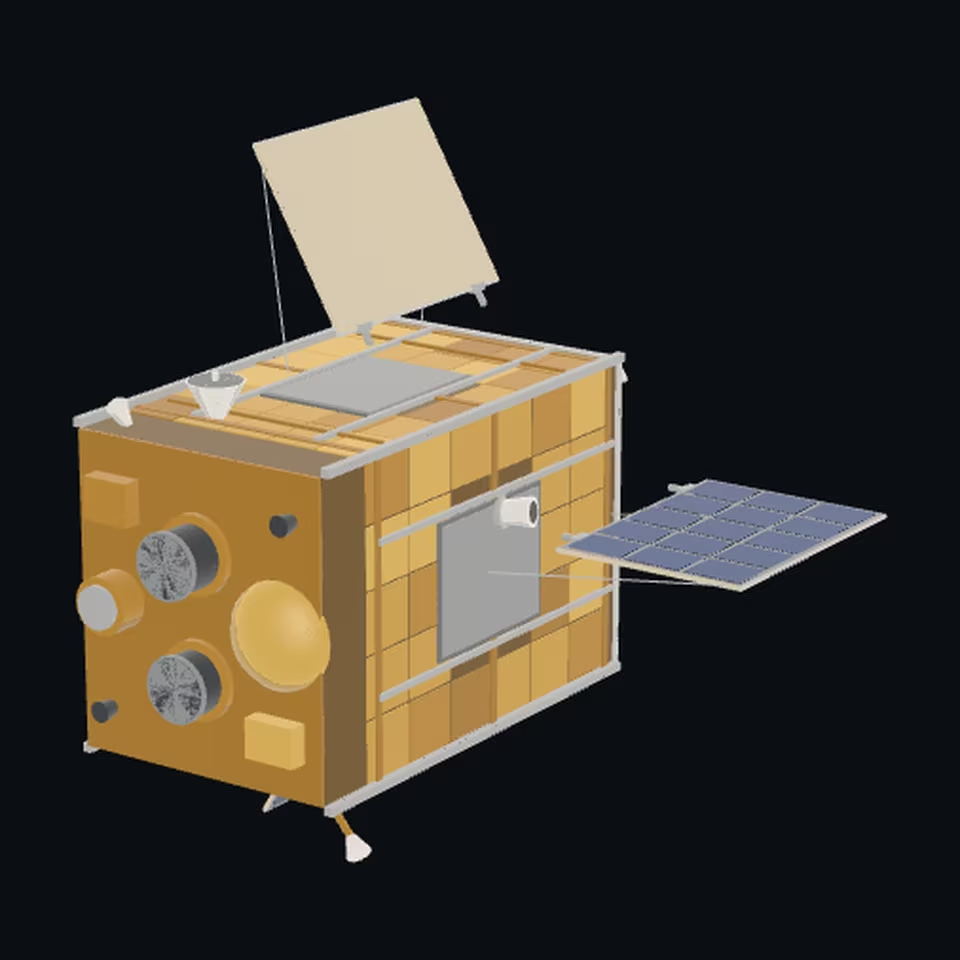
Open the 3D viewer (www.spaceradar.ai).
The viewer loads when you ask: about 700 kB the first time (three.js and the model), much less after.
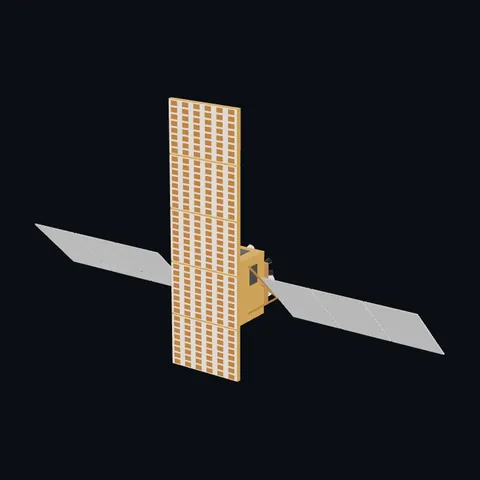
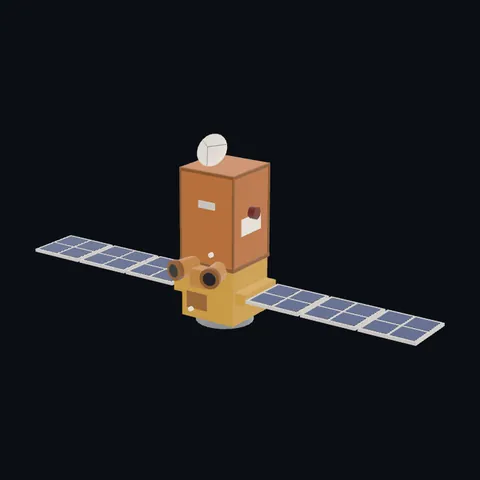
Pictures 4
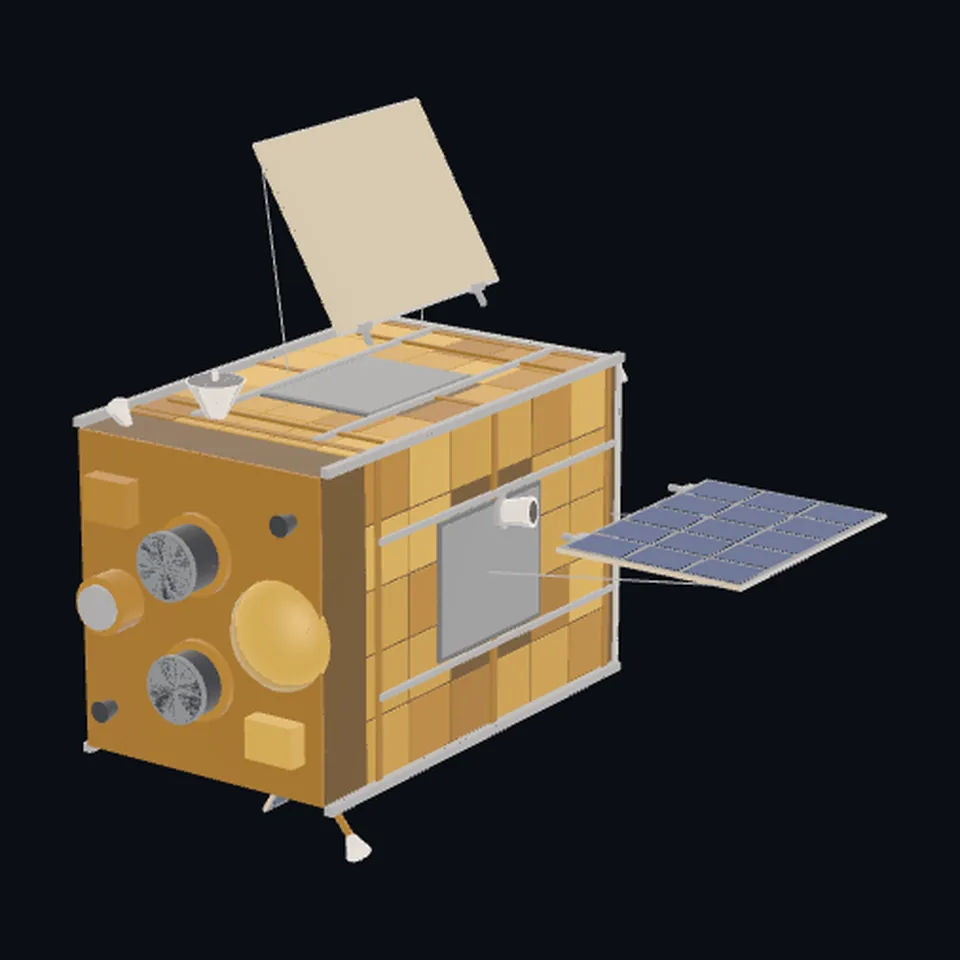 Three-quarter view
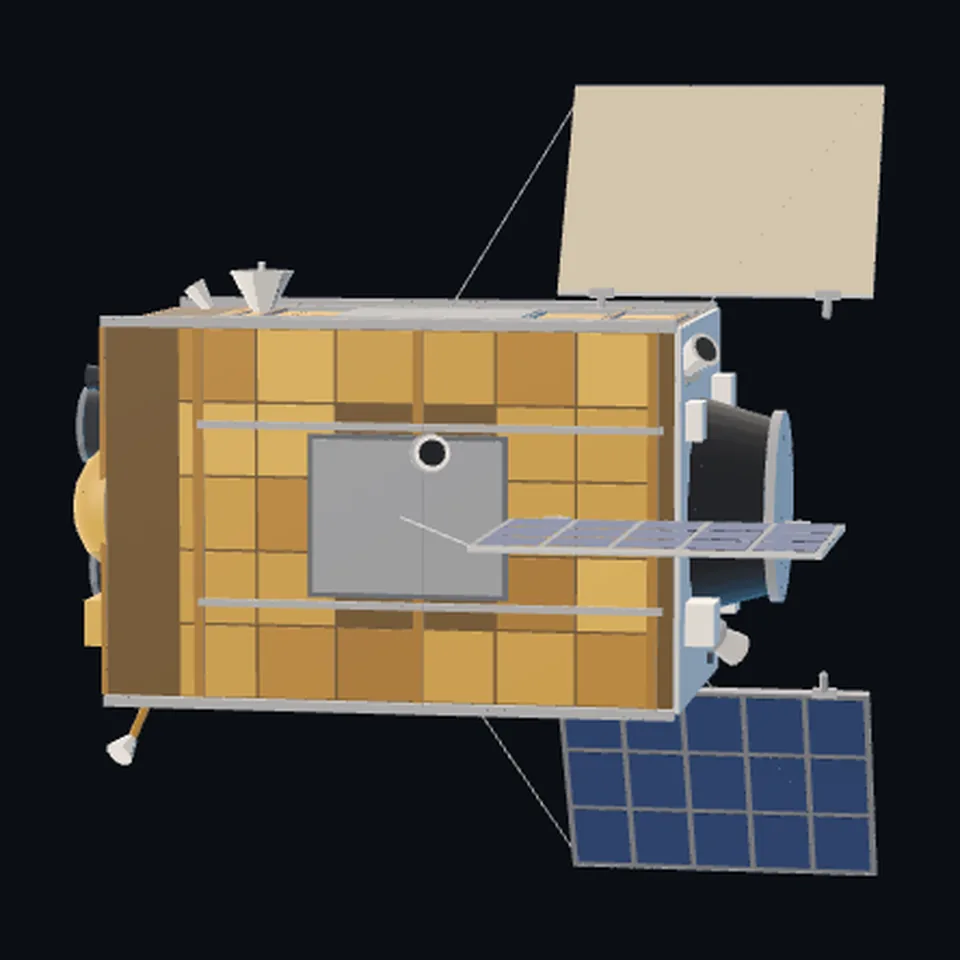 From the side
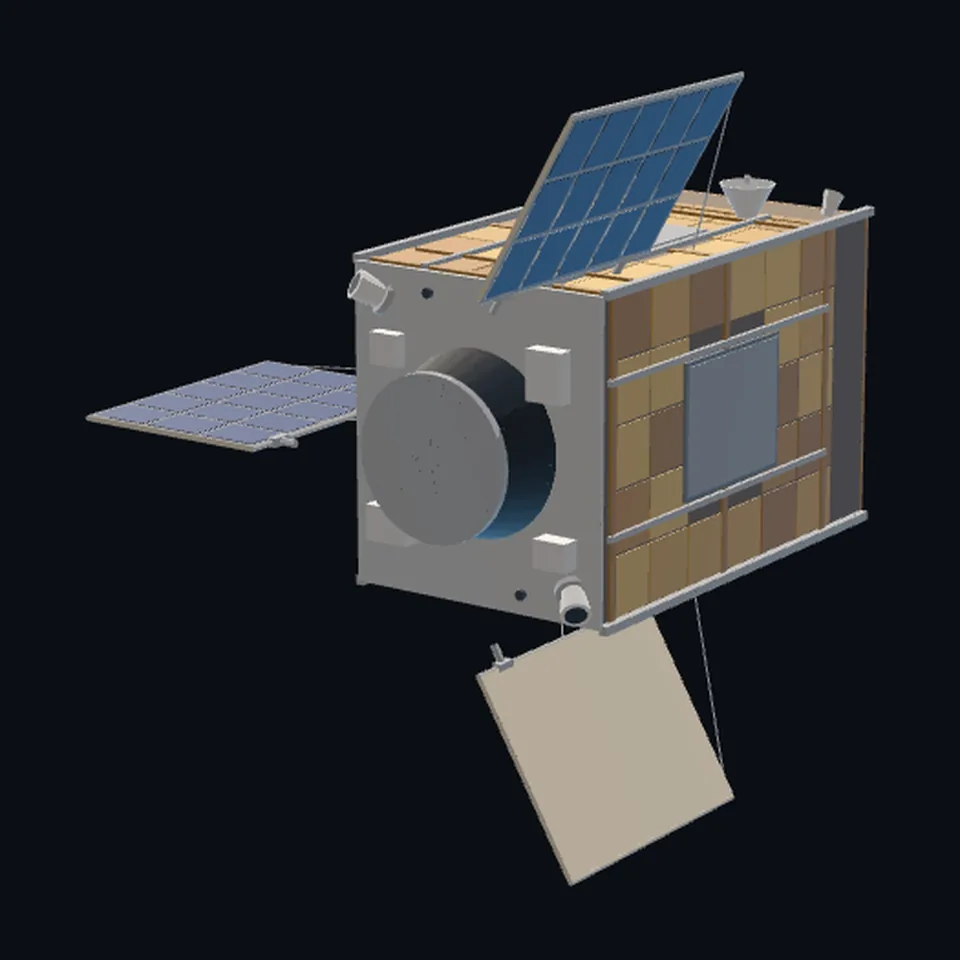 From behind
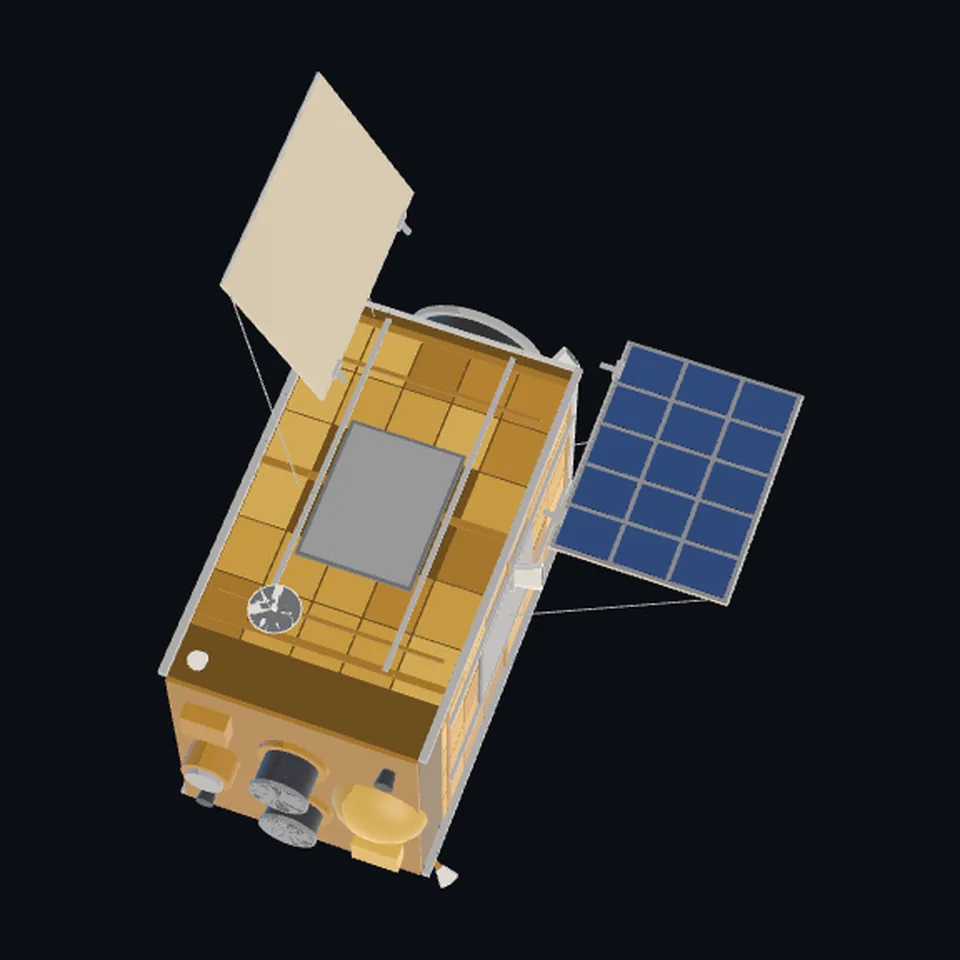 From above
About this model
SPOT 6 and 7 is one of the 203 3D models Space Radar made itself: a satellite, built in code from published dimensions and photographs, with no image-to-3D generator and no one else’s mesh.
Shape built from published dimensions and pictures; details simplified. It has 14,124 triangles in a 104 kB glTF file, and is 2.7 m across at full scale.
On Space Radar’s live map it is drawn for the object with NORAD catalogue number 38755, where its published orbit puts it now. Open it on the map.
Dimensions and their sources
| Measure | Value |
|---|---|
| Body x | 1.55 m |
| Body y | 1.75 m |
| Body z | 2.7 m |
| Mass | 712 kg |
| Solar area | 5.4 m² |
| Panels | 3 |
| Panel | 1.15 × 1.55 m |
| Naomi aperture | 0.2 m |
| Naomi telescopes | 2 |
eoPortal, 'SPOT-6 and SPOT-7 (Azersky)', eoportal.org/satellite-missions/spot-6-7, OPENED 2026-11-03, Table 1: 'Body: ~ 1.55 m x 1.75 m x 2.7 m' and 'Solar array wingspan area: 5.4 m2' (the same table's other column, 'Body: 3.1 m x 3.1 m x 5.7 m', 'Solar array wingspan area: 8 m2', is SPOT-5's and was not used); NAOMI 'two identical Korsch telescopes in silicon carbide that each deliver an aperture of 200mm'; 'A single Isoflux antenna provides the necessary ground coverage' (X-band); 'A standard S-band TT&C system with full spherical coverage in uplink and downlink'; the HYDRA multi-head star tracker (figure 4); 'GaAs triple junction solar cell based arrays'. ESA Earth Online 'SPOT 6', earth.esa.int/eogateway/missions/spot-6/description, OPENED 2026-11-03: '1.55 m x 1.75 m x 2.7 m' and 712 kg. Gunter's Space Page, space.skyrocket.de/doc_sdat/spot-6.htm, OPENED 2026-11-03: 'Configuration: AstroSat-500 Mk.2 (AstroBus-L)', 'Power: 3 deployable solar arrays, batteries', 'Mass: 712 kg'. PAGES DISAGREE: eoPortal's Table 1 says 714 kg (and its text 'a launch mass of ~ 800 kg'), ESA and Gunter say 712 kg; eoPortal calls the bus 'AstroBus-L (also known as AstroSat-250 or AS250)', Gunter 'AstroSat-500 Mk.2 (AstroBus-L)'. The body metres are the same on both pages and are what was built; the mass is not in the mesh. DERIVED: three panels of 5.4 m2 in all are 1.8 m2 each, drawn 1.15 m by 1.55 m (1.78 m2 each, 5.35 m2). NOT CITED, read off the pictures: how the panels stand (round the body's long axis, hinged 0.12 m off the faces, 0.9 m of each beyond the body's top face), the baffles' 0.34 m diameter, 0.62 m spacing and 0.3 m height, the Isoflux dish's size and place, the radiator plates, the rails, the adapter cone's size, the star-tracker heads' places and every colour. (read 2026-11-03)
How it was made
Built in code from published dimensions and photographs, with no image-to-3D generator and no one else’s mesh. 3D model: built by Space Radar from the dimensions published by eoPortal and ESA Earth Online and from pictures of SPOT 6 and 7 (EADS Astrium, ISRO, Airbus Defence and Space), looked at only.
The full record
built by this project in code (the private tool model-from-images: assemble.py, from a yaml of primitives, object `imaging-spot67`), from the cited numbers and the pictures under `references`; no image-to-3D model was used, and no published mesh of the craft (Airbus and ESA publish none; the pictures on eoPortal and Gunter's Space Page carry no free licence, so they were looked at only)
Where the map uses it. NORAD 38755 (SPOT 6, launched 9 September 2012) and 40053 (SPOT 7, renamed Azersky, launched 30 June 2014, ceased operations 17 March 2023): the twin Airbus (then EADS Astrium) 1.5 m imaging satellites. One file for both: the two are the same design. It had no route of its own and was drawn as the generic satellite; public #974
Licence note. None of the pictures is in the file and none was fetched into it. LOOKED AT ONLY: eoPortal's figures 1, 7, 8 and 9 (credits EADS Astrium, ISRO and Airbus Defence and Space, no licence stated) and the Astrium illustration on Gunter's Space Page (no licence stated), all read as the shape is drawn. The shape is this project's, under this repository's licence, built from published numbers (facts). NO LOGO AND NO LETTERING is on the mesh.
References 4
What the shape was compared with. None of these pictures is in the file.
- eoPortal, 'SPOT-6 and SPOT-7 (Azersky)', figure 7 'Illustration of the deployed SPOT-6 spacecraft'EADS Astriumno licence stated (credit EADS Astrium; read 2026-11-03): LOOKED AT ONLY, not reproduced
- eoPortal, 'SPOT-6 and SPOT-7 (Azersky)', figures 1, 8 and 9EADS Astrium; ISRO; Airbus Defence and Spaceno licence stated (credits EADS Astrium, ISRO, Airbus Defence and Space; read 2026-11-03): LOOKED AT ONLY, not reproduced
- Gunter's Space Page, 'SPOT 6, 7 / Azersky' (illustration 'SPOT 6 [Astrium]')Astriumno licence stated (credit Astrium; read 2026-11-03): LOOKED AT ONLY, not reproduced
- Wikipedia, 'SPOT (satellite)', section SPOT 6 and SPOT 7Wikipedia contributorsCC BY-SA 4.0 (text; read 2026-11-03): cited for a fact, nothing copied
Use it
The model is under the MIT licence: use it, change it and share it, in any project, also a paid one. Keep the credit:
SPOT 6 and 7 3D model by Space Radar (spaceradar.ai), MIT LicenseAny glTF 2.0 loader that reads meshopt compression (EXT_meshopt_compression) opens the file: three.js with its MeshoptDecoder, Babylon.js, model-viewer. Tools such as glTF-Transform can write an uncompressed copy.
Or embed the viewer in your page:
<iframe src="https://www.spaceradar.ai/model/?id=spot-6-7" title="SPOT 6 and 7, 3D model by Space Radar" width="600" height="450" loading="lazy" style="border:0;max-width:100%"></iframe>Related models