Resurs-DK1
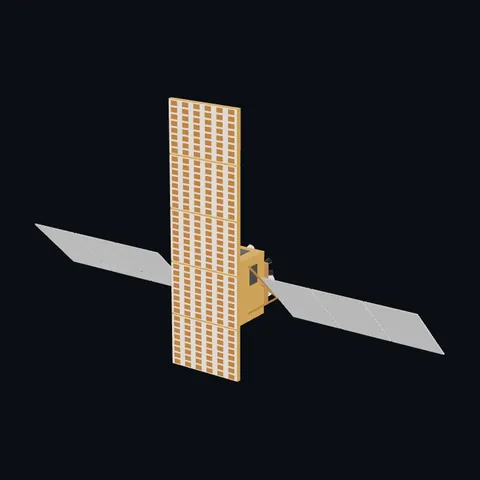
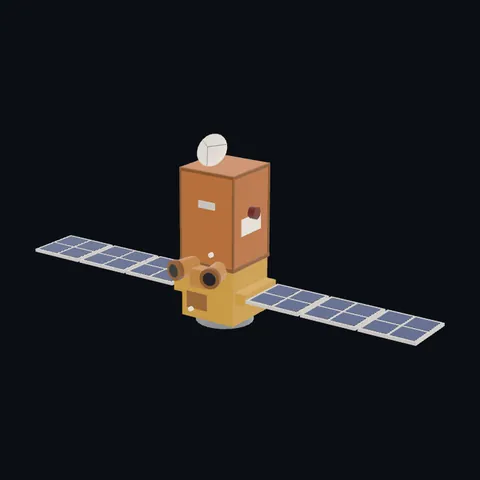
Shape built from published dimensions and pictures; details simplified.
Turn it in 3D
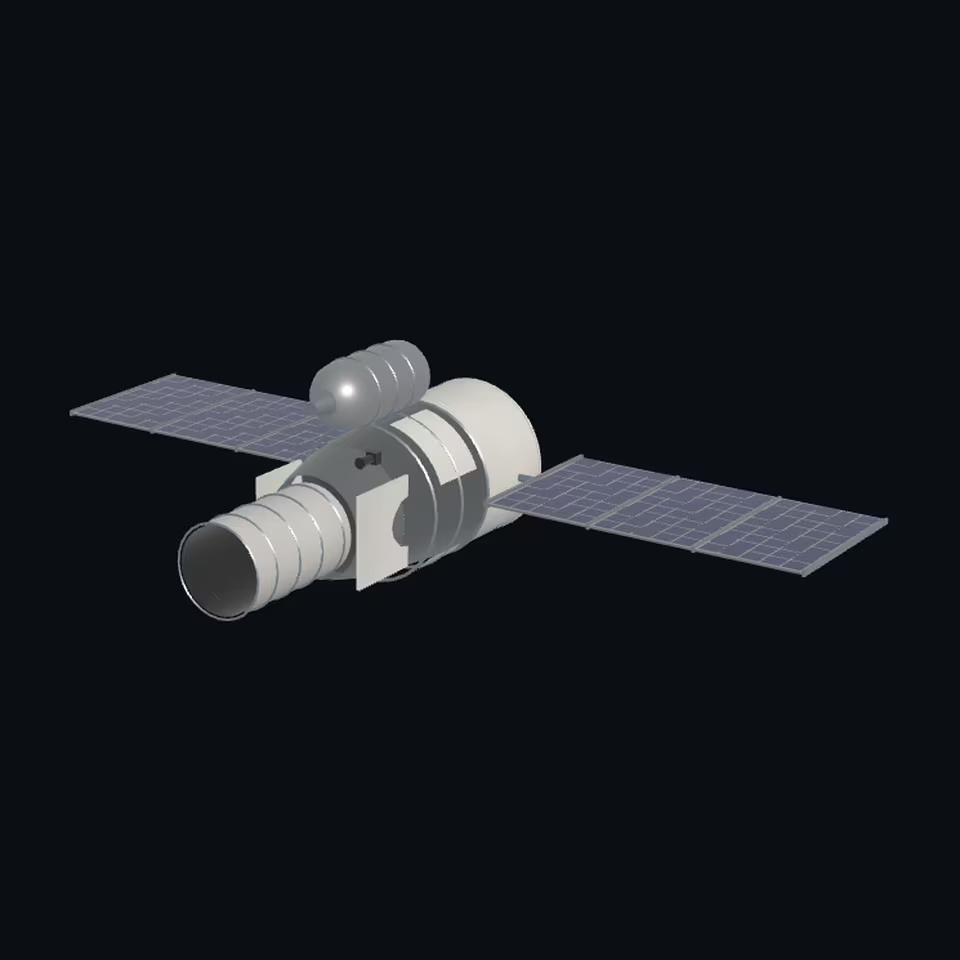
Open the 3D viewer (www.spaceradar.ai).
The viewer loads when you ask: about 700 kB the first time (three.js and the model), much less after.
Pictures 4
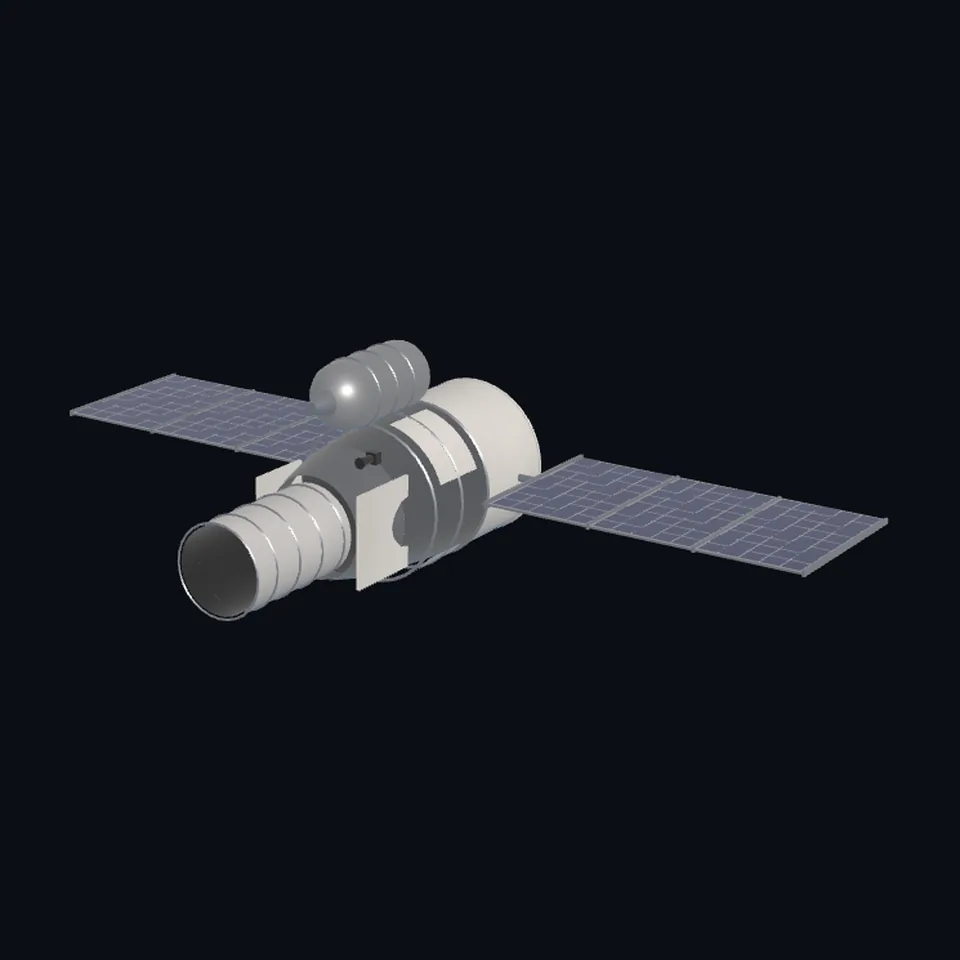 Three-quarter view
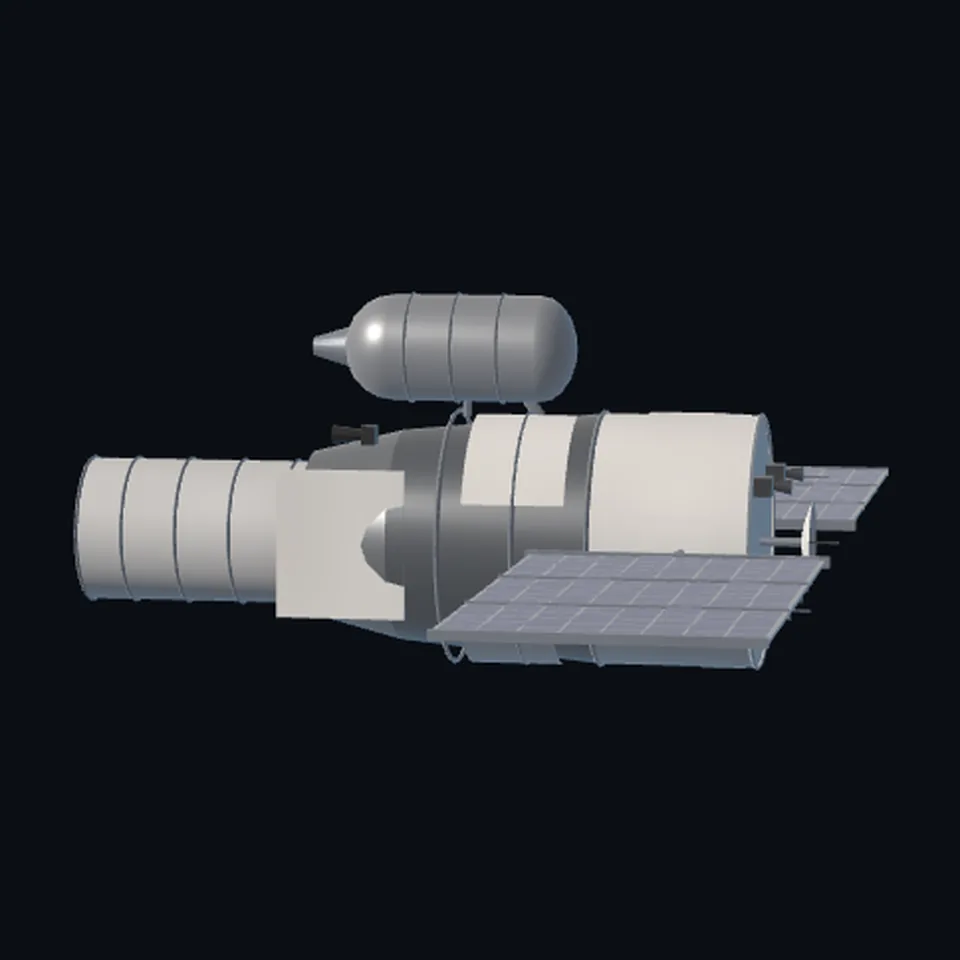 From the side
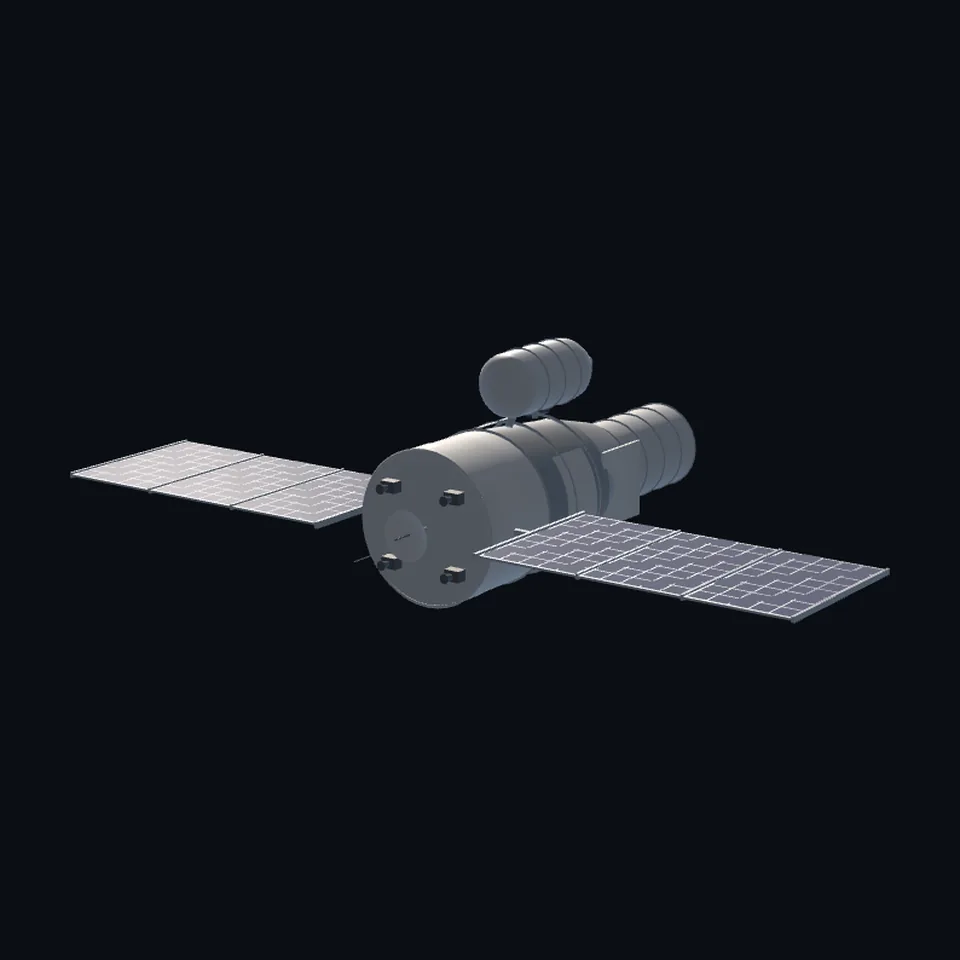 From behind
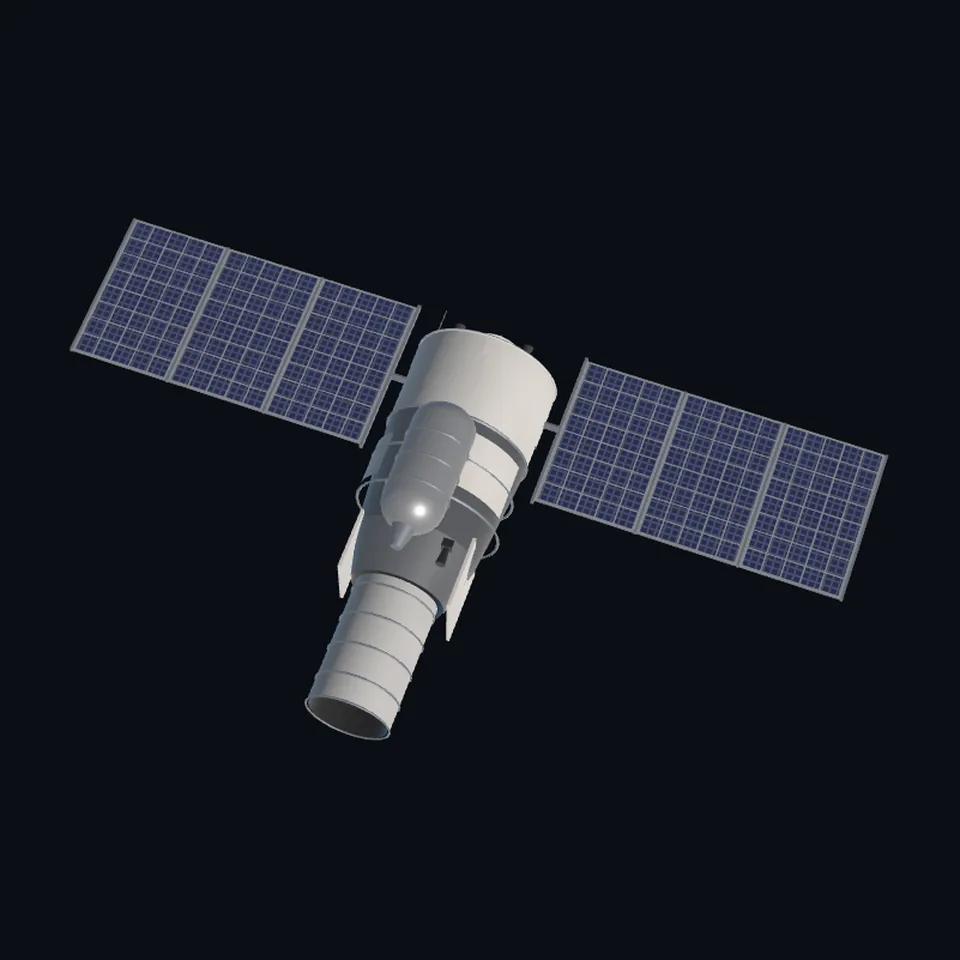 From above
About this model
Resurs-DK1 is one of the 203 3D models Space Radar made itself: a satellite, built in code from published dimensions and photographs, with no image-to-3D generator and no one else’s mesh.
Shape built from published dimensions and pictures; details simplified. It has 7,014 triangles in a 56 kB glTF file, and is 14 m across at full scale.
On Space Radar’s live map it is drawn for the object with NORAD catalogue number 29228, where its published orbit puts it now. Open it on the map.
Dimensions and their sources
| Measure | Value |
|---|---|
| Height | 7.4 m |
| Diameter | 2.72 m |
| Span | 14 m |
| Array | 36 m² |
eoPortal, Resurs-DK1, eoportal.org/satellite-missions/resurs-dk1, OPENED 2026-10-27: 'its height is 7.4 m', 'launch mass of about 6570 kg', 'two photovoltaic solar arrays mounted on the compartment's outer surface', 'the solar array span is about 14 m (total solar array size = 36 m2)', Geoton's 'aperture diameter of 50 cm' and 'focal length of 400 cm', PAMELA '123 cm x 70 cm x 70 cm'; Wikipedia, Resurs-DK No.1 (read 2026-10-27): '7.93 x 2.72 m' (we built the 7.4 m and the 2.72 m). OURS: the tube's diameter (1.56 m, the 0.5 m aperture with its baffle), the compartments' split, the radiators' places, PAMELA's container (1.2 m across, upright on an arm), the wings' panels (1.9 by 3.1 m, three a side: 36 m2) (read 2026-10-27)
How it was made
Built in code from published dimensions and photographs, with no image-to-3D generator and no one else’s mesh. 3D model: built by Space Radar from eoPortal's published dimensions; compared with pictures by Vlsergey (CC BY-SA 3.0) and a line drawing (CC BY-SA 2.5).
The full record
built by this project in code (release 1.4.0 stage r14-m4: one script a craft on release 1.3.0 W3-b's part library, lib.py and parts.py, kept with the stage's notes in ~/space-radar-handoff/release-1.4/r14-m4/build), from the cited dimensions and the pictures under `references`; no image-to-3D model was used, and no published mesh: a search for one on 2026-10-27 found none, NASA's 3D Resources has none of these craft, and TsSKB-Progress and Roscosmos publish no model of the craft that was found (read 2026-10-27)
Where the map uses it. NORAD 29228 (RESURS-DK 1) in the live saved data of 2026-10-12: Russia's high-resolution imaging satellite (TsSKB-Progress, 2006): a 2.7 m cylinder with the Geoton-L1 camera's long tube below it, PAMELA's domed container on its side and two wings of three panels. It wore a generic satellite; public #1113.
Licence note. No TsSKB-Progress picture or model is in the file. Compared with, with credit: a model of the craft at MAKS-2009 by Vlsergey (CC BY-SA 3.0) and a line drawing (CC BY-SA 2.5), on Wikimedia Commons; nothing of them is in the file. The shape is this project's, under this repository's licence, built from published numbers (facts).
References 2
What the shape was compared with. None of these pictures is in the file.
- Resurs DK-1 Model at MAKS-2009.jpgVlsergey, CC BY-SA 3.0CC BY-SA 3.0 (Commons' LicenseShortName, read 2026-10-27)
- Resurs-DK.gifCC BY-SA 2.5CC BY-SA 2.5 (Commons' LicenseShortName, read 2026-10-27)


Use it
The model is under the MIT licence: use it, change it and share it, in any project, also a paid one. Keep the credit:
Resurs-DK1 3D model by Space Radar (spaceradar.ai), MIT LicenseAny glTF 2.0 loader that reads meshopt compression (EXT_meshopt_compression) opens the file: three.js with its MeshoptDecoder, Babylon.js, model-viewer. Tools such as glTF-Transform can write an uncompressed copy.
Or embed the viewer in your page:
<iframe src="https://www.spaceradar.ai/model/?id=resurs-dk1" title="Resurs-DK1, 3D model by Space Radar" width="600" height="450" loading="lazy" style="border:0;max-width:100%"></iframe>Related models