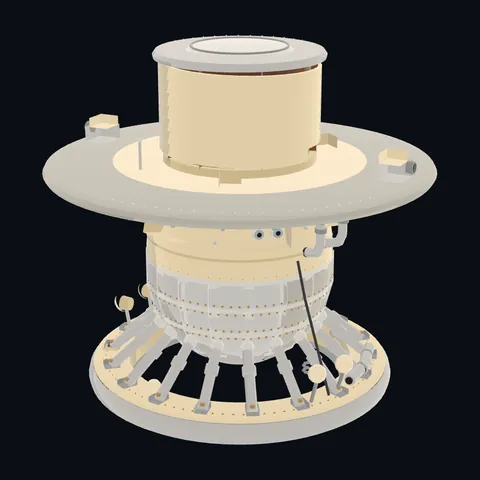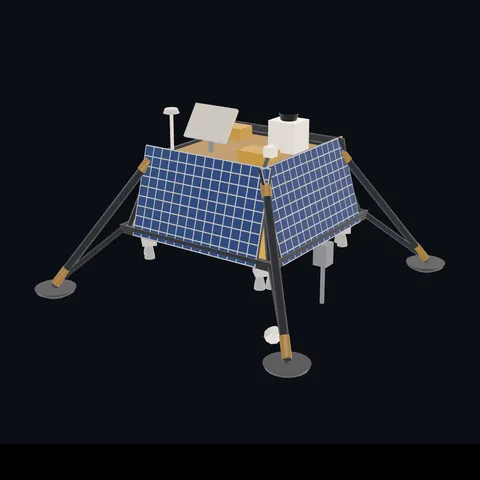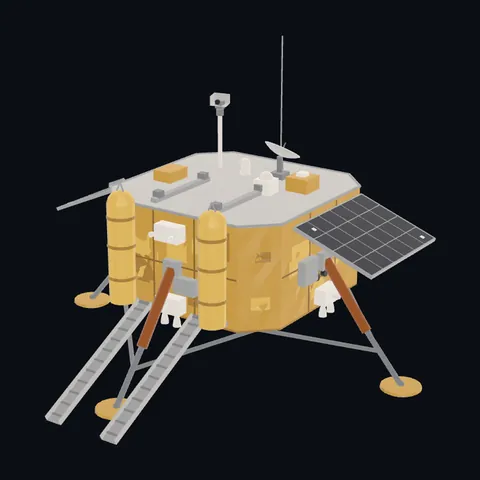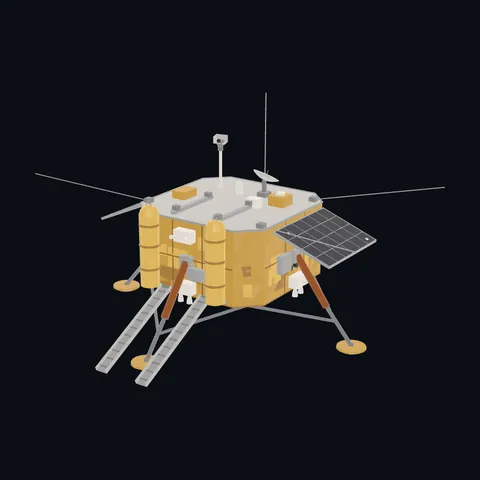
Odysseus (Nova-C)
Shape built from published dimensions and pictures; details simplified.
Turn it in 3D
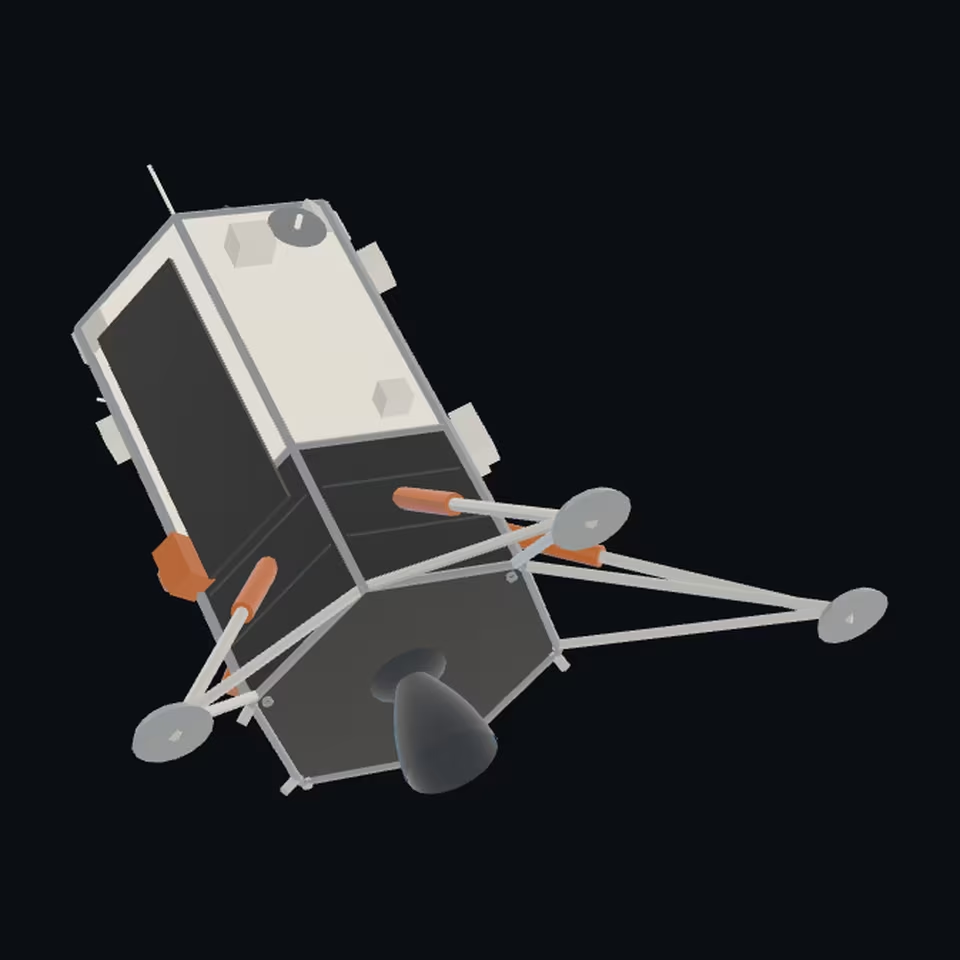
Open the 3D viewer (www.spaceradar.ai).
The viewer loads when you ask: about 700 kB the first time (three.js and the model), much less after.
Pictures 4
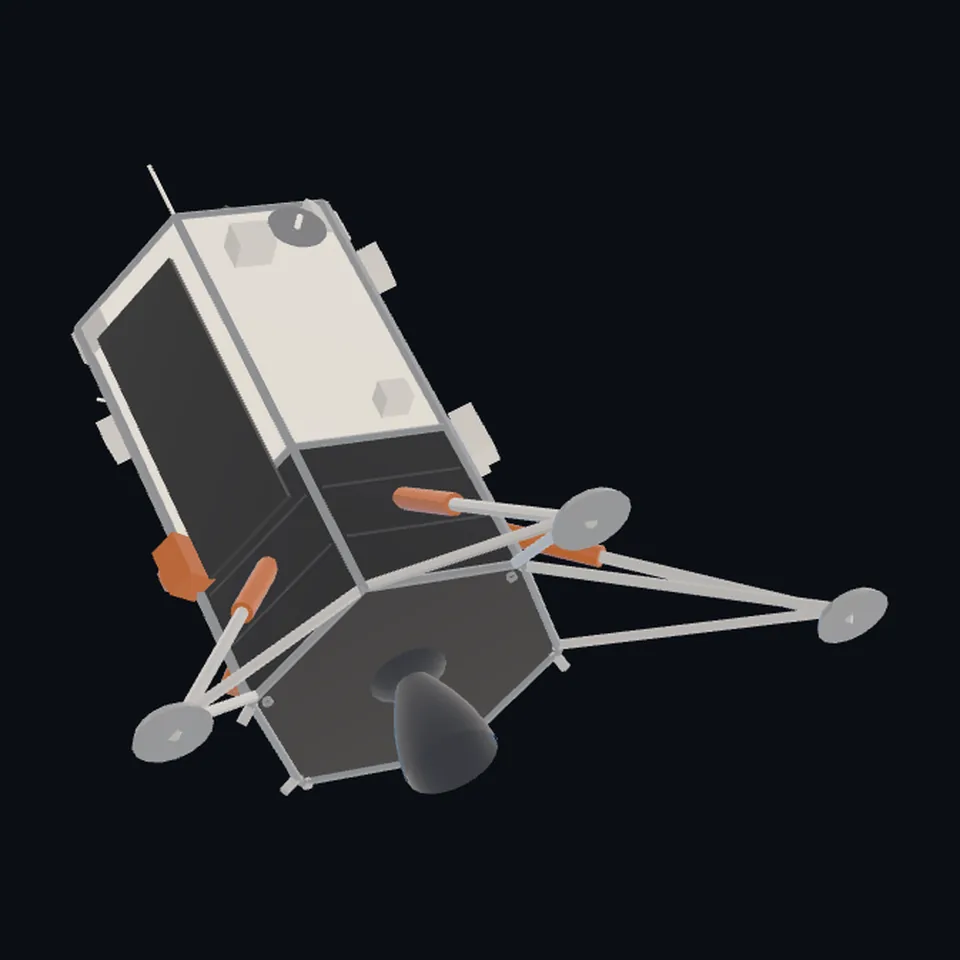 Three-quarter view
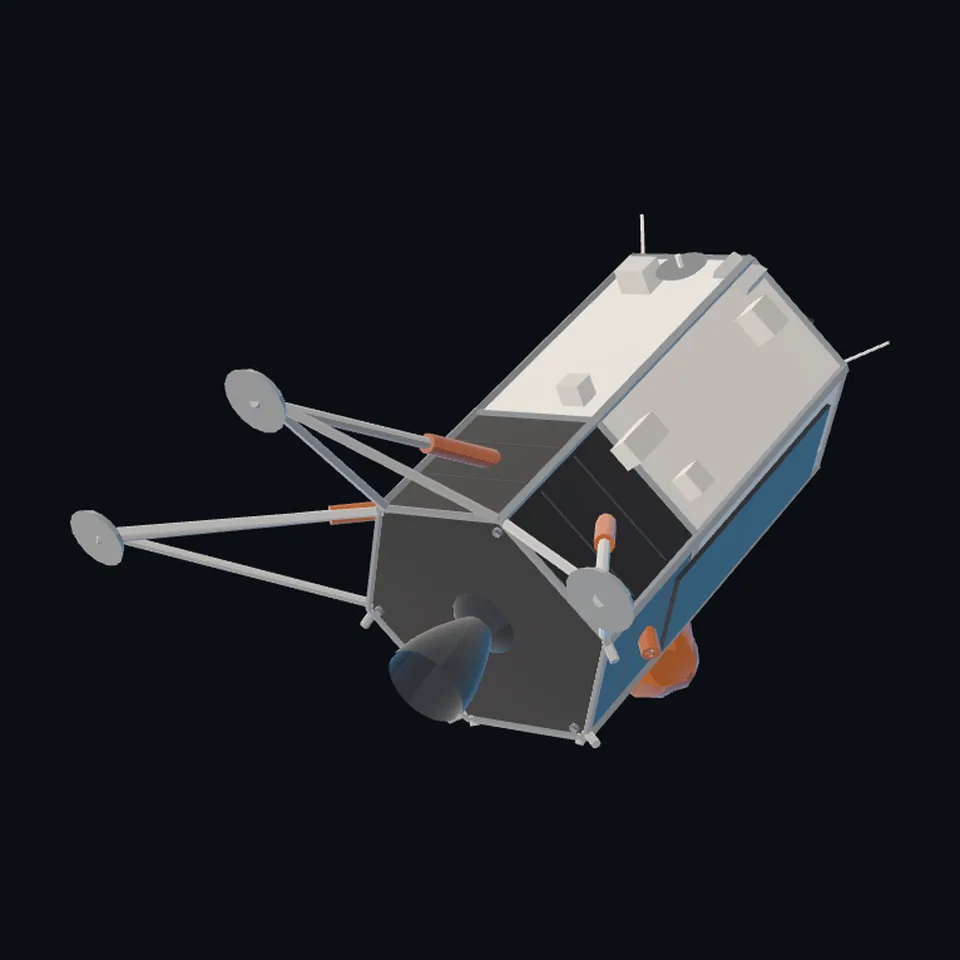 From the side
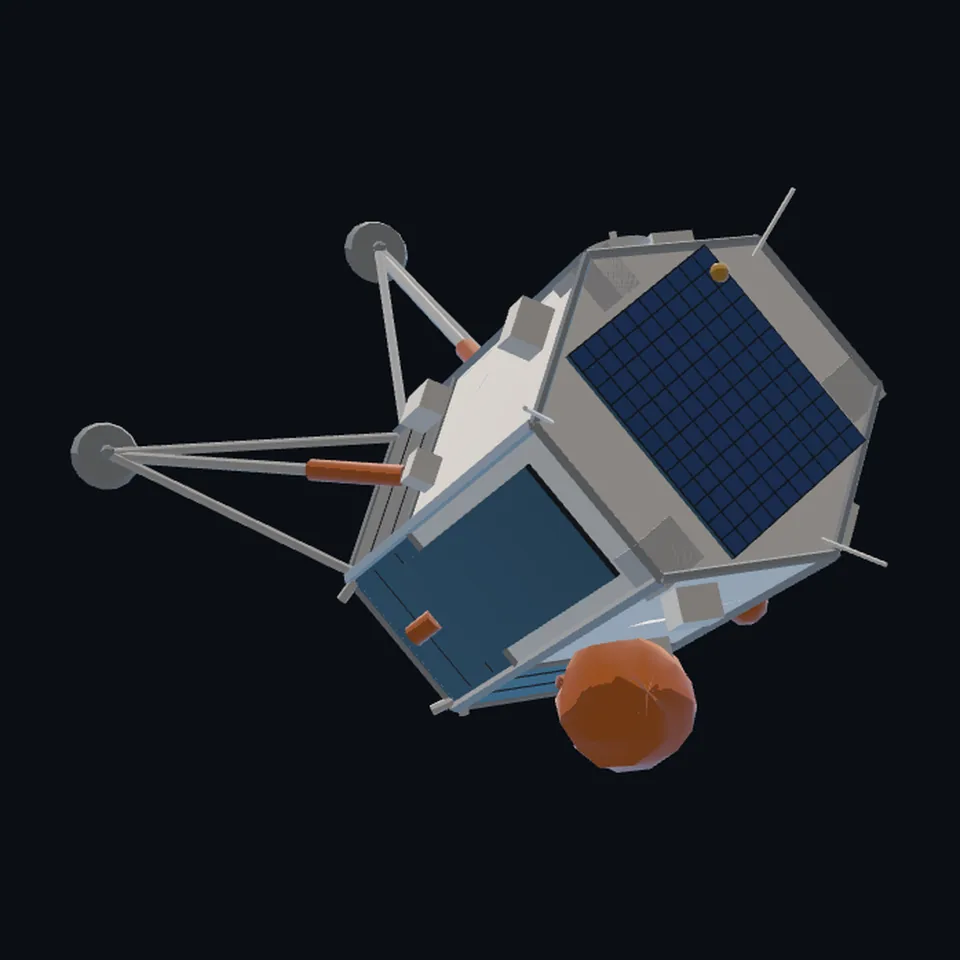 From behind
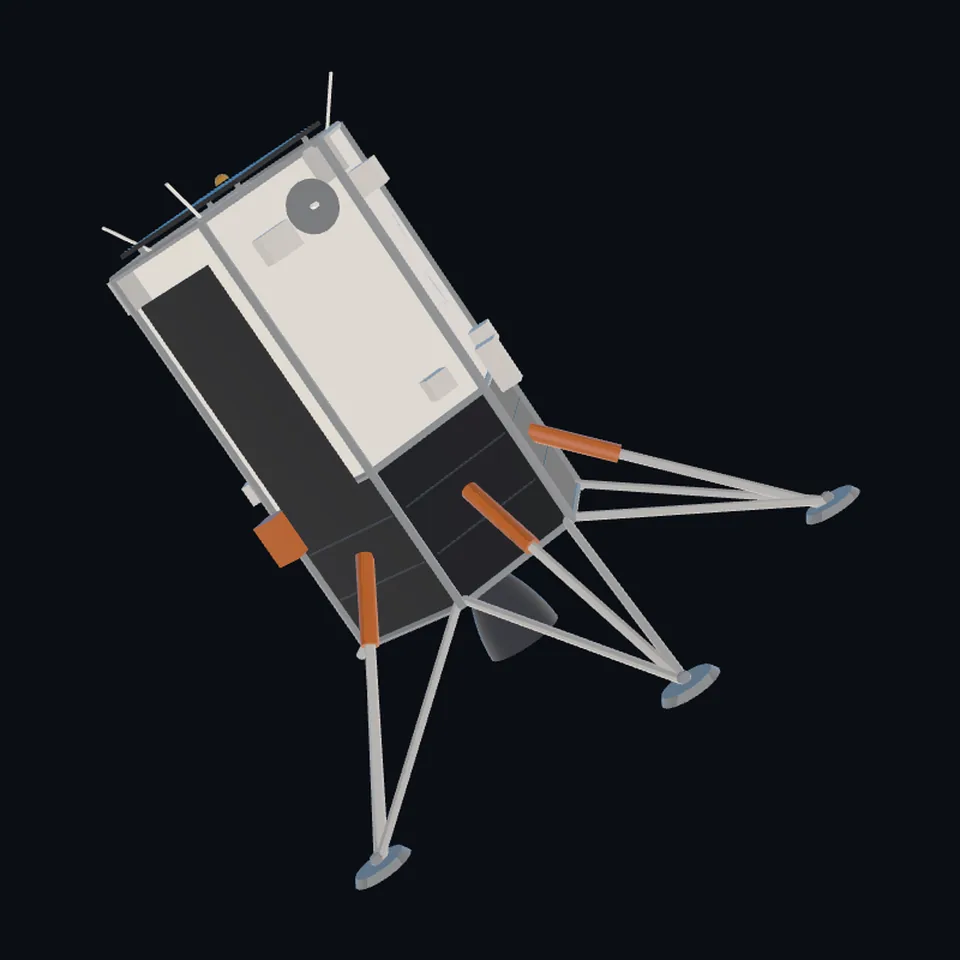 From above
About this model
Odysseus (Nova-C) is one of the 203 3D models Space Radar made itself: a lander or rover, built in code from published dimensions and photographs, with no image-to-3D generator and no one else’s mesh.
Shape built from published dimensions and pictures; details simplified. It has 6,126 triangles in a 67 kB glTF file, and is 3.9 m across at full scale.
It is part of the map’s library; no object on the live map is drawn with it today.
Dimensions and their sources
| Measure | Value |
|---|---|
| Height | 3.938 m |
Wikipedia, 'Nova-C', en.wikipedia.org/wiki/Nova-C, OPENED 2026-10-20: 'The lander structure is a hexagonal cylinder with six landing legs and is 3.938 m (12.92 ft) tall'; 'three solar panels, a top deck panel and two body panels'; 'the lander broke a leg off of the hexagonal body'; 'the lander is resting on a helium tank and/or a computer shelf that was strapped outside of the main fuselage'. Wikipedia, 'IM-1', en.wikipedia.org/wiki/IM-1, OPENED 2026-10-20: 'It was later determined to have landed at a 30 degree angle'; 'broke one of its six legs and tipped to its side'. DERIVED: a lander that rests on a tank strapped to its side is tipped about 60 degrees from upright (its long axis 30 degrees above the ground): at 30 degrees from upright the tank would be more than a metre up. OURS: the body 1.57 m across the flats (read off the photograph against the height), the legs' 2.15 m reach, every part's size (read 2026-10-20)
How it was made
Built in code from published dimensions and photographs, with no image-to-3D generator and no one else’s mesh. 3D model: built by Space Radar from published dimensions and a NASA photograph (public domain).
The full record
built by this project in code (release 1.3.0 stage W1-c's part library, lib.py, and one script a craft, kept with the stage's notes), from the cited dimensions and the pictures under `references`; no image-to-3D model was used, and no published mesh (NASA's 3D Resources, 1 583 paths, and NASA Science's 3D models have none of this craft; read 2026-10-20)
Where the map uses it. the im-1 landing site (registry/sites.yaml), near Malapert A: Intuitive Machines' Nova-C lander Odysseus as it came to rest, on its side. It was the generic lander, which is still what is drawn while this file is on its way; public #1135
Licence note. Public domain (NASA's photograph of the flight lander, which the layout was read off: looked at, with credit; nothing of it is in the file). The shape is this project's, under this repository's licence, built from published numbers (facts). NO LOGO AND NO LETTERING is on the mesh.
References 1
What the shape was compared with. None of these pictures is in the file.
- Intuitive Machines' Nova-C lunar lander (IM 00309) (cropped)NASA/Intuitive MachinesPublic domain (NASA Marshall Space Flight Center / Intuitive Machines; Commons' LicenseShortName, read 2026-10-20)

Use it
The model is under the MIT licence: use it, change it and share it, in any project, also a paid one. Keep the credit:
Odysseus (Nova-C) 3D model by Space Radar (spaceradar.ai), MIT LicenseAny glTF 2.0 loader that reads meshopt compression (EXT_meshopt_compression) opens the file: three.js with its MeshoptDecoder, Babylon.js, model-viewer. Tools such as glTF-Transform can write an uncompressed copy.
Or embed the viewer in your page:
<iframe src="https://www.spaceradar.ai/model/?id=odysseus" title="Odysseus (Nova-C), 3D model by Space Radar" width="600" height="450" loading="lazy" style="border:0;max-width:100%"></iframe>Related models