ICEYE
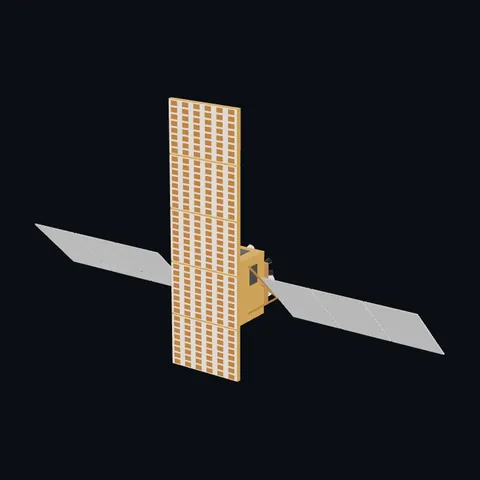
Shape built from published dimensions and pictures; details simplified.
Turn it in 3D
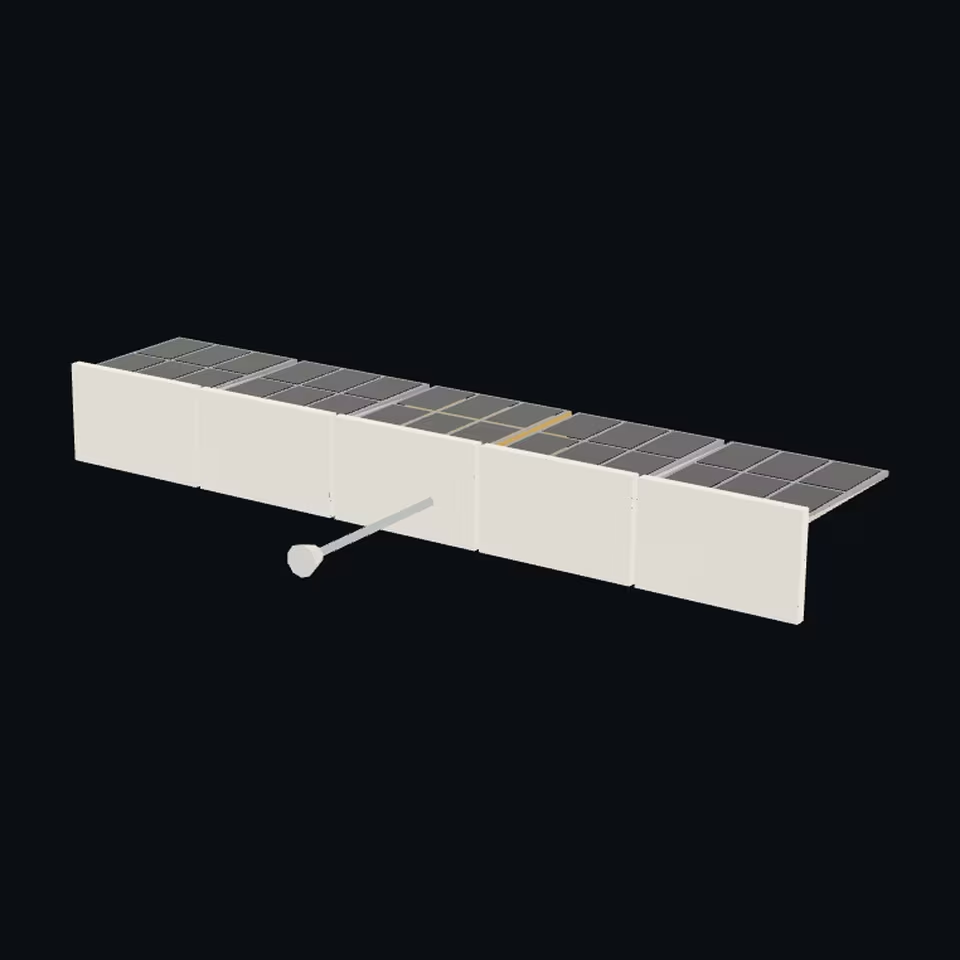
Open the 3D viewer (www.spaceradar.ai).
The viewer loads when you ask: about 700 kB the first time (three.js and the model), much less after.
Pictures 4
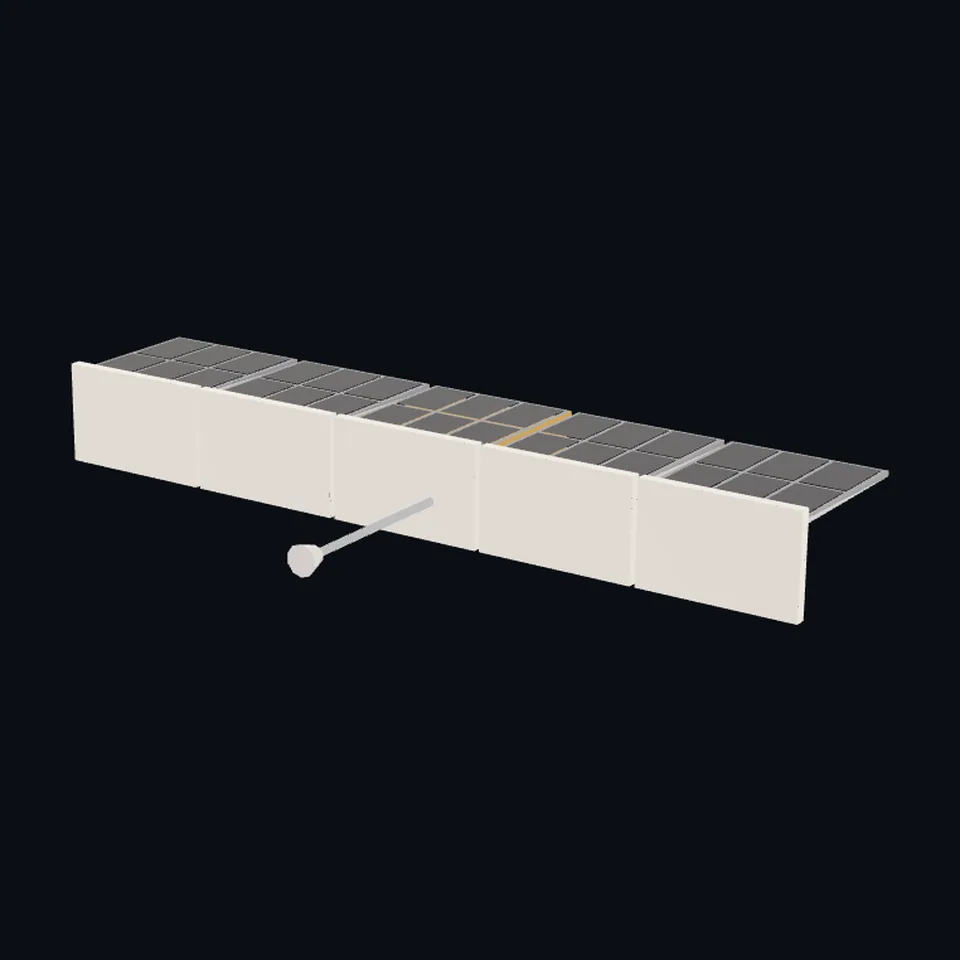 Three-quarter view
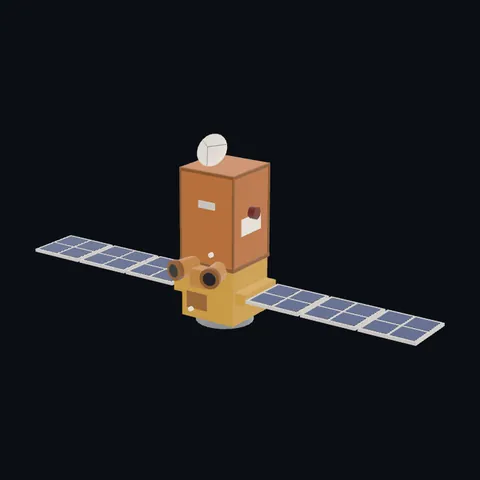
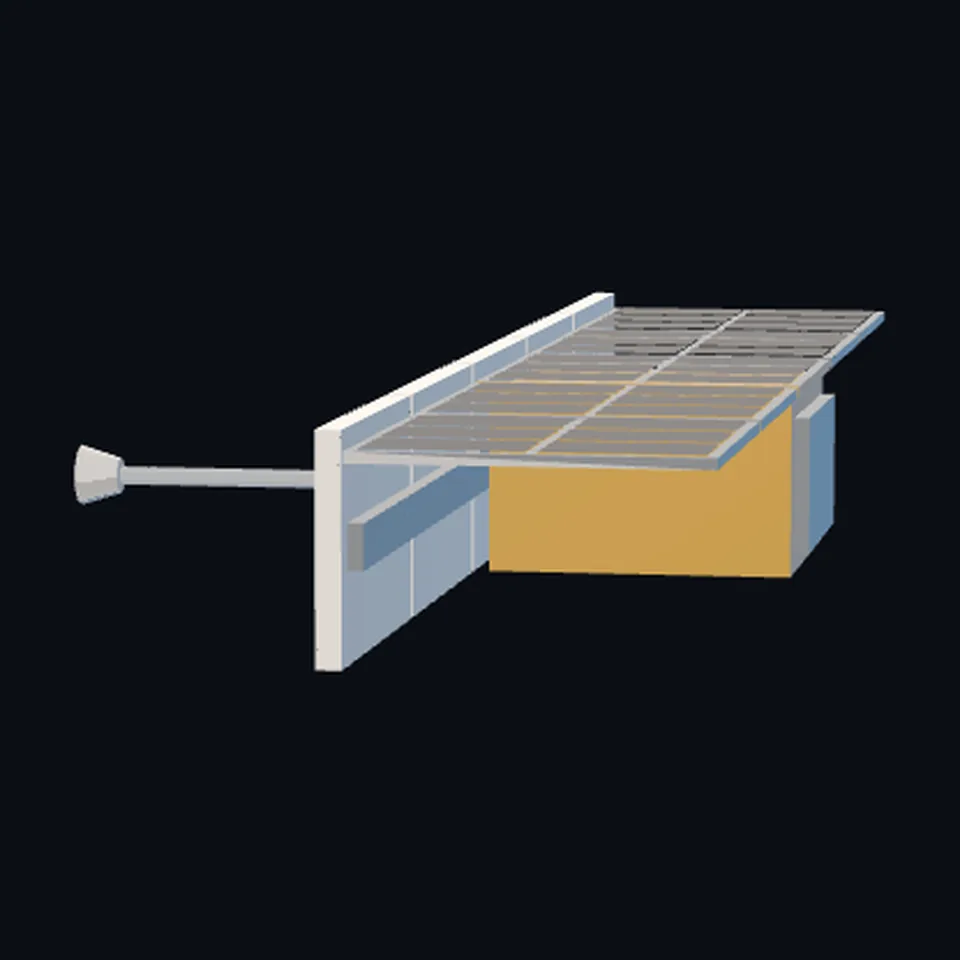 From the side
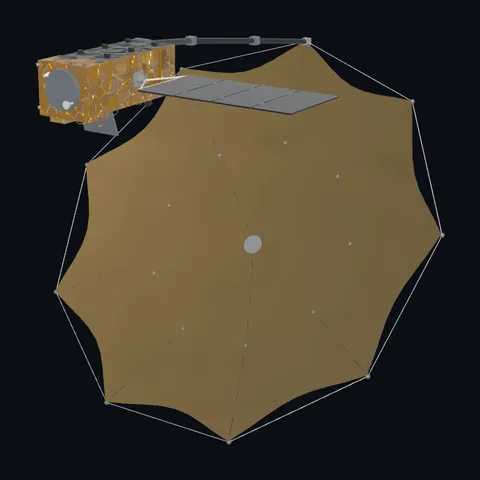
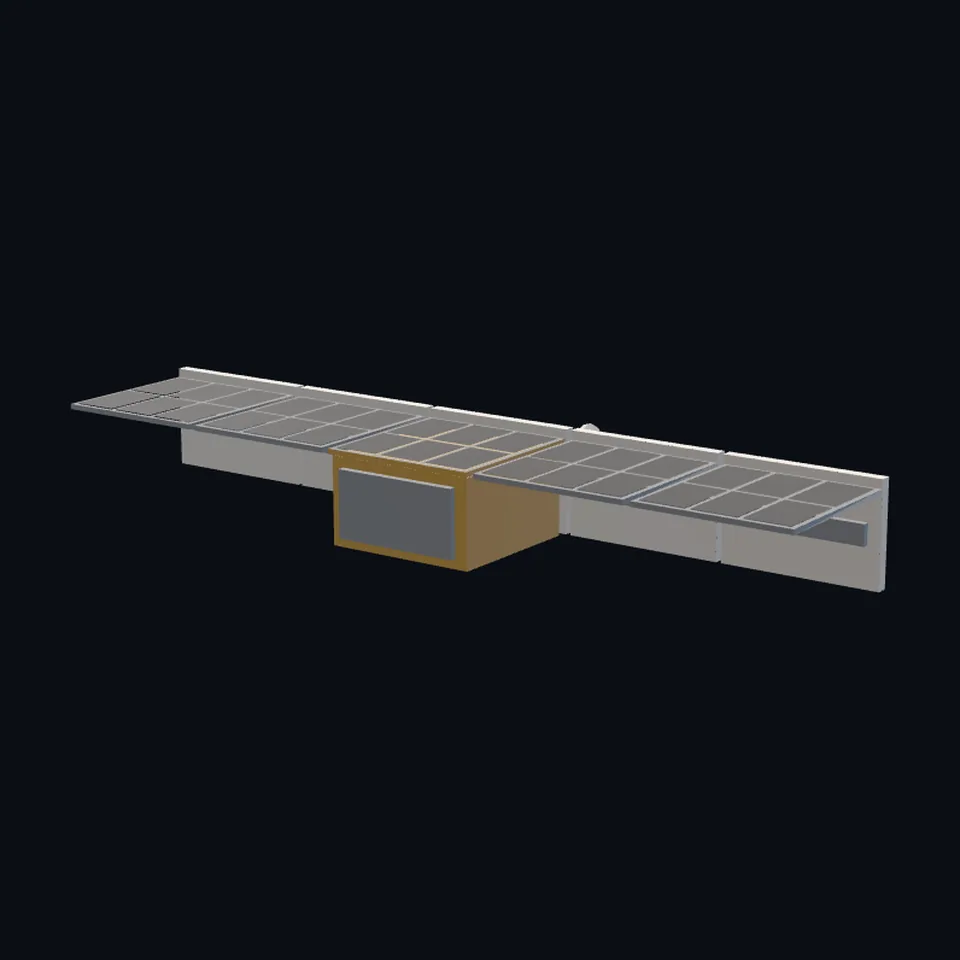 From behind
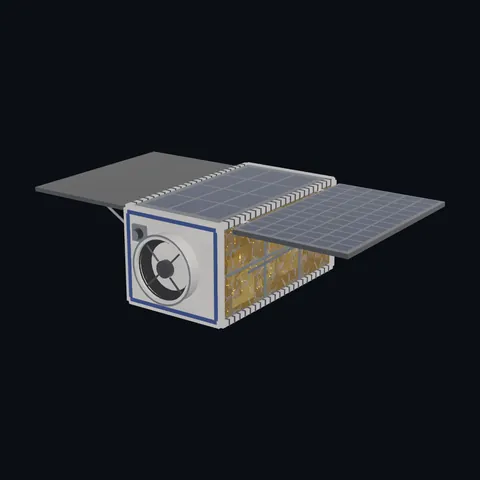
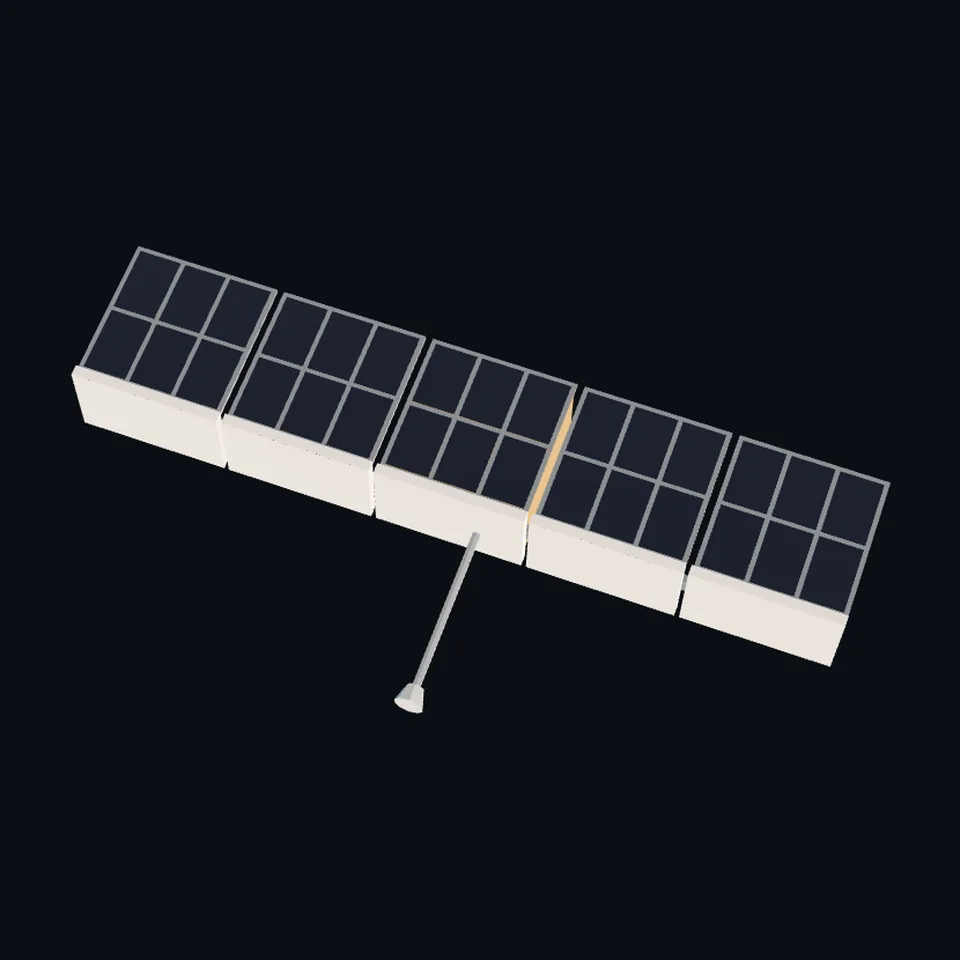 From above
About this model
ICEYE is one of the 203 3D models Space Radar made itself: a satellite, built in code from published dimensions and photographs, with no image-to-3D generator and no one else’s mesh.
Shape built from published dimensions and pictures; details simplified. It has 5,642 triangles in a 30 kB glTF file, and is 3.2 m across at full scale.
It is part of the map’s library; no object on the live map is drawn with it today.
Dimensions and their sources
| Measure | Value |
|---|---|
| Antenna length | 3.2 m |
| Antenna width | 0.4 m |
| Stowed height | 0.7 m |
| Stowed width | 0.6 m |
eoPortal, eoportal.org/satellite-missions/iceye-constellation, opened 2026-10-13, table 2: 'Antenna size 3.2 m x 0.4 m'; 'Each ICEYE spacecraft has a mass of 85 kg'. eoPortal, eoportal.org/satellite-missions/iceye-x1, opened 2026-10-13: 'The size of the microsatellite in launch configuration is 70 cm in height and 60 cm in width. The SAR antenna has a length of 3.25 m.'; 'The SAR antenna consists of five elements, the central element being rigidly attached to the satellite body and two elements deploying to either side to create a 3.2 m wide antenna array.'; 'power is provided by 1 fixed solar array and batteries' (of the first craft, 2018). ESA, earth.esa.int/eogateway/missions/iceye/description, opened 2026-10-13 through a reader: 'Mass' '85 kg'; 'Dimensions' '70 cm x 60 cm'. NOT CITED, taken from the two renders looked at: five solar panels of about 0.6 x 0.6 m in a row on the antenna's back (built upright; the renders show them leaning), the bus as a box 0.6 x 0.34 x 0.58 m behind the middle one, a 0.7 m mast with a small antenna on the Earth side. THE FLEET IS SEVERAL GENERATIONS; one shape stands for all of them (read 2026-10-13)
How it was made
Built in code from published dimensions and photographs, with no image-to-3D generator and no one else’s mesh. 3D model: built by Space Radar from published dimensions of the ICEYE satellites.
The full record
built by this project in code (the private tool model-from-images: assemble.py, from a yaml of primitives), from the cited dimensions and the pictures under `references`; no image-to-3D model was used, and no published mesh (NASA's 3D Resources on GitHub, 1 583 paths read 2026-10-13, has none of this craft; its operator is not known to publish one, and a model on a marketplace is somebody else's work)
Where the map uses it. any record of klass satellite whose name has the word ICEYE (ICEYE-X2 upward in the live saved data of 2026-10-12, 56 records): ICEYE's radar microsatellite, a 3.2 m antenna with a row of solar panels on its back. It was, and while this file is on its way still is, the shared radar blade (scene/models.js `radar`: Sentinel-1's 12 m antenna on a bus with wings); public #998
Licence note. The shape is this project's, under this repository's licence. The two pictures looked at are CC BY-SA 4.0 and NOTHING OF THEM IS REPRODUCED OR TRACED: they were looked at for where the parts sit, and the sizes are the cited ones. NO LOGO AND NO LETTERING is on the mesh: the operator's marks are trademarks and are not drawn.
References 2
What the shape was compared with. None of these pictures is in the file.
- ICEYE SAR satellite NetherlandsDefensie Nederland, Wikimedia CommonsCC BY-SA 4.0 (share-alike: looked at only)
- ICEYE SAR satellite Netherlands 2Defensie Nederland, Wikimedia CommonsCC BY-SA 4.0 (share-alike: looked at only)


Use it
The model is under the MIT licence: use it, change it and share it, in any project, also a paid one. Keep the credit:
ICEYE 3D model by Space Radar (spaceradar.ai), MIT LicenseAny glTF 2.0 loader that reads meshopt compression (EXT_meshopt_compression) opens the file: three.js with its MeshoptDecoder, Babylon.js, model-viewer. Tools such as glTF-Transform can write an uncompressed copy.
Or embed the viewer in your page:
<iframe src="https://www.spaceradar.ai/model/?id=iceye" title="ICEYE, 3D model by Space Radar" width="600" height="450" loading="lazy" style="border:0;max-width:100%"></iframe>Related models