GOSAT
Shape built from published dimensions and pictures; details simplified.
Turn it in 3D
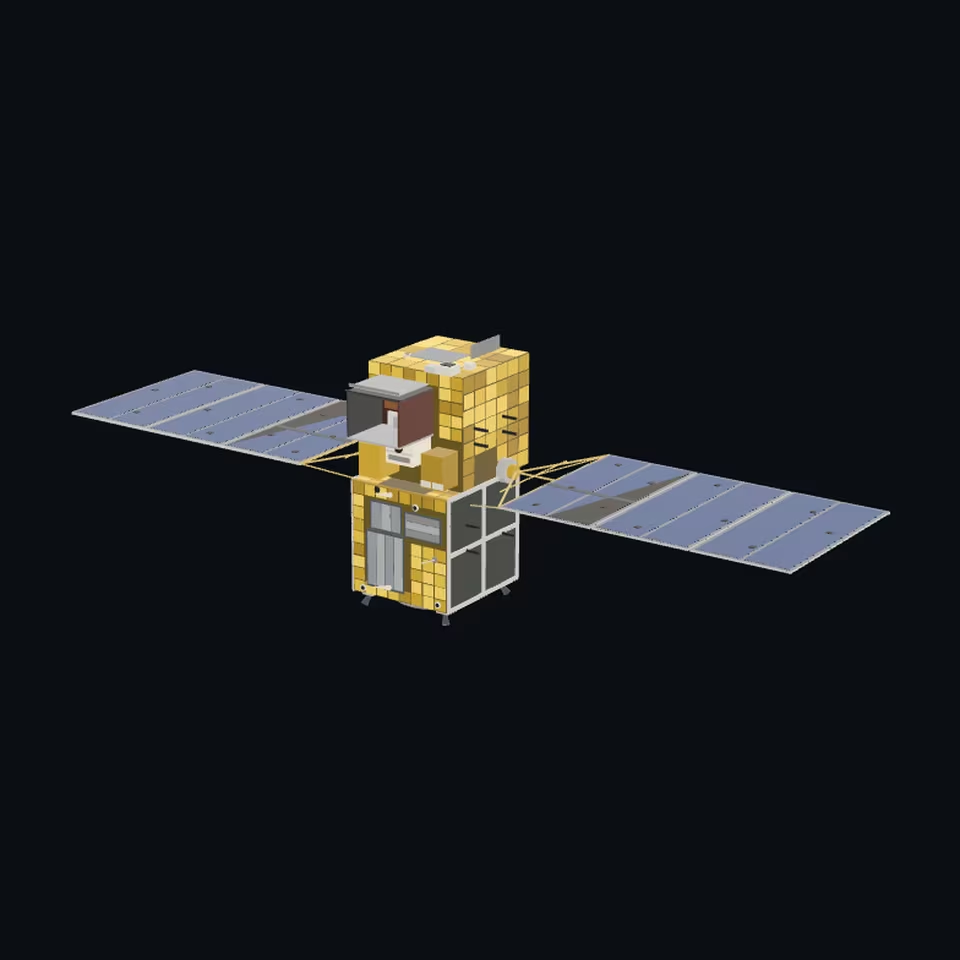
Open the 3D viewer (www.spaceradar.ai).
The viewer loads when you ask: about 700 kB the first time (three.js and the model), much less after.
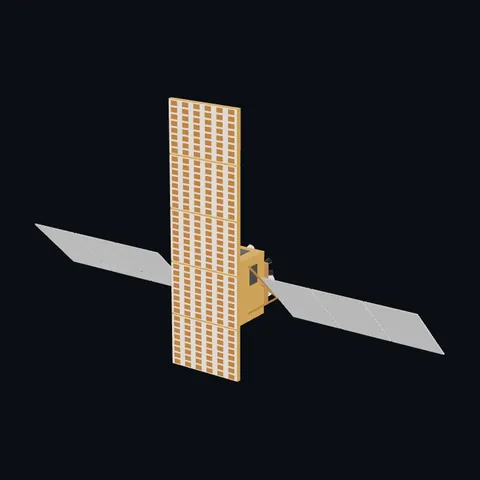
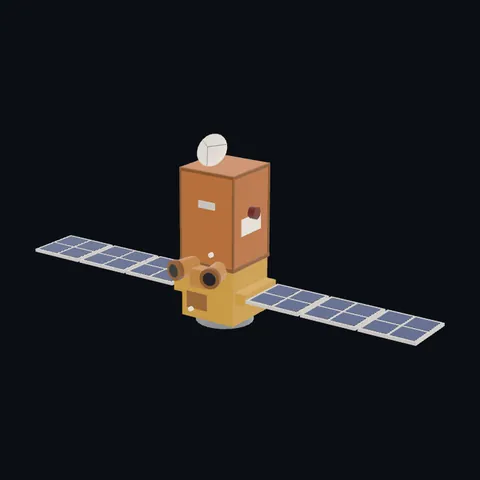
Pictures 4
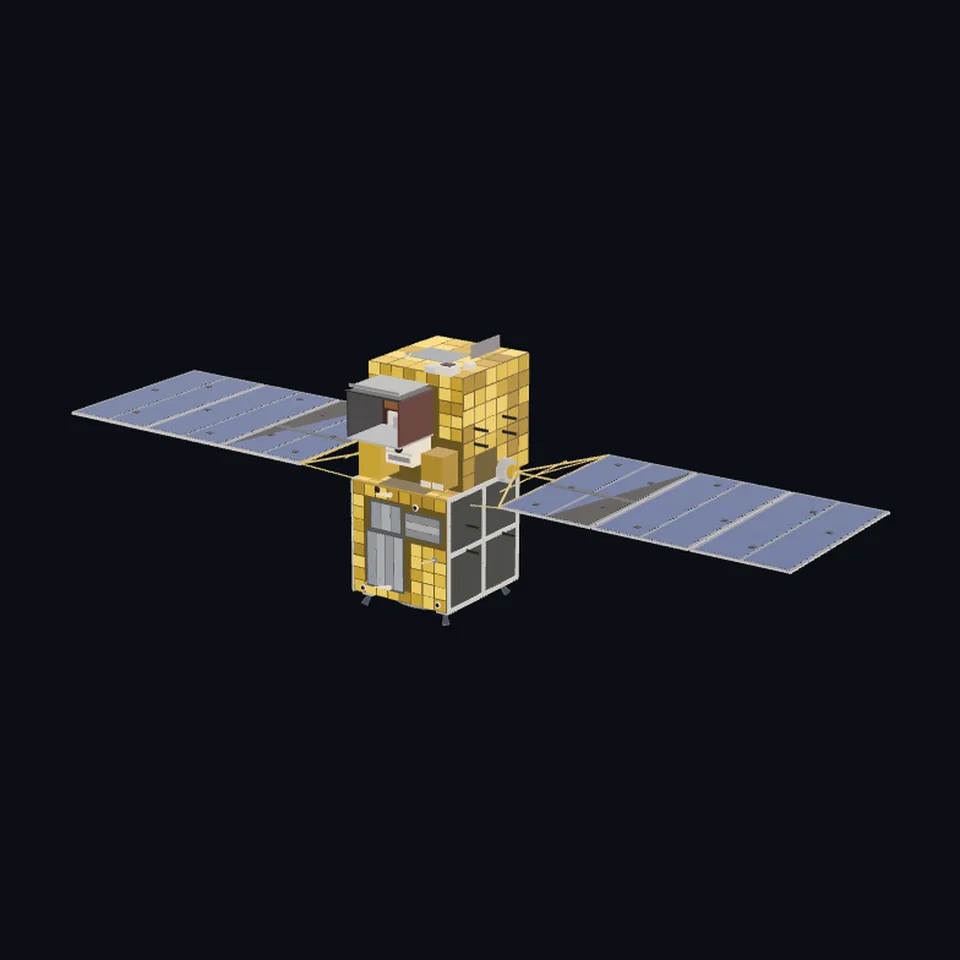 Three-quarter view
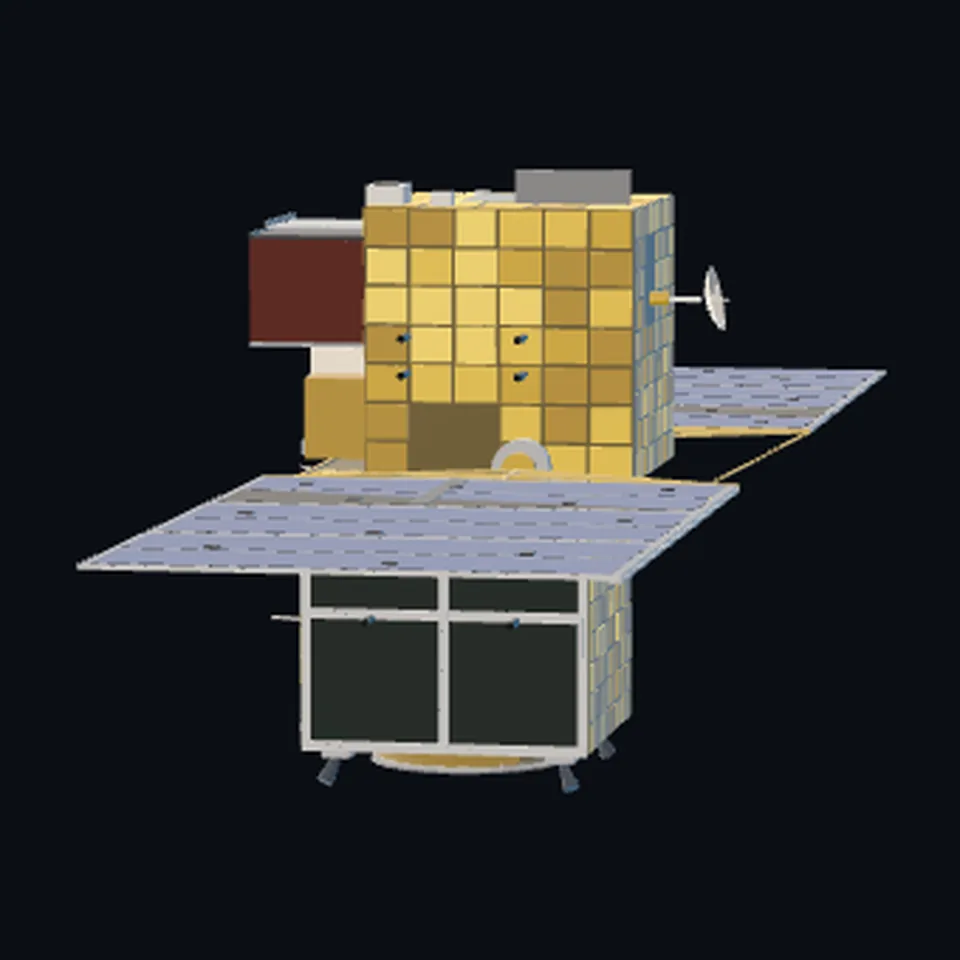 From the side
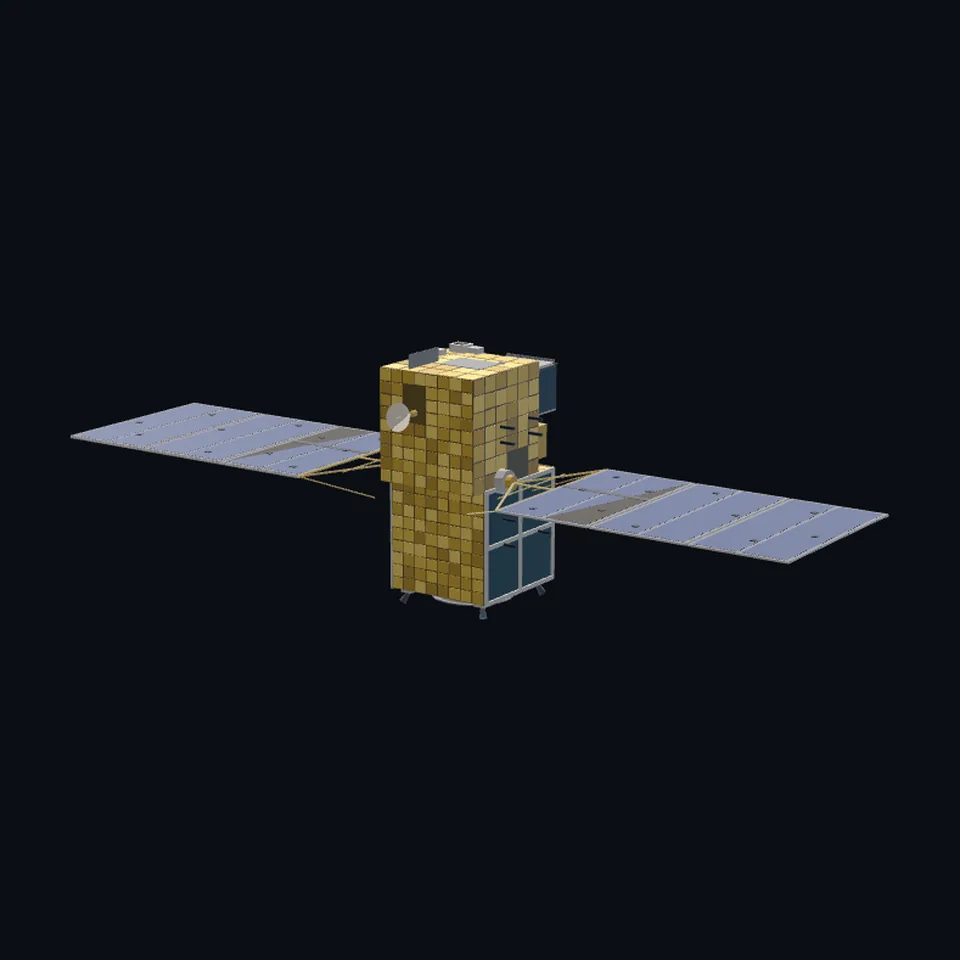 From behind
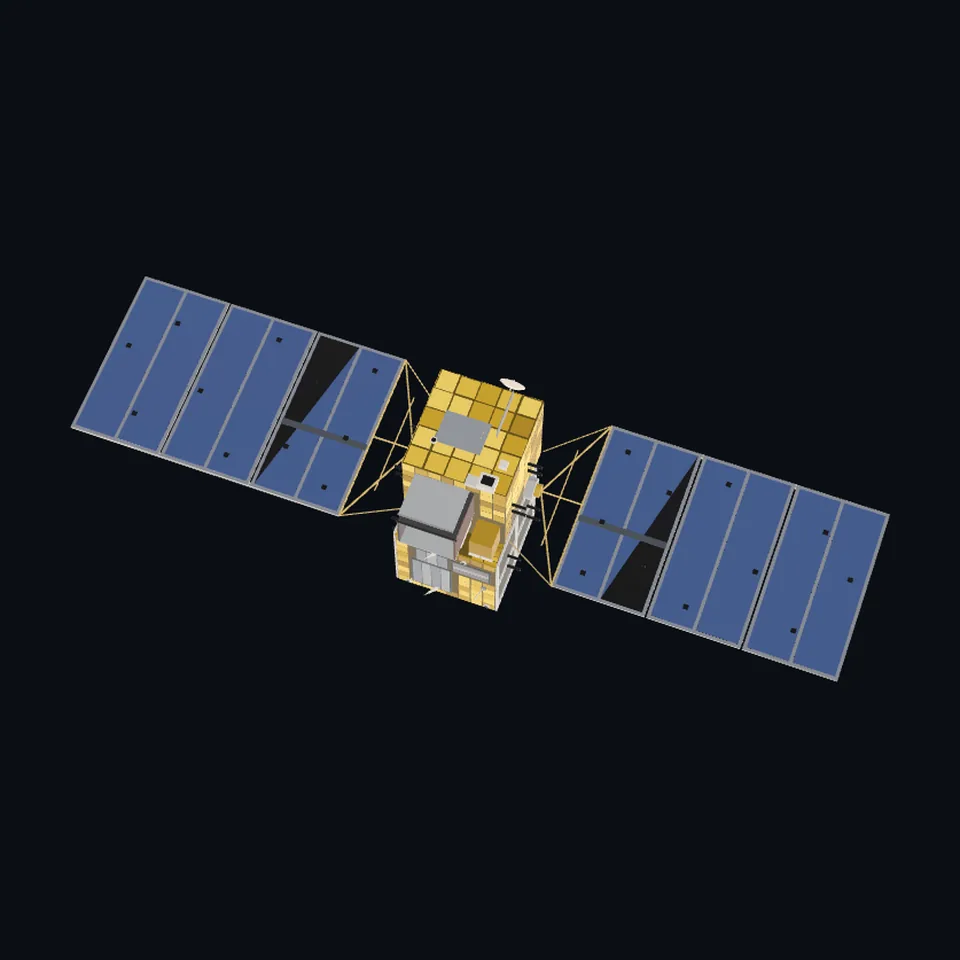 From above
About this model
GOSAT is one of the 203 3D models Space Radar made itself: a satellite, built in code from published dimensions and photographs, with no image-to-3D generator and no one else’s mesh.
Shape built from published dimensions and pictures; details simplified. It has 17,052 triangles in a 133 kB glTF file, and is 14 m across at full scale.
On Space Radar’s live map it is drawn for 3 catalogued objects, each where its published orbit puts it now. Open it on the map.
Dimensions and their sources
| Measure | Value |
|---|---|
| Body h | 3.7 m |
| Body w | 1.8 m |
| Body d | 2 m |
| Wing tip to tip | 13.7 m |
| Paddle wings | 2 |
| Paddle sections each | 3 |
| Wing from attachment | 6 m |
| Mass | 1750 kg |
| Power eol | 3800 W |
| Tanso fts | 1.2 × 1.1 × 0.7 m |
| Tanso cai | 0.5 × 0.4 × 0.5 m |
JAXA, 'GOSAT Ibuki', global.jaxa.jp/projects/sat/gosat, OPENED 2026-11-05: 'Size 3.7 m x 1.8 m X 2.0 m (Depth)', 'Length between the tips of the paddles: 13.7 m', 'Approx. 1,750kg'. JAXA EORC, eorc.jaxa.jp/GOSAT/mission_instrument.html, OPENED 2026-11-05: '3.7 m (H) x 1.8 m (W) x 2.0 m (D) (Except attachment)'. eoPortal, 'GOSAT', eoportal.org/satellite-missions/gosat, OPENED 2026-11-05: 'structure size of 2.0 m (length) x 1.8 m width) x 3.7 m height)', 'The length of the paddle wing is about 6 m from the attachment to the tip', TANSO-FTS '1.2 m x 1.1 m x 0.7 m', TANSO-CAI '0.5 m x 0.4 m x 0.5 m', 3.8 kW at end of life. THE TWO PAGES AGREE (eoPortal's 'length 2.0, width 1.8, height 3.7' is JAXA's D 2.0, W 1.8, H 3.7); which side is which is read from the exhibit photographs: the 3.7 m is the launch axis, the 1.8 m the paddle axis, the 2.0 m the Earth-facing depth, the 3.7 m excluding the adapter. NOT CITED, read off the pictures: the split of the body into two boxes at half height, every position on the Earth face, the A-frame trusses (1.0 m), the panel size (3 sections of 1.65 m by 3.2 m a wing, scaled from the stowed paddle's height in the exhibit photographs and the 13.7 m and 6 m: 31.7 m2 and 3.8 kW is about 120 W/m2), the ring (1.24 m across, 0.2 m), the thrusters' places, the antennas' sizes, the TEDA boxes, the cell colour and every other colour.
How it was made
Built in code from published dimensions and photographs, with no image-to-3D generator and no one else’s mesh. 3D model: built by Space Radar from the dimensions JAXA publishes for GOSAT and from JAXA's illustrations and photographs of the craft (looked at, not used).
The full record
built by this project in code (the private tool model-from-images: assemble.py, from a yaml of primitives written by a script, object `satellite-gosat`), from the cited numbers and the pictures under `references`; no image-to-3D model was used, and no published mesh of the craft (JAXA publishes pictures, not a model; NASA's 3D Resources path list, 1 583 paths, read by name on 2026-11-05: none of this craft)
Where the map uses it. NORAD 33492 (GOSAT (IBUKI), 2009-002A): JAXA's first greenhouse-gas observing satellite, launched on 23 January 2009. NOT for GOSAT-2 (43672) or GOSAT-GW (64694): later craft on other buses, not built here. It had no route of its own and was drawn as the generic satellite; public #959
Licence note. None of the pictures is in the file and none was fetched into it. LOOKED AT ONLY: JAXA's illustrations on eoPortal (figures 2, 4 and 5 and the header picture, credit JAXA, no licence stated) and four photographs on Wikimedia Commons of JAXA's GOSAT exhibit at the Tsukuba Space Center (CC BY-SA 3.0, CC BY-SA 4.0 and CC0; credits on the file pages). The shape is this project's, under this repository's licence, built from published numbers (facts). NO LOGO AND NO LETTERING is on the mesh.
References 3
What the shape was compared with. None of these pictures is in the file.
- JAXA, 'GOSAT Ibuki' (project page) and JAXA EORC, 'GOSAT mission and instruments'JAXAJAXA pages (numbers are facts; nothing copied)
- eoPortal, 'GOSAT', figures 2, 4 and 5 and the header pictureJAXAno licence stated (credit JAXA; read 2026-11-05): LOOKED AT ONLY, not reproduced
- Wikimedia Commons: 'JAXA Greenhouse observing satelite.jpg' and '... 2.jpg' (CC BY-SA 3.0), 'Space center in Tsukuba 7.jpg' (CC BY-SA 4.0), 'Artifacts at Tsukuba Space Center Space Dome exhibition hall 9.jpg' (CC0)the photographers named on the Commons file pagesCC0 and CC BY-SA 3.0 / 4.0 (Commons' LicenseShortName, read 2026-11-05): LOOKED AT ONLY, nothing copied

Use it
The model is under the MIT licence: use it, change it and share it, in any project, also a paid one. Keep the credit:
GOSAT 3D model by Space Radar (spaceradar.ai), MIT LicenseAny glTF 2.0 loader that reads meshopt compression (EXT_meshopt_compression) opens the file: three.js with its MeshoptDecoder, Babylon.js, model-viewer. Tools such as glTF-Transform can write an uncompressed copy.
Or embed the viewer in your page:
<iframe src="https://www.spaceradar.ai/model/?id=gosat" title="GOSAT, 3D model by Space Radar" width="600" height="450" loading="lazy" style="border:0;max-width:100%"></iframe>Related models