GHGSat-C
Shape built from published dimensions and pictures; details simplified.
Turn it in 3D
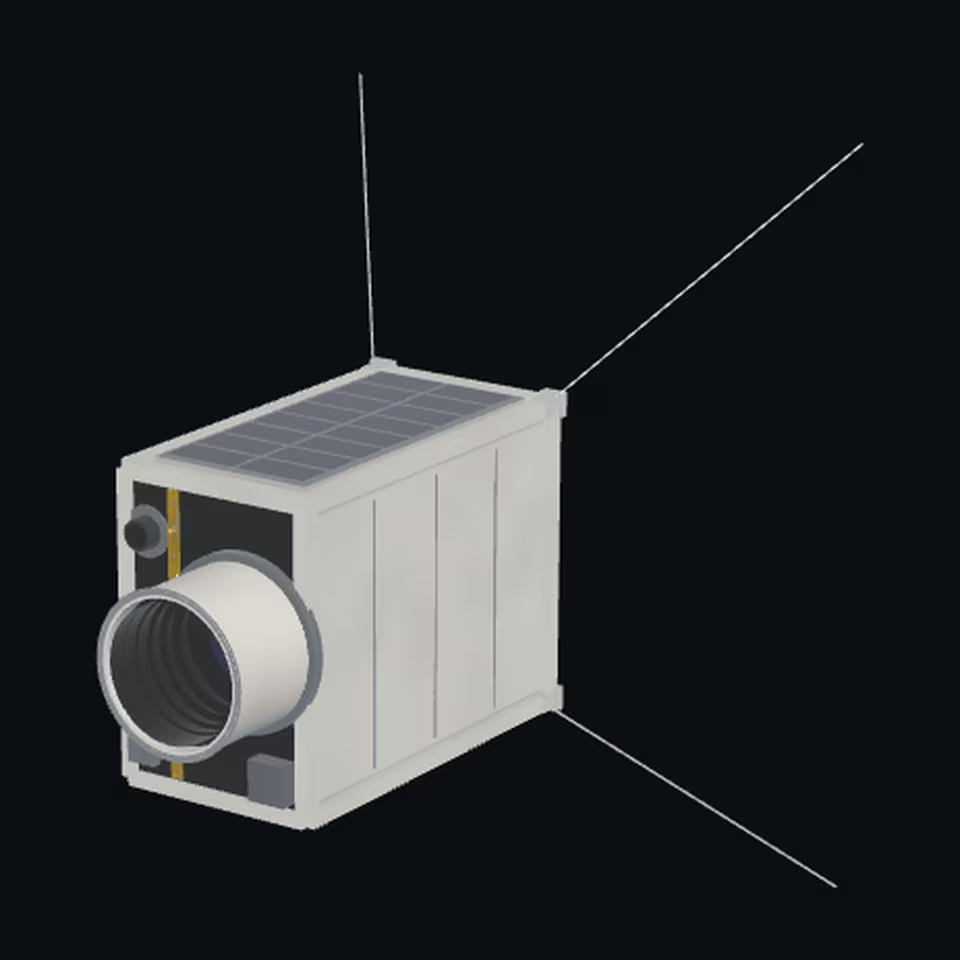
Open the 3D viewer (www.spaceradar.ai).
The viewer loads when you ask: about 700 kB the first time (three.js and the model), much less after.
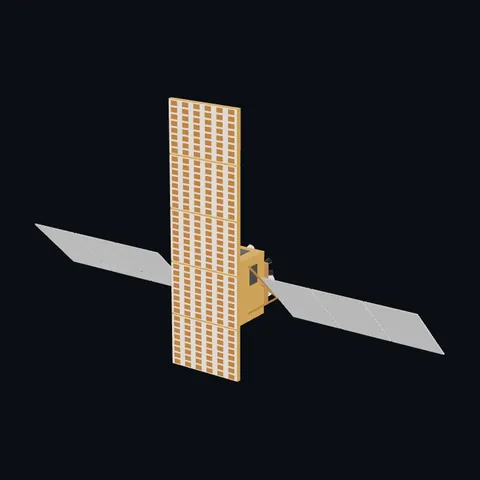
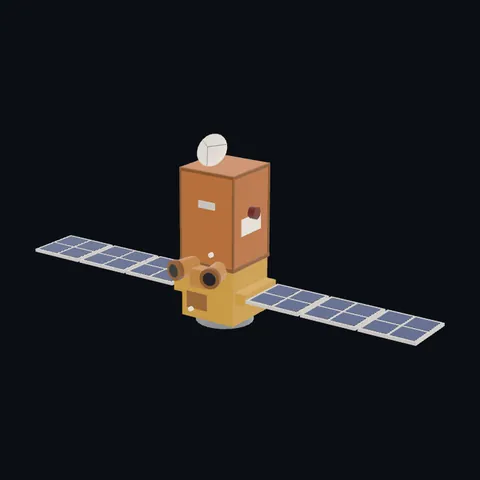
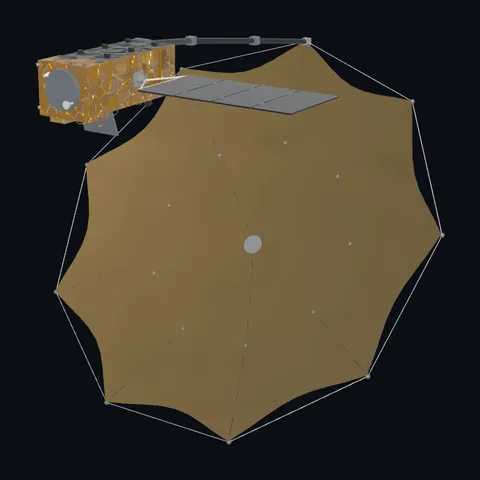
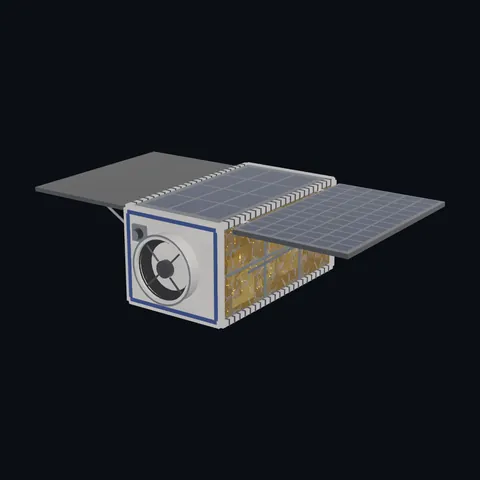
Pictures 4
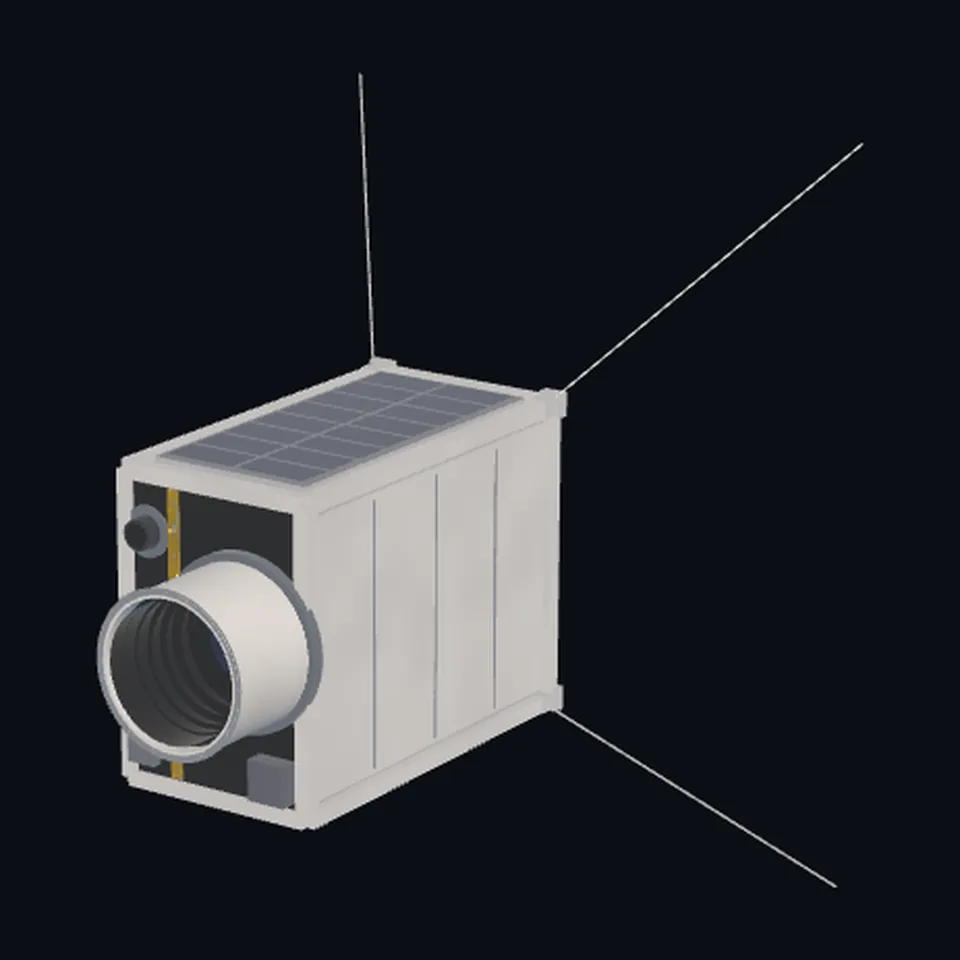 Three-quarter view
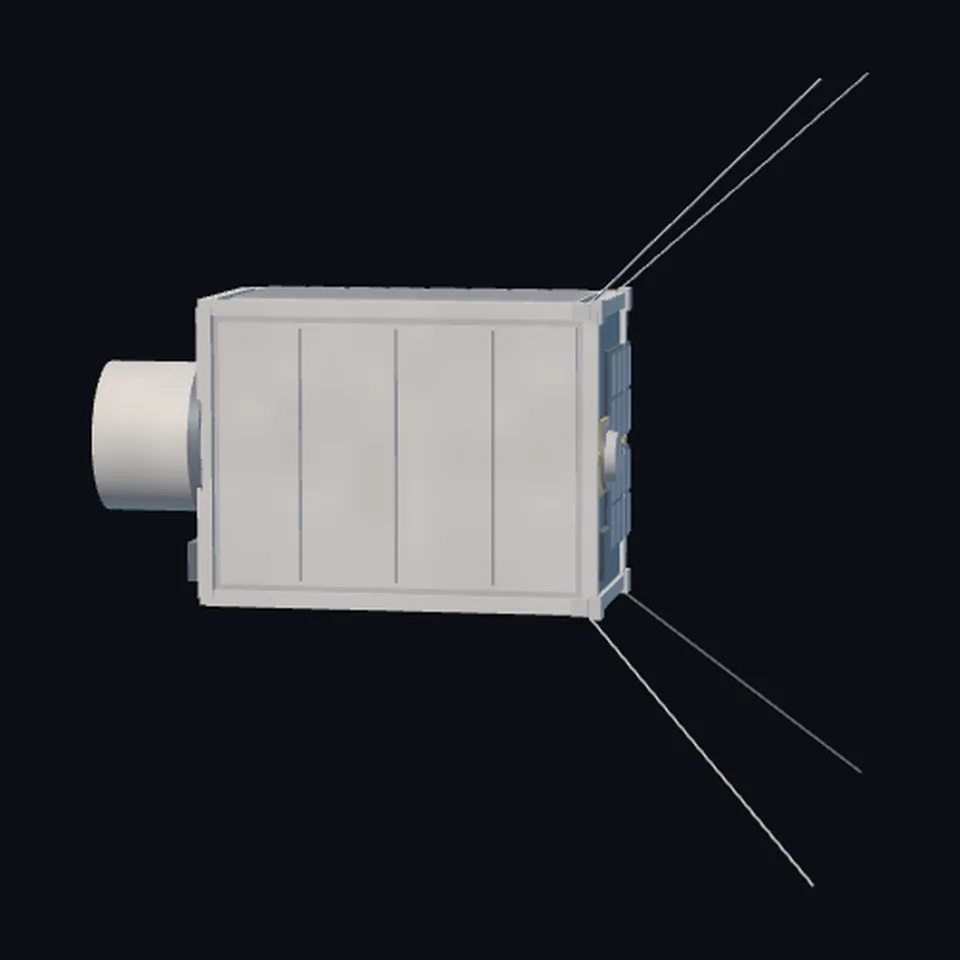 From the side
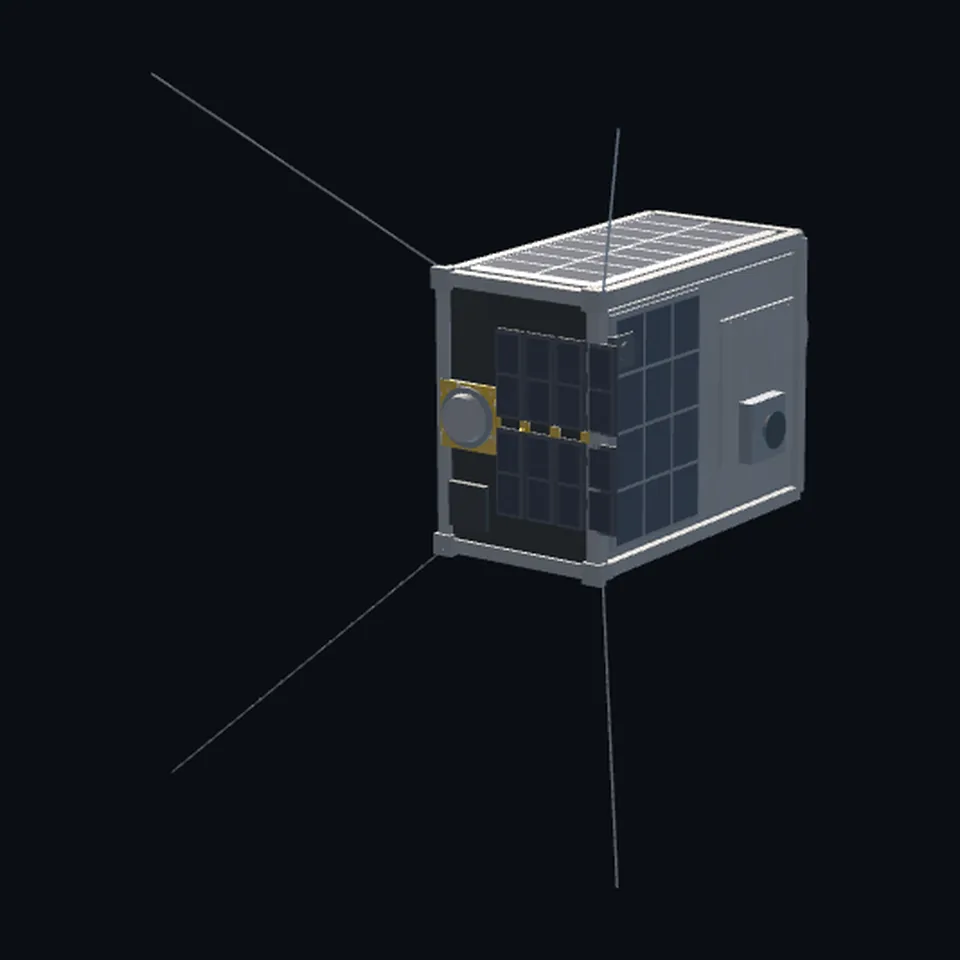 From behind
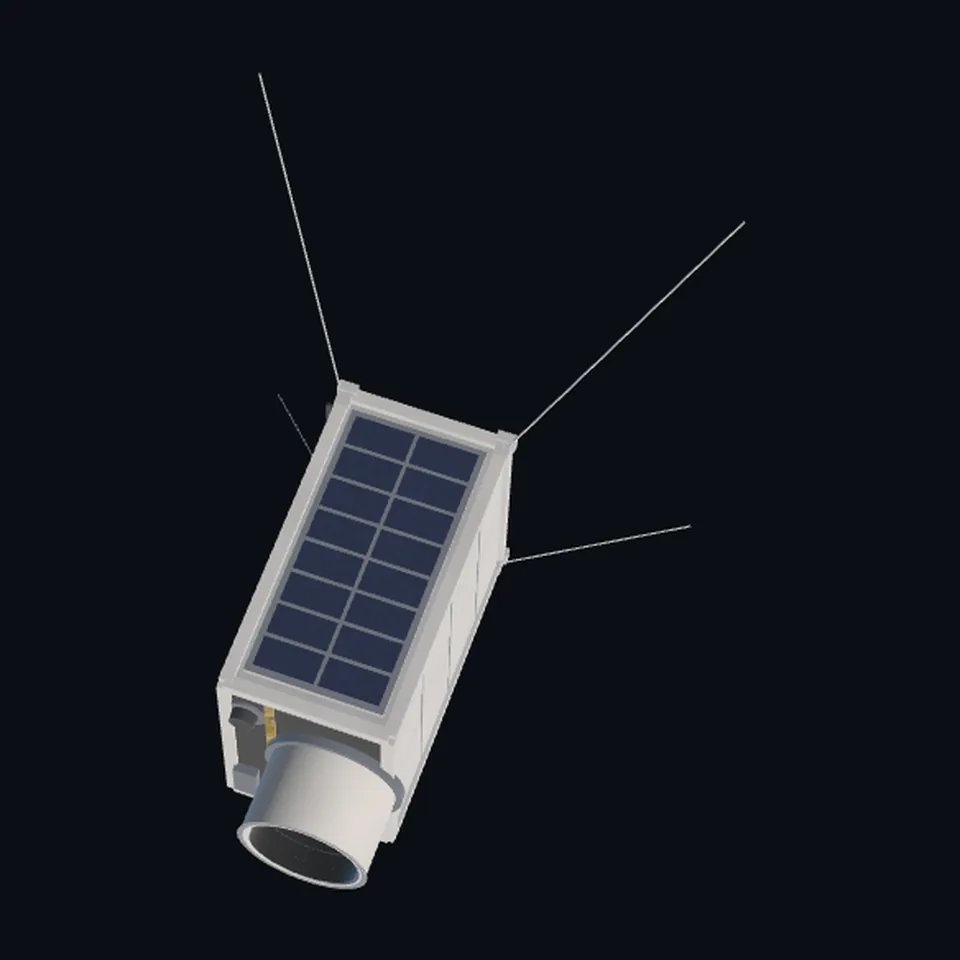 From above
About this model
GHGSat-C is one of the 203 3D models Space Radar made itself: a satellite, built in code from published dimensions and photographs, with no image-to-3D generator and no one else’s mesh.
Shape built from published dimensions and pictures; details simplified. It has 4,366 triangles in a 46 kB glTF file, and is 0.4 m across at full scale.
On Space Radar’s live map it is drawn for 10 catalogued objects, each where its published orbit puts it now. Open it on the map.
Dimensions and their sources
| Measure | Value |
|---|---|
| Length | 0.4 m |
| Width | 0.3 m |
| Depth | 0.2 m |
| Mass | 16 kg |
eoPortal, eoportal.org/satellite-missions/ghgsat-con, OPENED 2026-10-27: 'The nominal volume is 20 x 30 x 40 cm'; 'The GHGSat-C1 will have a mass of ~16 kg'; 'two trays and six panels'; 'Each 15 kg satellite is based on the low-cost, high-performance ... NEMO bus'; the labelled figure names the main payload, an auxiliary camera, Darkstar, a radiator, UHF antennas, a sun sensor, an S-band antenna, a GPS antenna and solar cells. OURS: the tube's diameter and length, the cell counts, the radiator's and Darkstar's size, the whips' length and angle (read 2026-10-27)
How it was made
Built in code from published dimensions and photographs, with no image-to-3D generator and no one else’s mesh. 3D model: built by Space Radar from eoPortal's published dimensions; compared with the operator's pictures, looked at only.
The full record
built by this project in code (release 1.3.0's part library, lib.py and parts.py, kept with the stage's notes in ~/space-radar-handoff/release-1.4/r14-m5/build, one script a craft), from the cited dimensions and the pictures under `references`; no image-to-3D model was used, and no published mesh: NASA's 3D Resources (1 583 paths, read 2026-10-27) has none of this craft, and no operator of it was found to publish a model under a free licence (searched 2026-10-27)
Where the map uses it. the GHGSat-C methane imagers C1 to C8 built by the University of Toronto's Space Flight Laboratory on its NEMO bus, 8 in the live saved data of 2026-10-12: NORAD 46278, 47509, 52737, 52744, 52746, 56186, 56204, 56209 (GHGSat-C1 to -C8). It wore the class shape of a satellite; public #1152. NOT C12 and C13 (NORAD 64529, 64548), which the issue lists: eoPortal says C9 to C11 are Spire's (Lemur-2 based) and that GHGSat ordered four more 16U satellites from Spire in 2023; C12 and C13 flew in 2025, after that order, and nothing says they are SFL's NEMO bus
Licence note. No operator picture or model is in the file: the pictures named `LOOKED AT ONLY` were looked at for the layout and are on no sheet. The shape is this project's, under this repository's licence, built from published numbers (facts). NO LOGO, FLAG OR LETTERING is on the mesh.
References 3
What the shape was compared with. None of these pictures is in the file.
- GHGSat-C1 exterior solid model (eoPortal figure 3)UTIAS/SFLlooked at only; not free
- Artist's rendition of GHGSat-C1/-C2 on orbit (eoPortal figure 8)UTIAS/SFL, GHGSatlooked at only; not free
- GHGSat-D structure exploded view (eoPortal figure 2)UTIAS/SFLlooked at only; not free
Use it
The model is under the MIT licence: use it, change it and share it, in any project, also a paid one. Keep the credit:
GHGSat-C 3D model by Space Radar (spaceradar.ai), MIT LicenseAny glTF 2.0 loader that reads meshopt compression (EXT_meshopt_compression) opens the file: three.js with its MeshoptDecoder, Babylon.js, model-viewer. Tools such as glTF-Transform can write an uncompressed copy.
Or embed the viewer in your page:
<iframe src="https://www.spaceradar.ai/model/?id=ghgsat-c" title="GHGSat-C, 3D model by Space Radar" width="600" height="450" loading="lazy" style="border:0;max-width:100%"></iframe>Related models