EOS-06
Shape built from published dimensions and pictures; details simplified.
Turn it in 3D
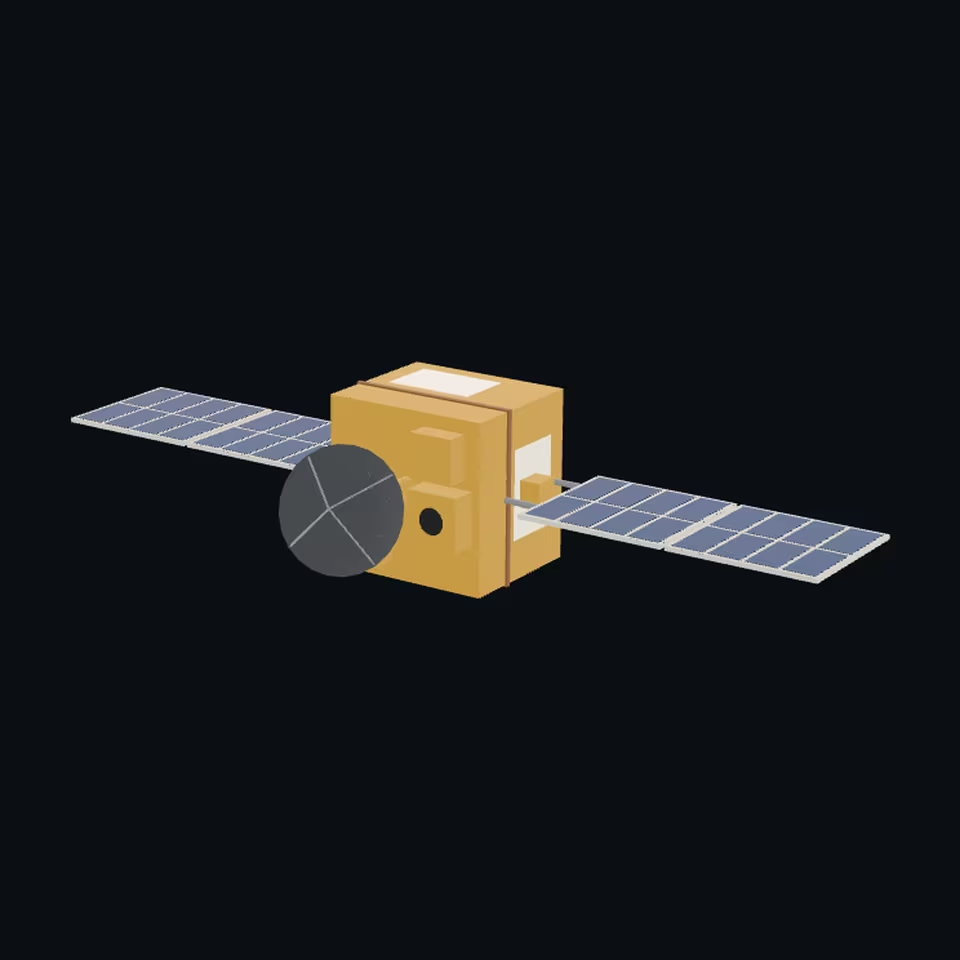
Open the 3D viewer (www.spaceradar.ai).
The viewer loads when you ask: about 700 kB the first time (three.js and the model), much less after.
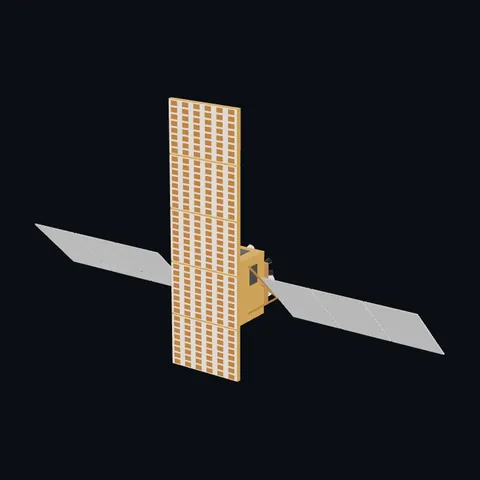
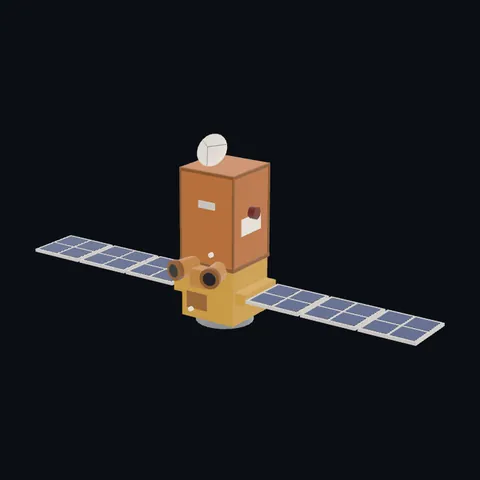
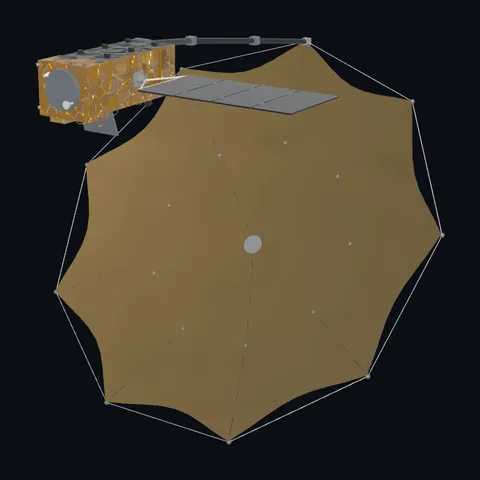
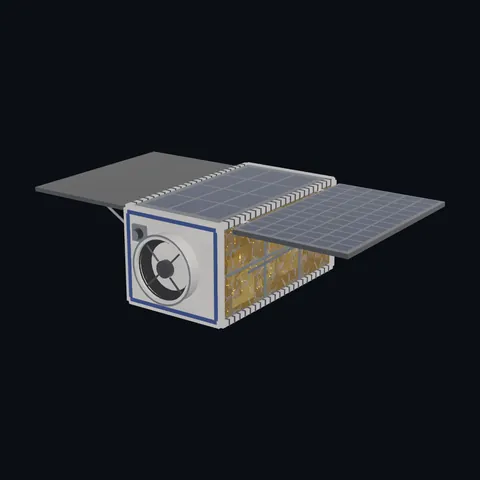
Pictures 4
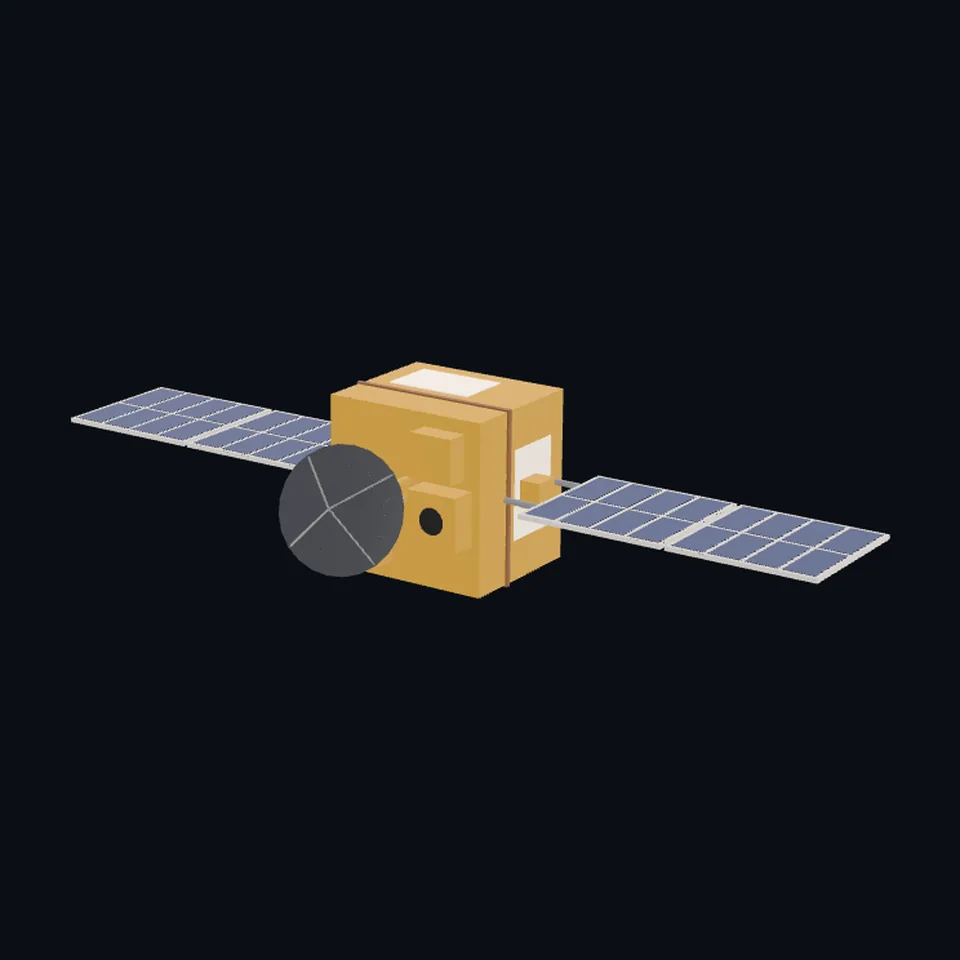 Three-quarter view
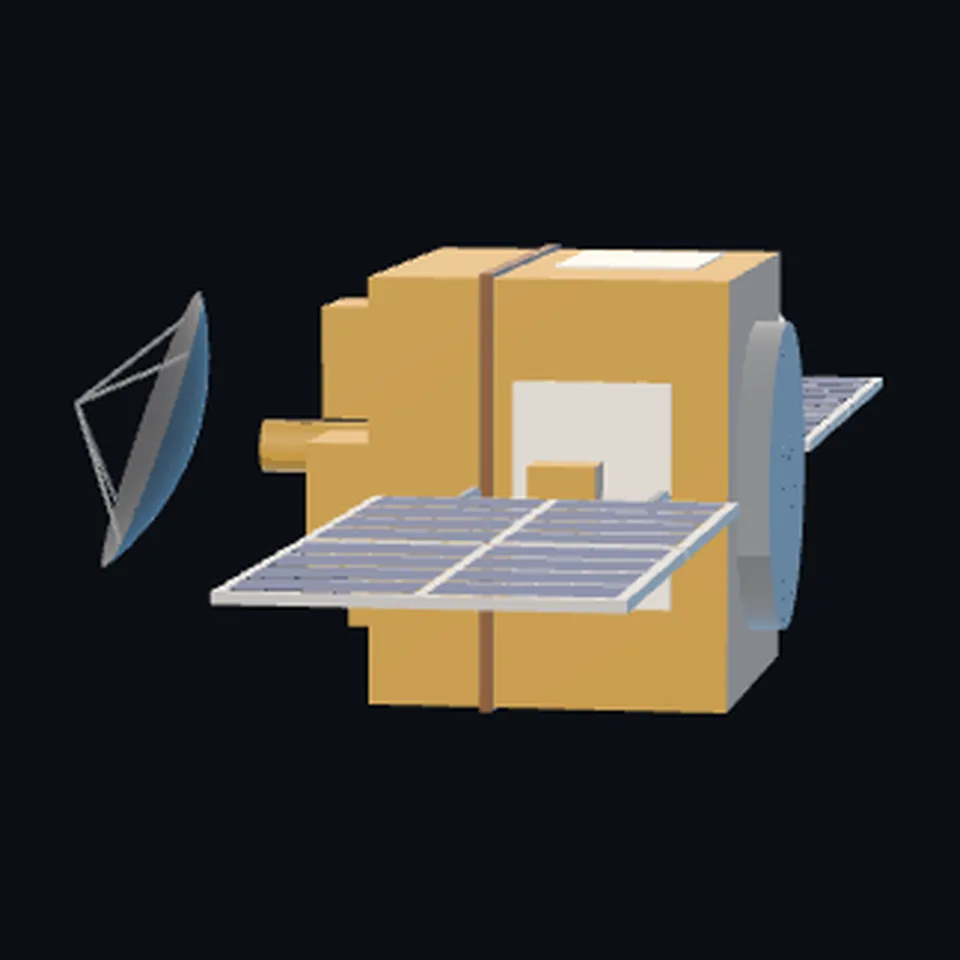 From the side
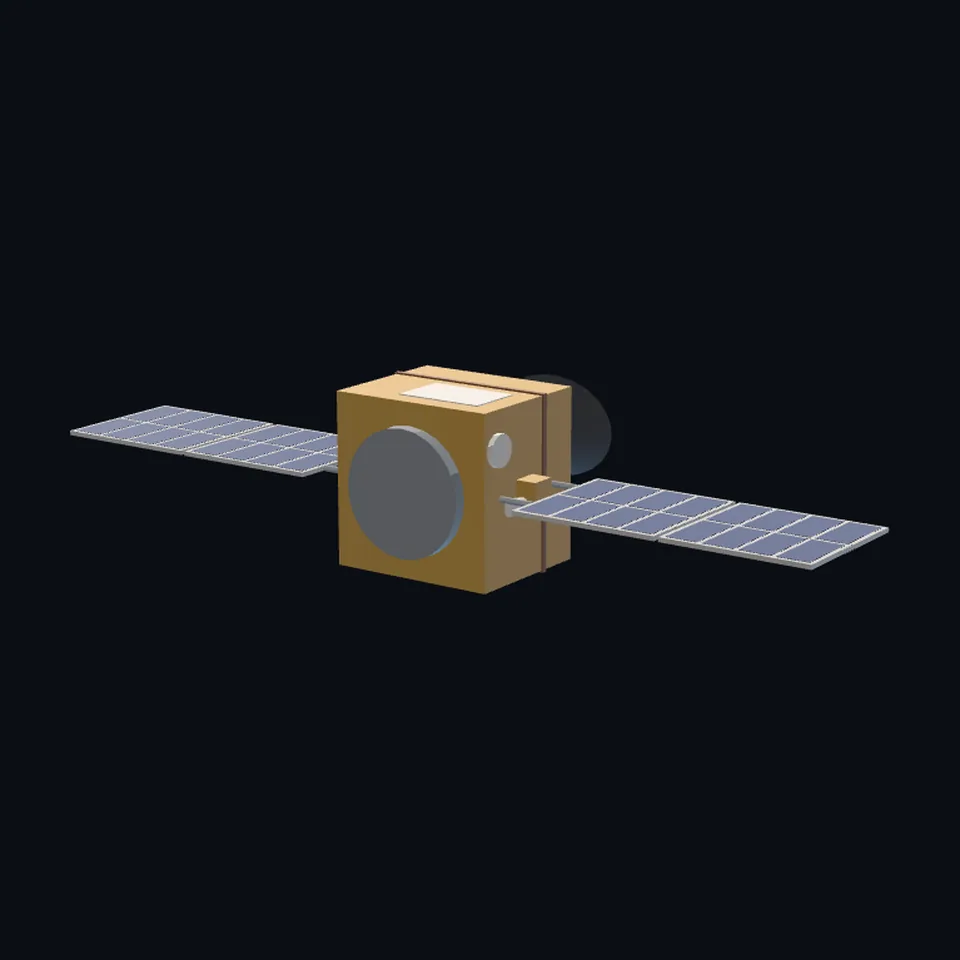 From behind
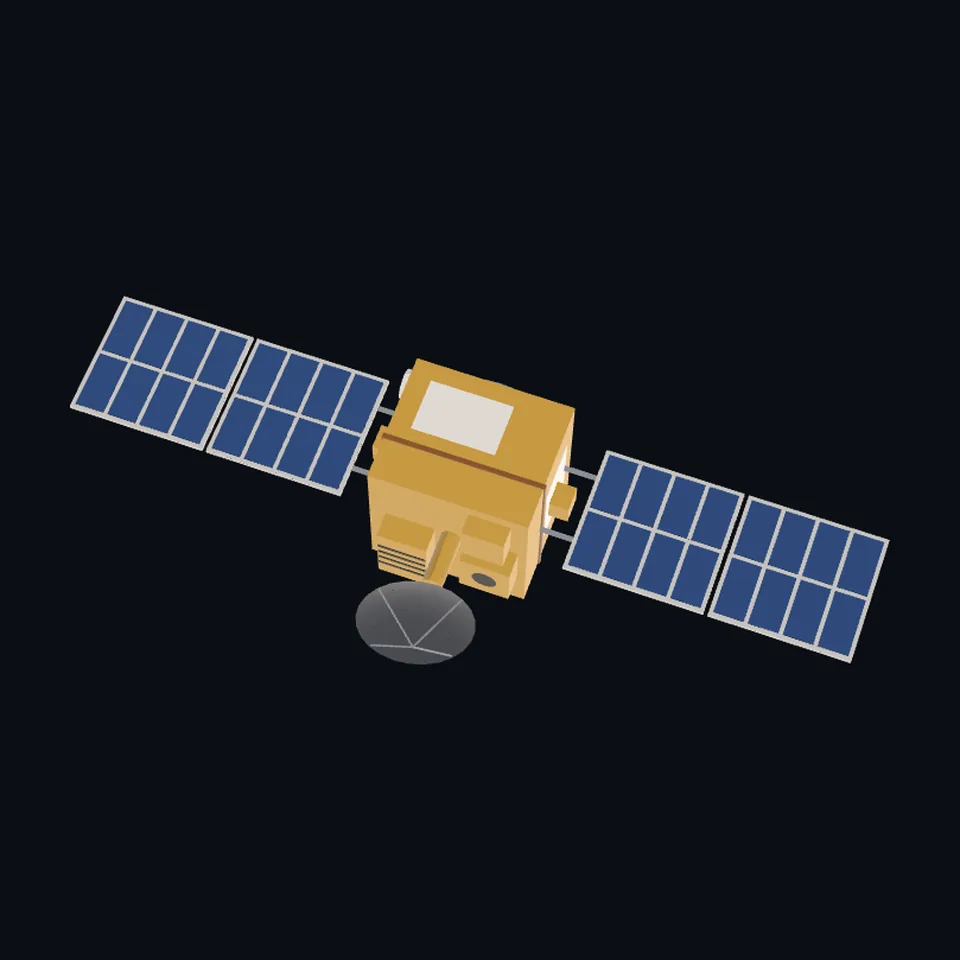 From above
About this model
EOS-06 is one of the 203 3D models Space Radar made itself: a satellite, built in code from published dimensions and photographs, with no image-to-3D generator and no one else’s mesh.
Shape built from published dimensions and pictures; details simplified. It has 4,850 triangles in a 33 kB glTF file, and is 1.4 m across at full scale.
On Space Radar’s live map it is drawn for the object with NORAD catalogue number 54361, where its published orbit puts it now. Open it on the map.
Dimensions and their sources
| Measure | Value |
|---|---|
| Mass | 1117 kg |
| Dish | 1.35 m |
| Panels per wing | 2 |
eoPortal, eoportal.org/satellite-missions/oceansat-3, OPENED 2026-10-27: 'Oceansat-3 uses the IRS-1 (Indian Remote Sensing Satellite-1) bus ... Oceansat-3 has a mass of 1117 kg with a structure consisting of a main platform and a secondary platform, which uses an aluminium honeycomb structure'; 'OSCAT-3 ... two conical scanning beams'. OURS: the platform's 1.9 x 1.9 x 1.1 m, the dish's 1.35 m (against the 1.9 m bus in ISRO's photograph), the wings' 1.7 x 1.6 m panels (read off ISRO's render), every item on the deck.
How it was made
Built in code from published dimensions and photographs, with no image-to-3D generator and no one else’s mesh. 3D model: built by Space Radar from published dimensions and ISRO's render and photograph of EOS-06 (ISRO, GODL-India).
The full record
built by this project in code (the private tool model-from-images: assemble.py, from a yaml of primitives), from the cited dimensions and the pictures under `references`; no image-to-3D model was used, and no published mesh: NASA's 3D Resources (1 583 paths, read 2026-10-27) has none of these craft, and no agency named here publishes a model of its own under terms that allow one
Where the map uses it. NORAD 54361 (EOS-6 (OCEANSAT-3)), in the active catalogue of 2026-10-26: ISRO's Oceansat follow-on launched in 2022, a gold platform with a dark 1.35 m scatterometer dish and two wings of two panels; public #1144
Licence note. ISRO's render of EOS-06 and ISRO's photograph of the craft on the PSLV fourth stage (Commons, GODL-India: attribution, commercial use and derivatives allowed) were looked at for the layout, with credit; nothing of any picture is in the file. The shape is this project's, under this repository's licence, built from published numbers (facts). NO LOGO AND NO LETTERING is on the mesh.
References 2
What the shape was compared with. None of these pictures is in the file.
- Render of EOS-06 (aka OceanSat-3) satellite with solar panels deployedIndian Space Research Organisation (ISRO)GODL-India (Government Open Data Licence - India; attribution; commercial use and derivatives allowed), as the Commons file's LicenseShortName reads, 2026-10-27
- EOS-6 (aka Oceansat-3) on PSLV fourth stageIndian Space Research Organisation (ISRO)GODL-India (Government Open Data Licence - India; attribution; commercial use and derivatives allowed), as the Commons file's LicenseShortName reads, 2026-10-27


Use it
The model is under the MIT licence: use it, change it and share it, in any project, also a paid one. Keep the credit:
EOS-06 3D model by Space Radar (spaceradar.ai), MIT LicenseAny glTF 2.0 loader that reads meshopt compression (EXT_meshopt_compression) opens the file: three.js with its MeshoptDecoder, Babylon.js, model-viewer. Tools such as glTF-Transform can write an uncompressed copy.
Or embed the viewer in your page:
<iframe src="https://www.spaceradar.ai/model/?id=eos-06" title="EOS-06, 3D model by Space Radar" width="600" height="450" loading="lazy" style="border:0;max-width:100%"></iframe>Related models