
Vostok parachutes
Shape built from published dimensions and pictures; details simplified.
Turn it in 3D
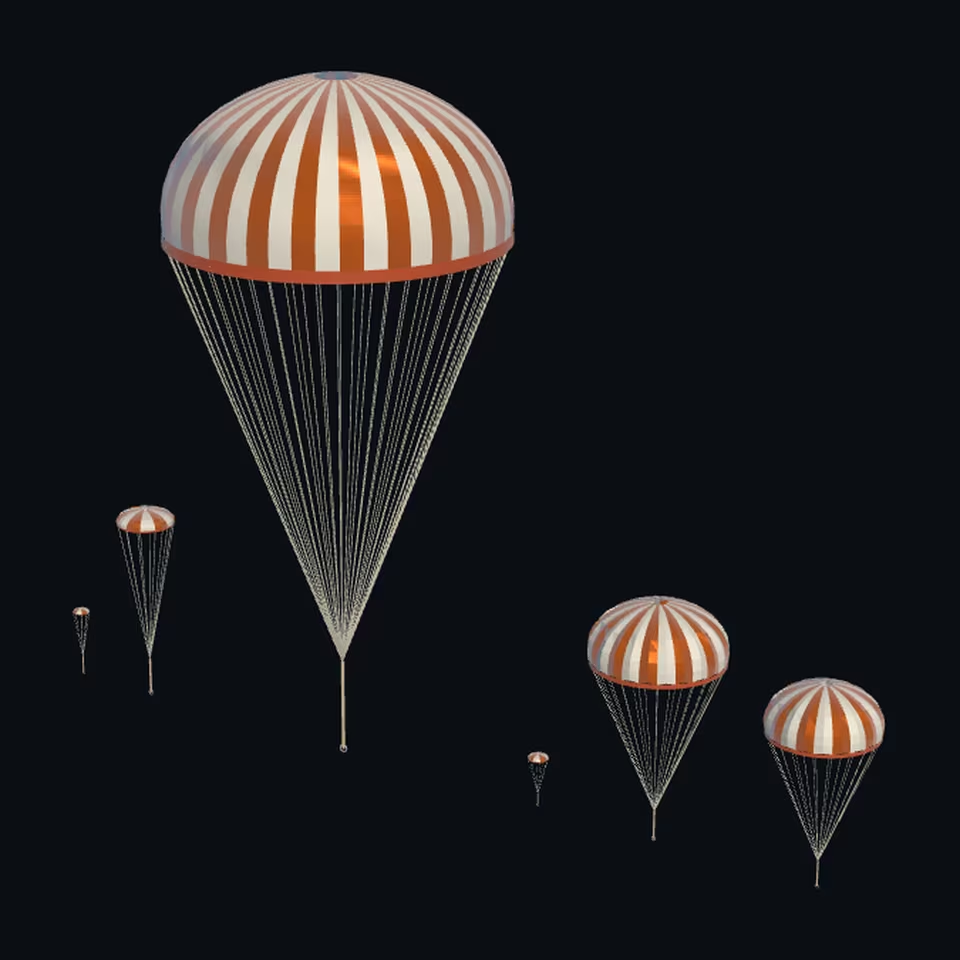
Open the 3D viewer (www.spaceradar.ai).
The viewer loads when you ask: about 700 kB the first time (three.js and the model), much less after.
Pictures 4
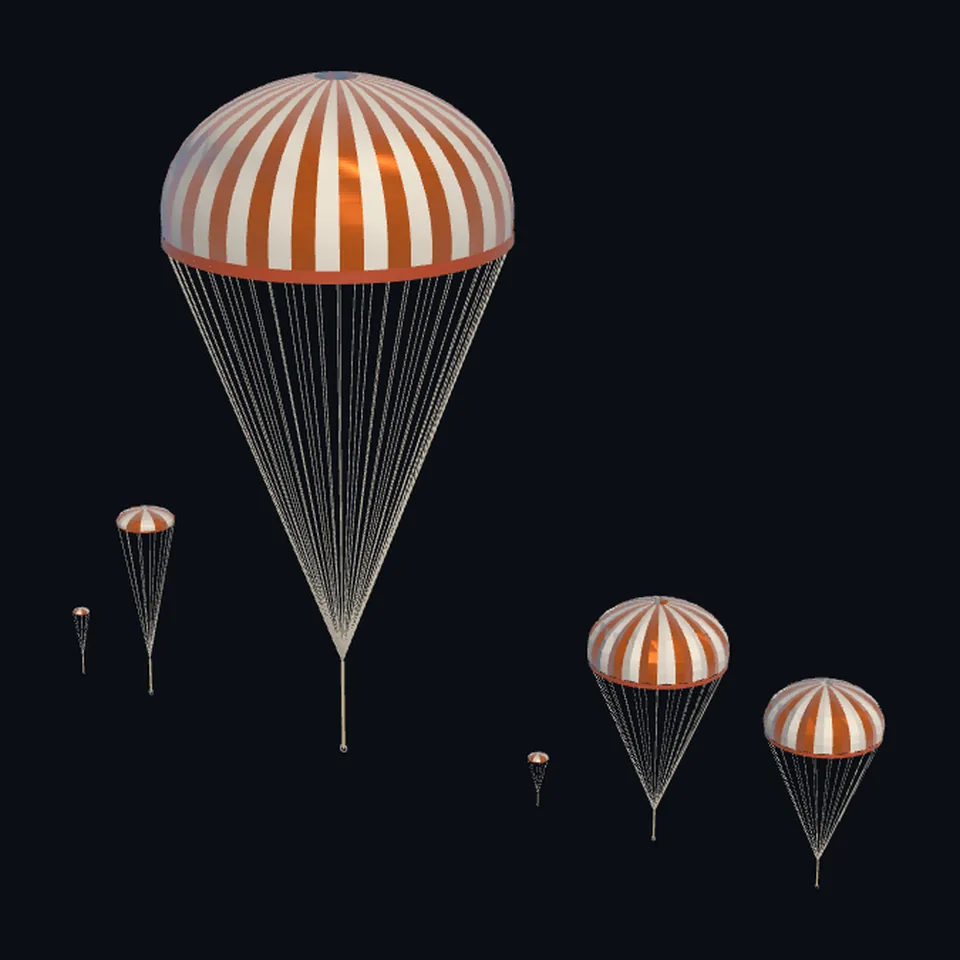 Three-quarter view
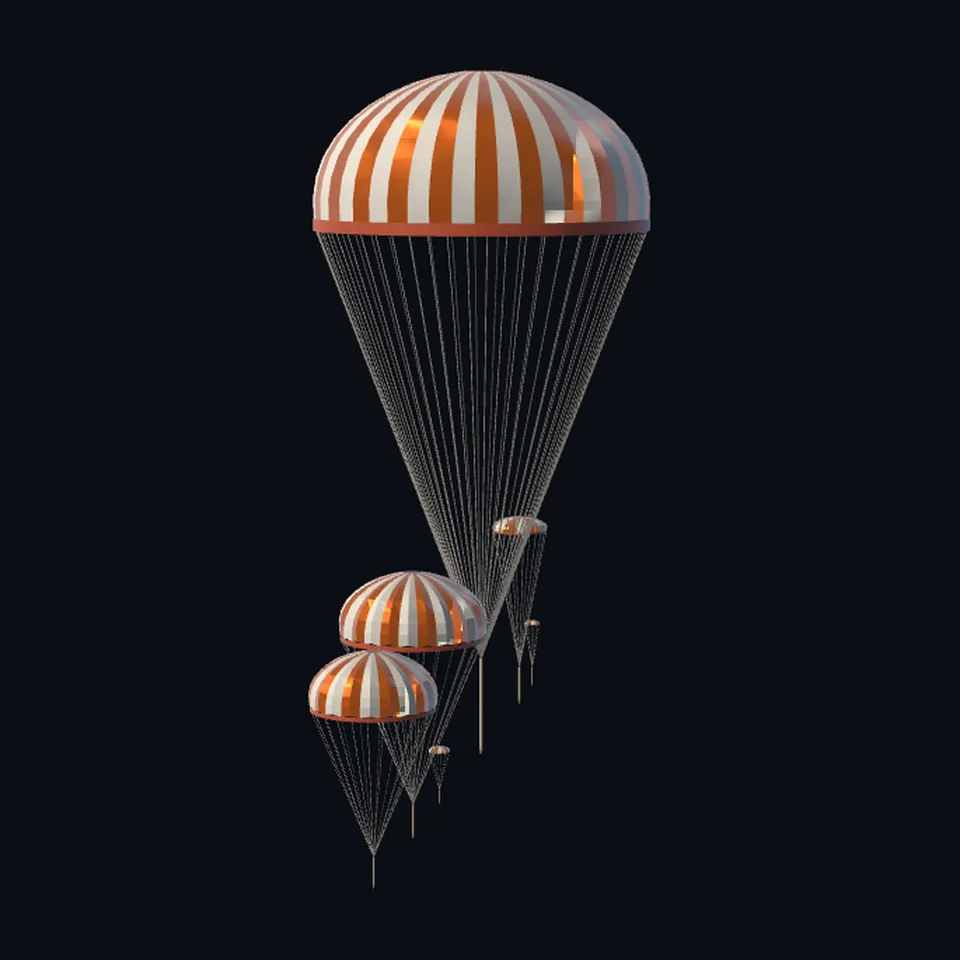 From the side
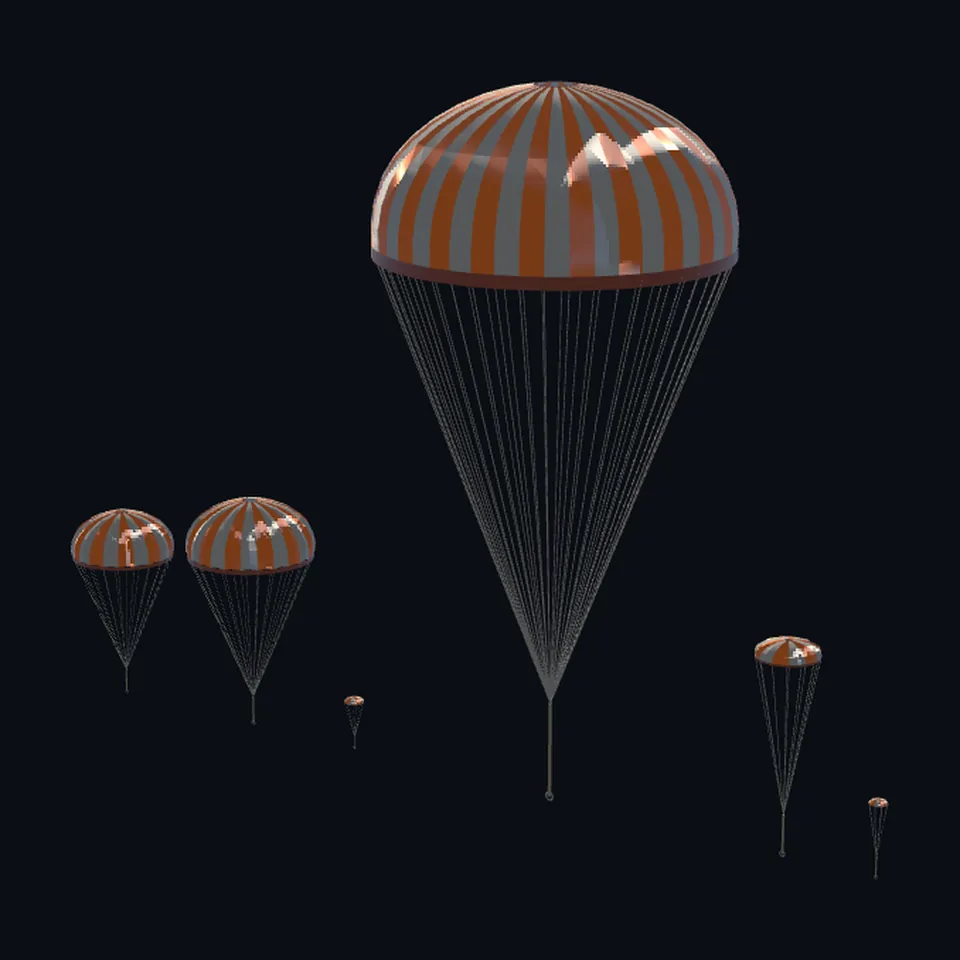 From behind
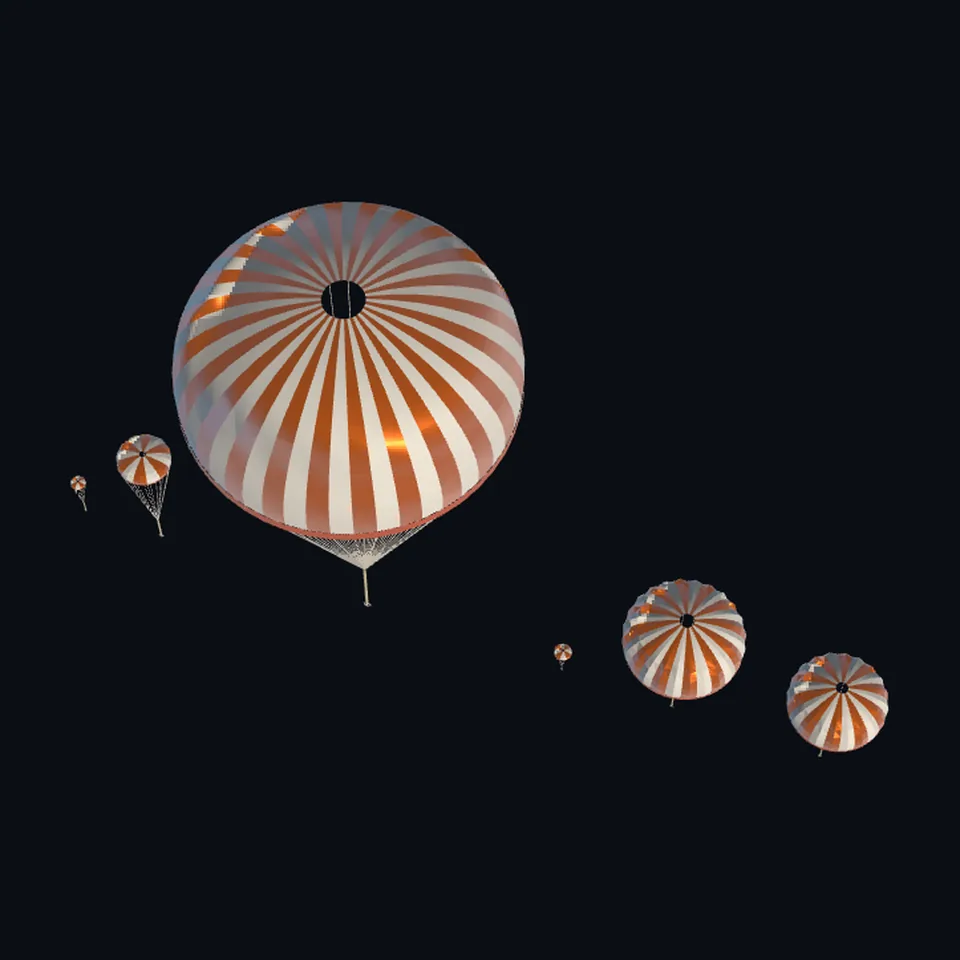 From above
About this model
Vostok parachutes is one of the 203 3D models Space Radar made itself: a crewed craft or station, built in code from published dimensions and photographs, with no image-to-3D generator and no one else’s mesh.
Shape built from published dimensions and pictures; details simplified. It has 8,664 triangles in a 121 kB glTF file, and is 27 m across at full scale.
It is part of the map’s library; no object on the live map is drawn with it today.
Dimensions and their sources
| Measure | Value |
|---|---|
| Capsule main area | 574 m² |
| Capsule braking area | 18 m² |
| Capsule pullout area | 1.5 m² |
| Pilot main area | 83.5 m² |
| Pilot reserve area | 56 m² |
| Nominal main diameter | 27 m |
RussianSpaceWeb, 'Botched Vostok launch tests emergency landing' (russianspaceweb.com/vostok-1k-4.html), read 2026-10-29, of the capsule of Korabl-Sputnik 4 (the PS-6415-59 system): 'a small pullout parachute with an area just 1.5 square meters' released 'a much larger 18-square-meter braking parachute' at 4 km and 180 m/s, slowing the capsule to 70 m/s, and at 2 km 'the main huge parachute with an area 574 square meters was released' (descent then 10 to 12 m/s). The cosmonaut's: Rambler, 'Парашюты для «космического десанта»' (news.rambler.ru/scitech/44174259-parashyuty-dlya-kosmicheskogo-d…), read 2026-10-28: the ejection seat 'with a main parachute of 83.5 square metres' and a reserve 'with a canopy of 56 square metres'; the seat's own drogue is drawn at 2 m^2 on the word of a search result that quoted a museum teaching document (museumday.mgpu.ru) which was NOT opened: ILLUSTRATIVE. The nominal diameters are a flat circle's (d = sqrt(4 A / pi): 27.0 m, 4.8 m, 1.4 m, 10.3 m, 8.4 m, 1.6 m). THE INFLATED SHAPE (0.66 of the nominal across, a gored oblate dome with a vent, a scalloped hem, one line to a gore, the lines 0.9 of the nominal long), the orange and white gores and the thickness of every line (made thicker than the real, so they show) are OURS and ILLUSTRATIVE: no drawing of the canopies was found. THE COSMONAUT'S CHUTES ARE A STAND-IN FOR THE SEAT'S: on 12 April 1961 the reserve opened on its own and both flew (RussianSpaceWeb, 'Landing of the Vostok spacecraft'). (read 2026-10-29)
How it was made
Built in code from published dimensions and photographs, with no image-to-3D generator and no one else’s mesh. 3D model: built by Space Radar from published canopy areas; compared with photographs of the capsule and the seat.
The full record
built by this project in code (tools/vostok-builder/, release 1.5.0 stage r15-c2: chutes.py); no agency or museum 3D model of this craft exists under a free licence (read 2026-10-29): NASA 3D Resources' file listing (1 583 paths, the GitHub tree of nasa/NASA-3D-Resources) has nothing of Vostok or the R-7 (its one Soyuz is the Apollo-Soyuz one); the Smithsonian's National Air and Space Museum records show physical models only (its 3D site was down); Wikimedia Commons has no 3D file of any of them; the downloadable meshes a web search found (CGTrader, MyMiniFactory, RenderHub, Unity) are sold or personal-use only. So it is built, as the quality bar says: from opened dimensions and many pictures of the flown hardware and the museum copies. No image-to-3D model was used and no published mesh.
Where the map uses it. MOMENTS (internal spec 0079, stage C2, internal #1051): the parachutes of Vostok, inflated: the capsule's pullout, braking and main canopies and the cosmonaut's drogue, main and reserve canopies, each its own part. THE ORIGIN OF EACH PART IS WHERE ITS SUSPENSION LINES MEET (the load hangs there), not its centre of mass; the canopy stands above it. The six are laid in a row along +X in the file, `attach` says where each origin is. No record draws it yet.
Licence note. The shape is this project's, under this repository's licence, built from published numbers (facts). Every picture it was compared with is listed under references; each was only looked at, none was traced, copied or projected, and the share-alike ones (CC BY-SA) are credited all the same.
References 1
What the shape was compared with. None of these pictures is in the file.
- Vostok ejector seat.jpgStolbovskyCC BY 4.0 (Commons, read 2026-10-28)

Use it
The model is under the MIT licence: use it, change it and share it, in any project, also a paid one. Keep the credit:
Vostok parachutes 3D model by Space Radar (spaceradar.ai), MIT LicenseAny glTF 2.0 loader that reads meshopt compression (EXT_meshopt_compression) opens the file: three.js with its MeshoptDecoder, Babylon.js, model-viewer. Tools such as glTF-Transform can write an uncompressed copy.
Or embed the viewer in your page:
<iframe src="https://www.spaceradar.ai/model/?id=vostok-chutes" title="Vostok parachutes, 3D model by Space Radar" width="600" height="450" loading="lazy" style="border:0;max-width:100%"></iframe>Related models
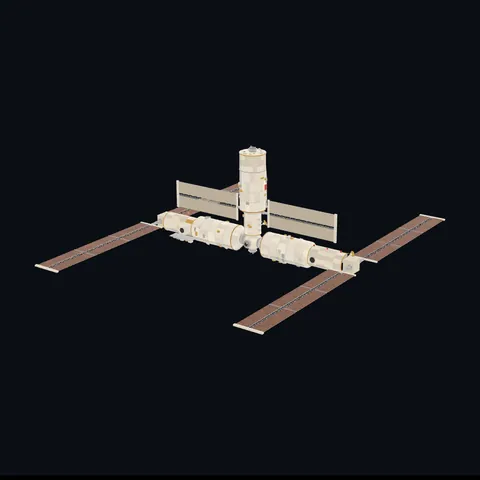
Tiangong (core module)
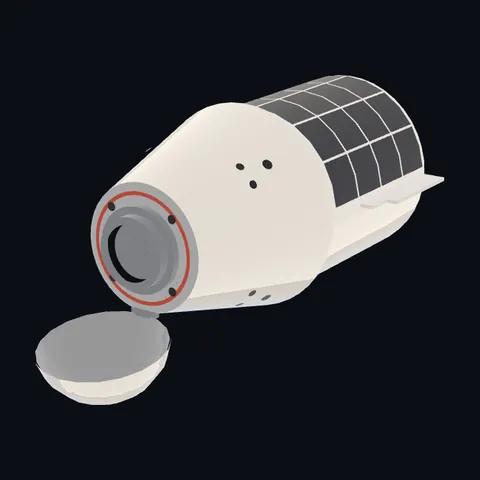
Shape built from published dimensions and pictures; details simplified.
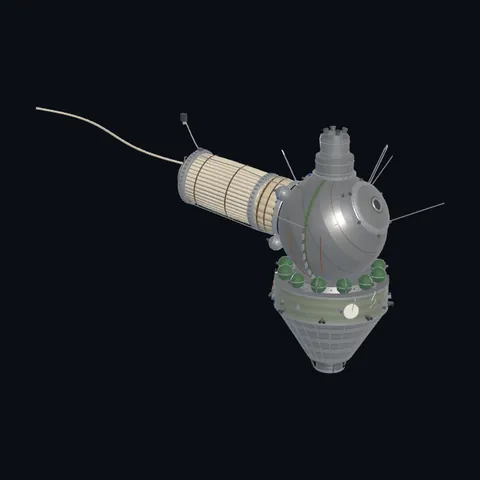
Voskhod 3KD
Shape built from published dimensions and pictures; details simplified.
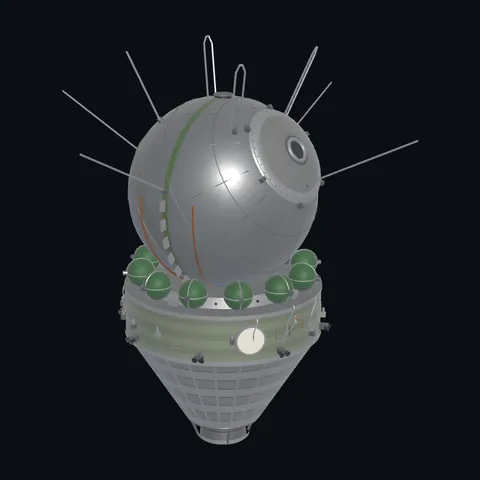
Vostok 3KA
Shape built from published dimensions and pictures; details simplified.
Cargo Dragon
Shape built from published dimensions and pictures; details simplified.