
Starlink (first generation)
Shape built from published dimensions and pictures; details simplified.
Turn it in 3D
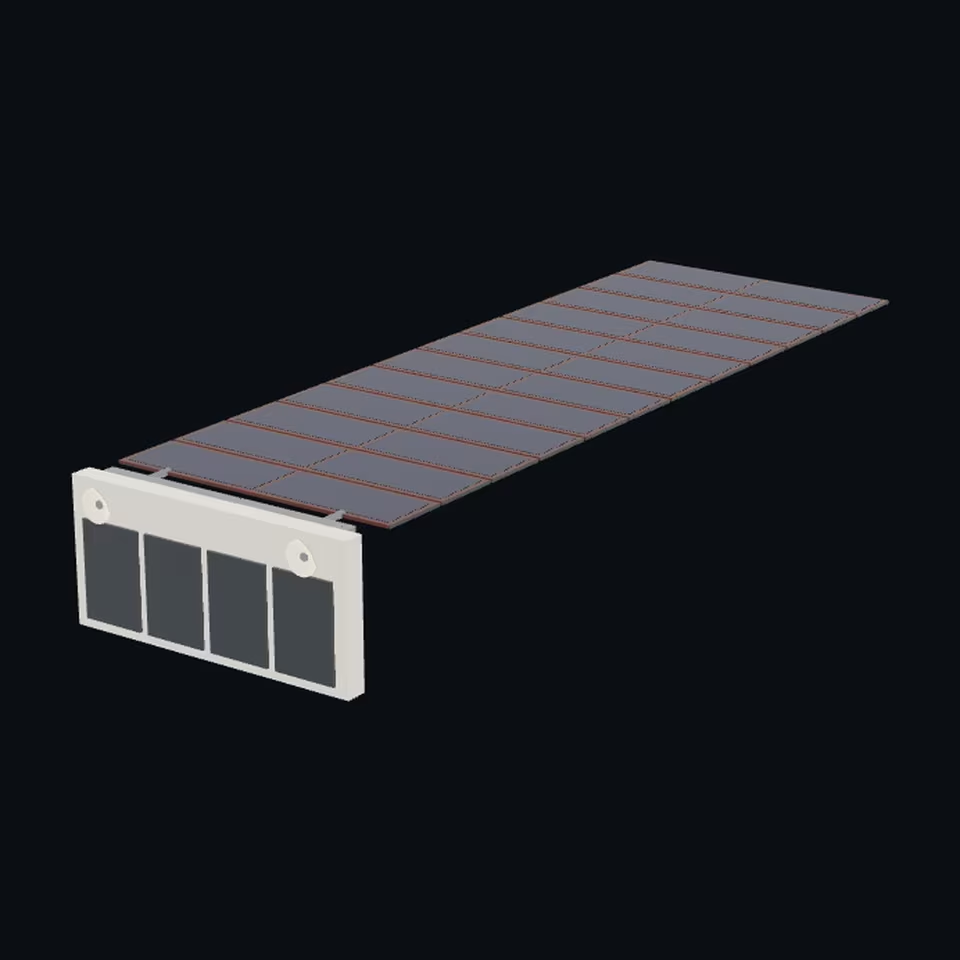
Open the 3D viewer (www.spaceradar.ai).
The viewer loads when you ask: about 700 kB the first time (three.js and the model), much less after.
Pictures 4
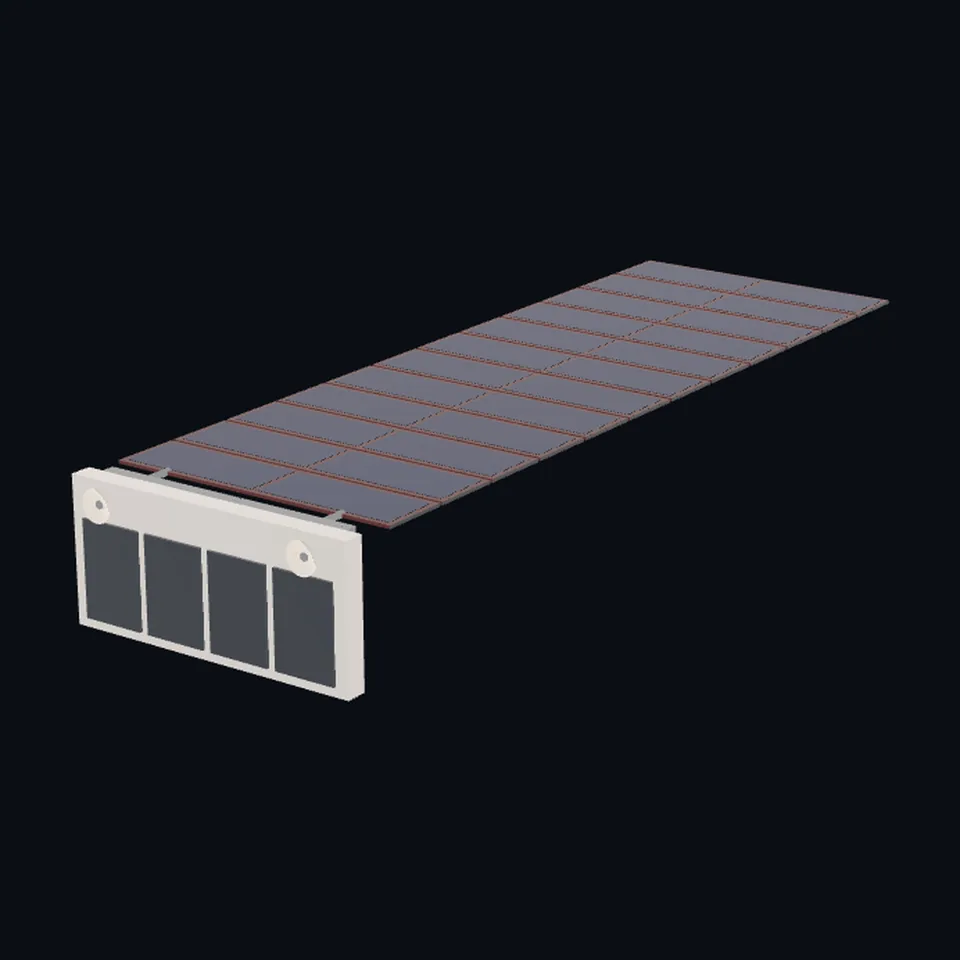 Three-quarter view
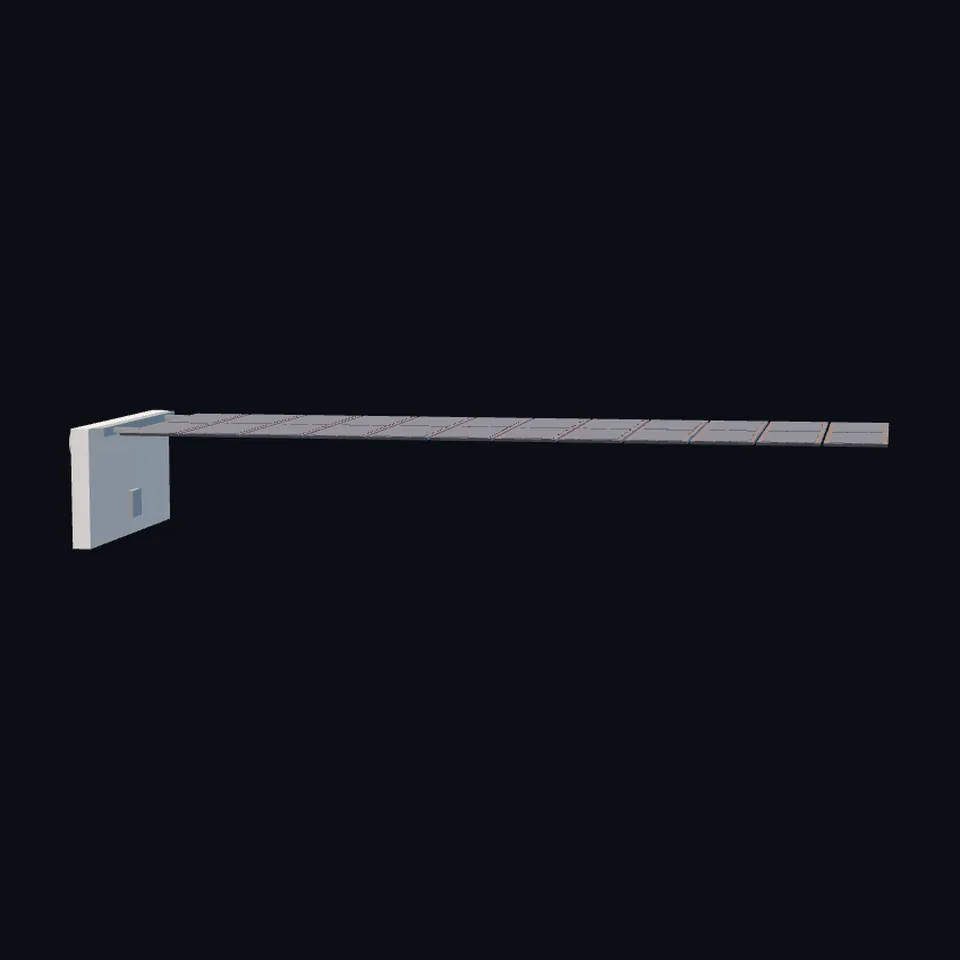 From the side
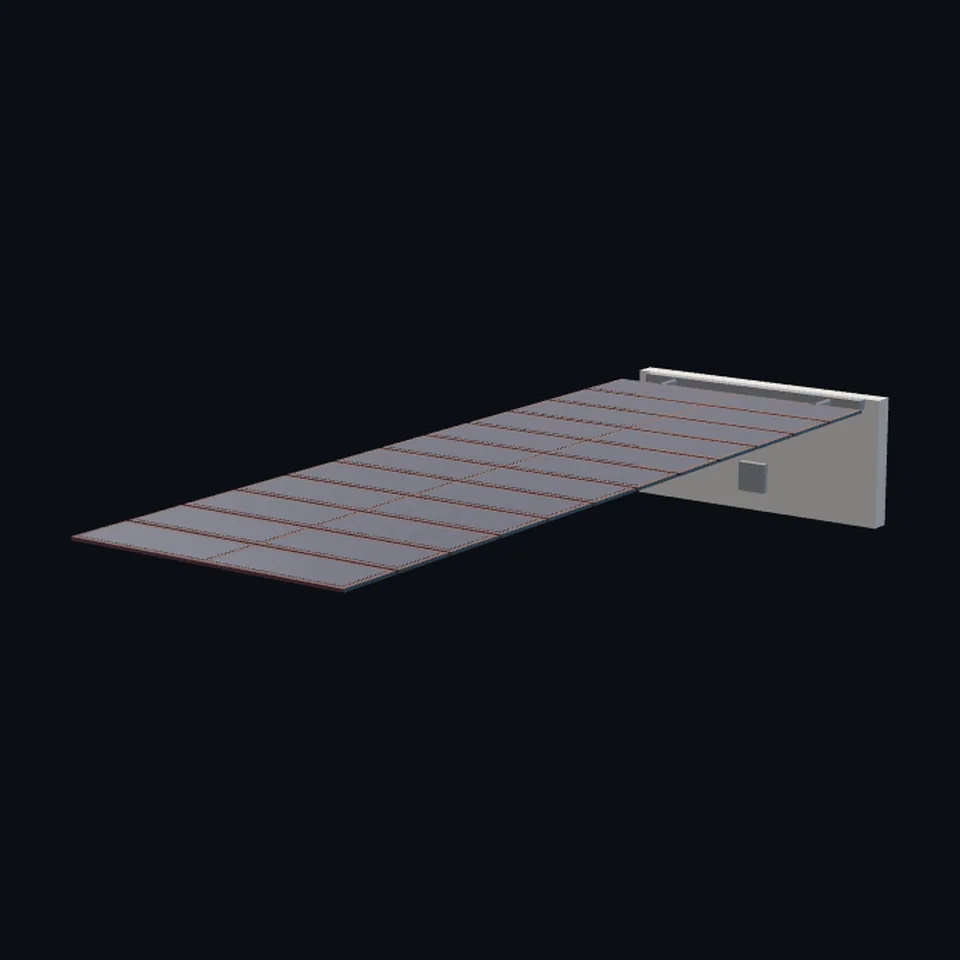 From behind
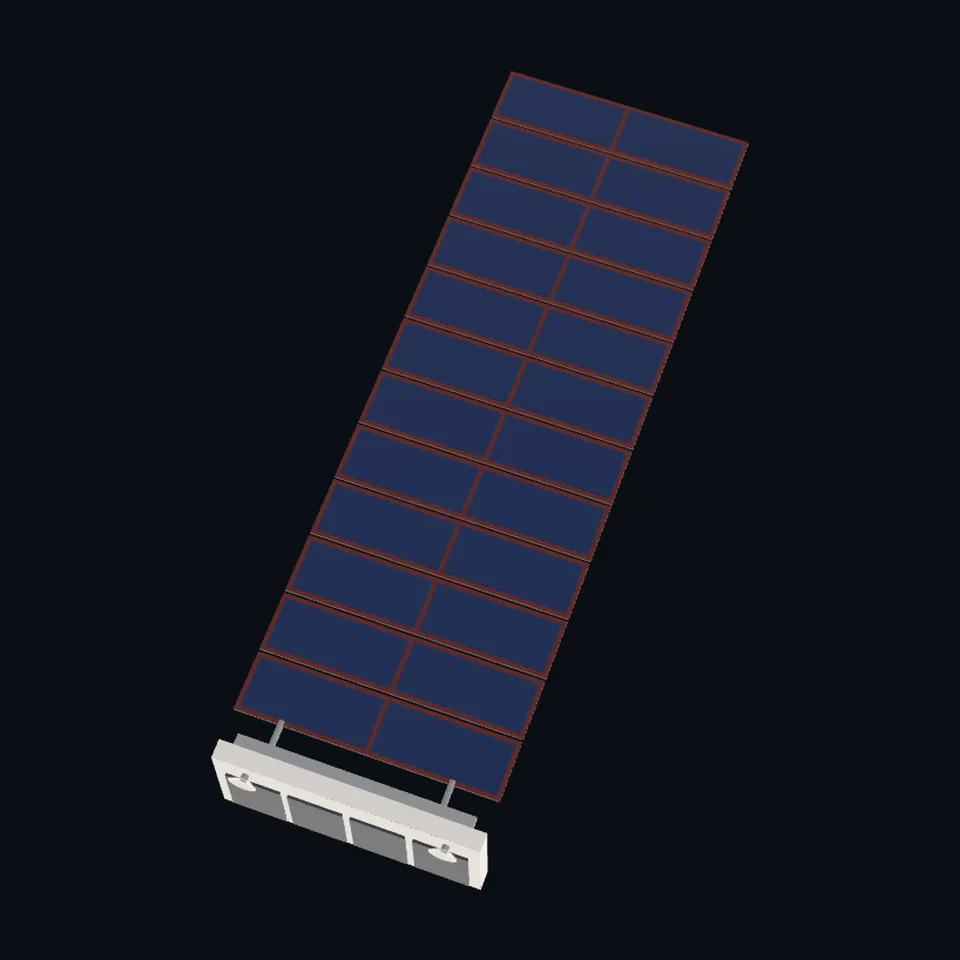 From above
About this model
Starlink (first generation) is one of the 203 3D models Space Radar made itself: a satellite, built in code from published dimensions and photographs, with no image-to-3D generator and no one else’s mesh.
Shape built from published dimensions and pictures; details simplified. It has 5,180 triangles in a 30 kB glTF file, and is 8.1 m across at full scale.
It is part of the map’s library; no object on the live map is drawn with it today.
Dimensions and their sources
| Measure | Value |
|---|---|
| Bus length | 2.8 m |
| Bus width | 1.3 m |
| Array width | 2.8 m |
| Array length | 8.1 m |
J. McDowell, planet4589.org/astro/starsim/index.html, opened 2026-10-13: 'In Oct 2022 SpaceX released an FCC filing which gave the dimensions of the proposed Generation 2 Starlinks, as well as an intermediate Gen2 to be launched on Falcon 9: Satellite Bus Dimensions (m) Solar array size (m) Mass (kg) V1.5 2.8 x 1.3m 2.8 x 8.1m 303 V2 Mini 4.1 x 2.7m 4.1 x 12.8m 800'. THE FCC FILING ITSELF WAS NOT OPENED (the FCC's server refused this machine); the numbers are McDowell's table of it. A PEER-REVIEWED PAPER AGREES TO THE SQUARE CENTIMETRE: Fankhauser, Tyson and Askari, 'Satellite Optical Brightness', The Astronomical Journal 166:59 (2023), arXiv:2305.11123, opened 2026-10-13, section 6.1: 'The two largest surfaces on Starlink v1.5 are the solar array and the chassis. The solar array has an area of 22.68 m2, and the chassis nadir has an area of 3.64 m2.' (2.8 x 8.1 = 22.68; 2.8 x 1.3 = 3.64); 'In nominal operations, the chassis points directly nadir and the solar array is perpendicular to the chassis and in the direction of the Sun.'; 'These satellites have a reflective sticker on the chassis nadir and dark pigmented backsheet on the solar arrays'. SpaceX's letter (under `references`), opened 2026-10-13: 'this inter-cell backing material was initially white, but it is now pigmented dark red'. Gunter's Space Page, space.skyrocket.de/doc_sdat/starlink-v1-0.htm, opened 2026-10-13: 'The Starlink satellites feature a flat panel design with a single solar panel and have a mass of about 260 kg.' NOT CITED: the chassis's thickness (0.2 m), how many panels the wing folds into (12, two cells across), the four antenna tiles and two small dishes on the Earth face (their count and places), the struts (read 2026-10-13)
How it was made
Built in code from published dimensions and photographs, with no image-to-3D generator and no one else’s mesh. 3D model: built by Space Radar from published dimensions; compared with a render by Wikideas1 (Wikimedia Commons, CC BY 4.0).
The full record
built by this project in code (the private tool model-from-images: assemble.py, from a yaml of primitives), from the cited dimensions and the pictures under `references`; no image-to-3D model was used, and no published mesh (NASA's 3D Resources on GitHub, 1 583 paths read 2026-10-13, has none of this craft; its operator is not known to publish one, and a model on a marketplace is somebody else's work)
Where the map uses it. any record of klass satellite whose name has the word STARLINK and whose launch year is 2022 or earlier (2 180 records in the live saved data of 2026-10-12): the first generation, v1.0 and v1.5, the flat bus with ONE solar wing. It was, and while this file is on its way still is, the procedural shape (scene/models.js `starlink-v1`: the wing laid flat, 9 m of this project's own); public #1000
Licence note. CC BY 4.0 (the editor's render it was compared with, credited under `references`); the shape is this project's, under this repository's licence. NO LOGO AND NO LETTERING is on the mesh: the operator's marks are trademarks and are not drawn.
References 2
What the shape was compared with. None of these pictures is in the file.
- Starlink 01Wikideas1 (Wikimedia Commons)CC BY 4.0
- SpaceX, letter to the FCC of 1 August 2022 with 'Brightness Mitigation Best Practices for Satellite Operators' attachedSpaceXa public filing with the FCC, read; the drawings in it are SpaceX's and nothing of them is reproduced

Use it
The model is under the MIT licence: use it, change it and share it, in any project, also a paid one. Keep the credit:
Starlink (first generation) 3D model by Space Radar (spaceradar.ai), MIT LicenseAny glTF 2.0 loader that reads meshopt compression (EXT_meshopt_compression) opens the file: three.js with its MeshoptDecoder, Babylon.js, model-viewer. Tools such as glTF-Transform can write an uncompressed copy.
Or embed the viewer in your page:
<iframe src="https://www.spaceradar.ai/model/?id=starlink-v1" title="Starlink (first generation), 3D model by Space Radar" width="600" height="450" loading="lazy" style="border:0;max-width:100%"></iframe>Related models
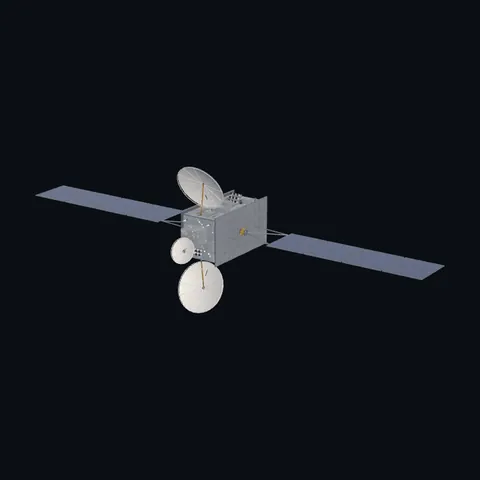
A2100AX satellite bus
Shape built from published dimensions and the maker’s renders; details estimated.
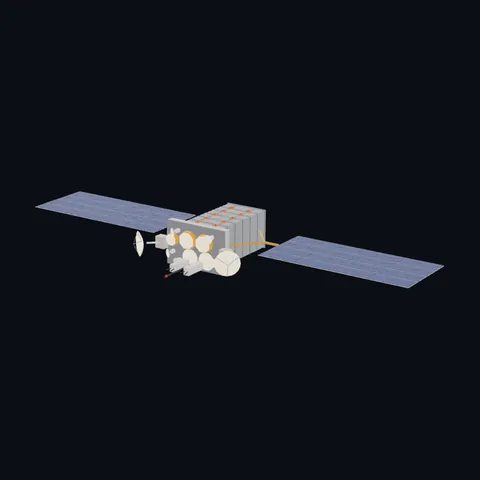
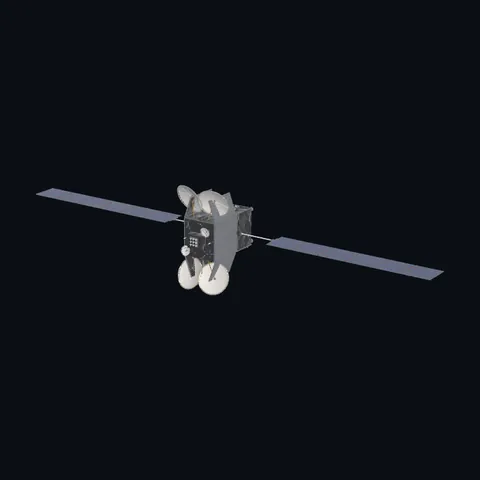
Boeing 702 satellite bus
Shape built from published dimensions and the maker’s renders; details estimated.