
MUOS
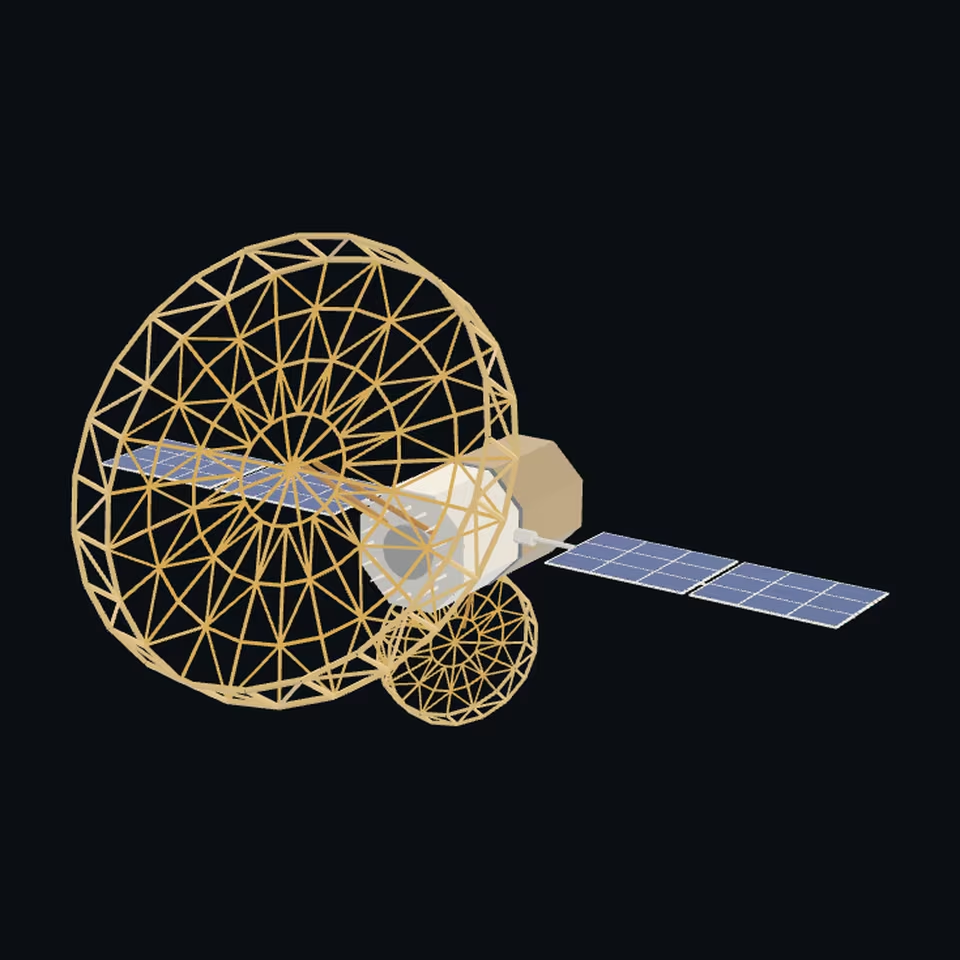
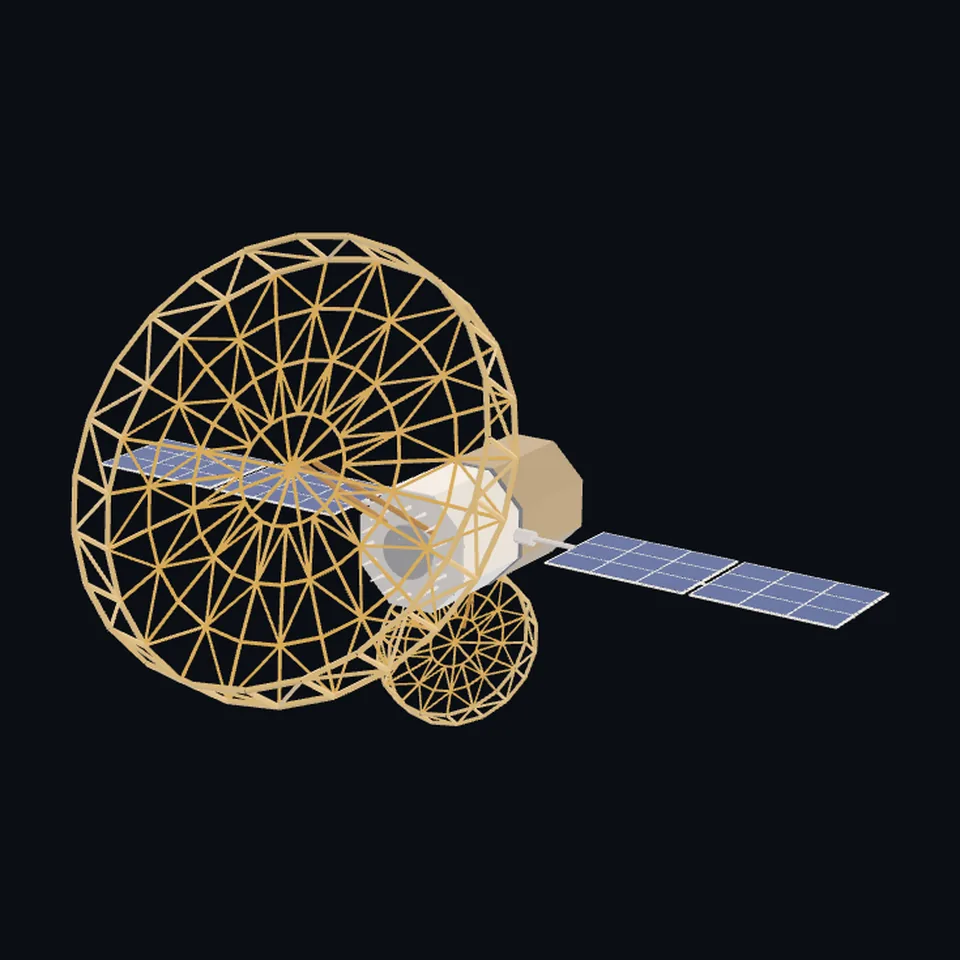
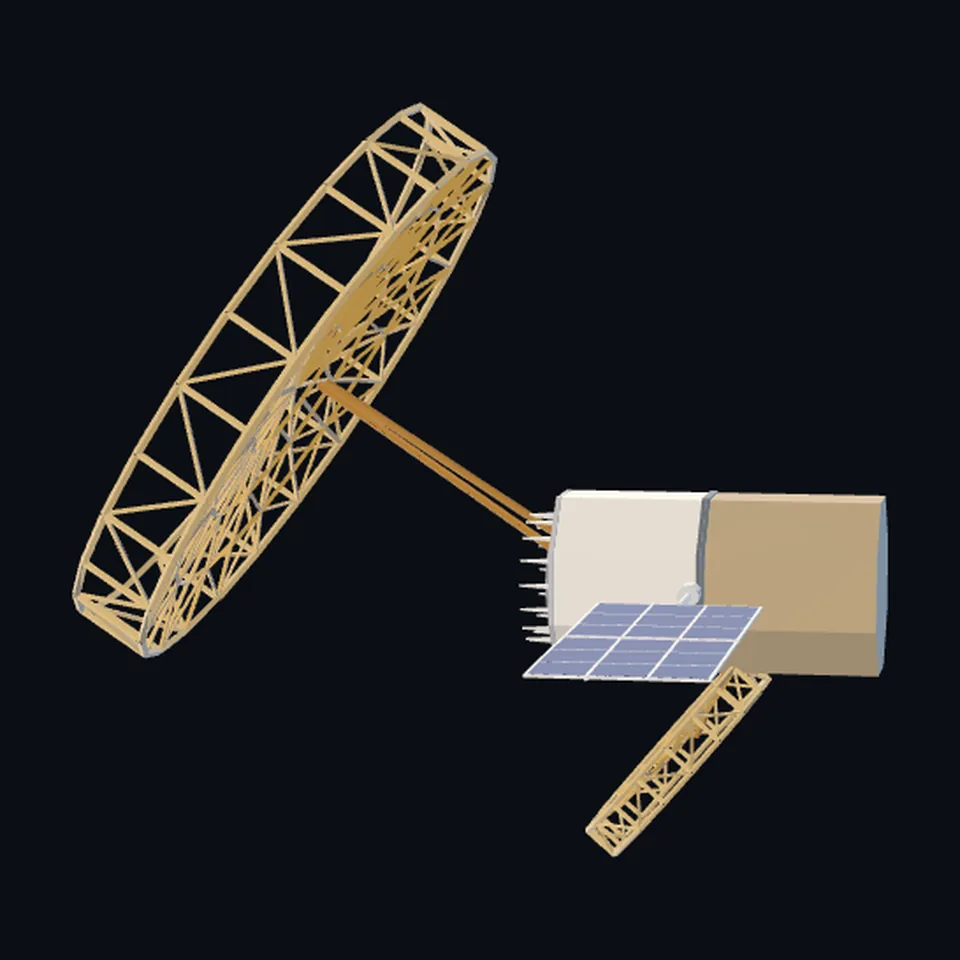
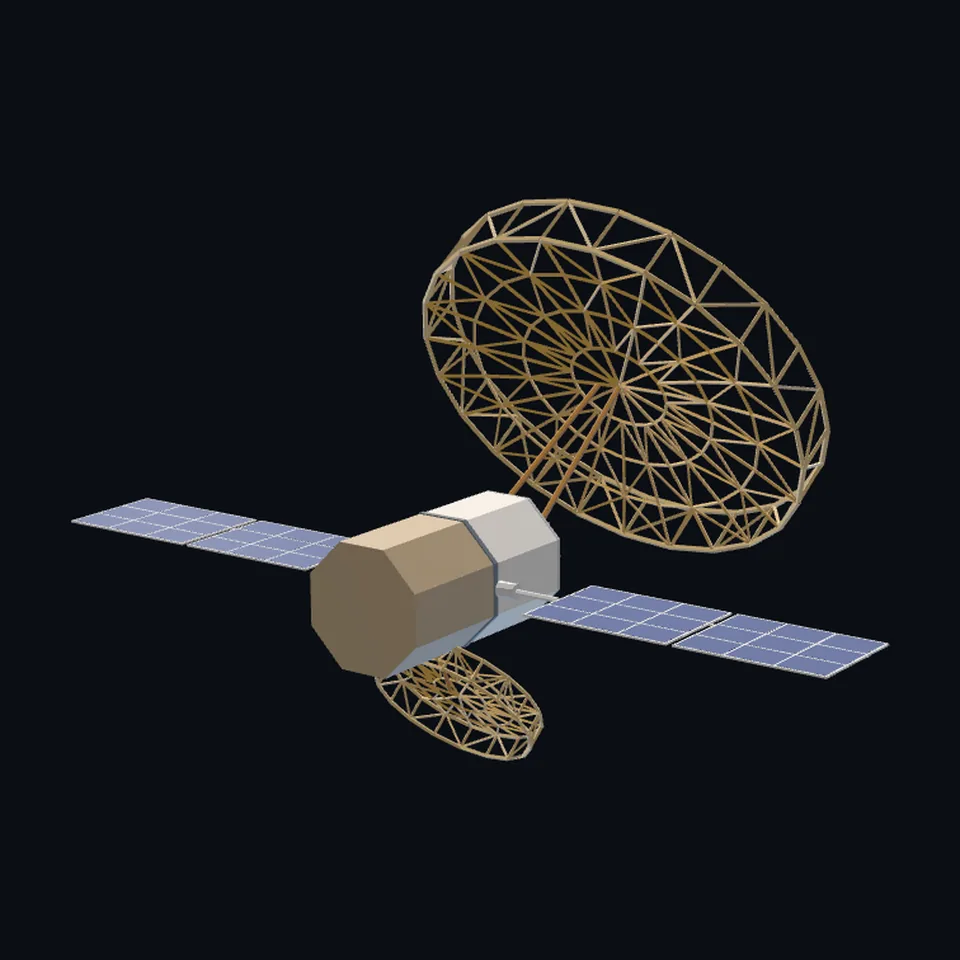
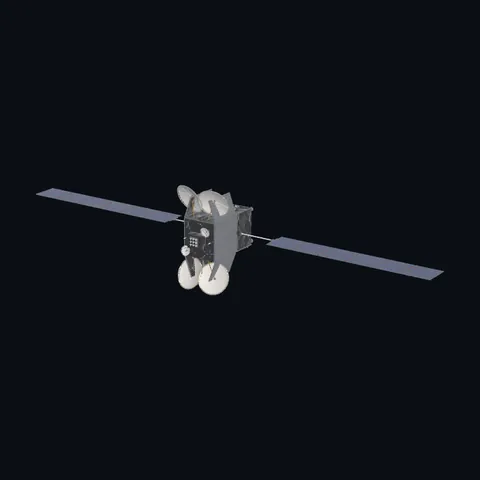
Shape built from published dimensions and pictures; details simplified.
Turn it in 3D
Open the 3D viewer (www.spaceradar.ai).
The viewer loads when you ask: about 700 kB the first time (three.js and the model), much less after.
Pictures 4
 Three-quarter view
 From the side
 From behind
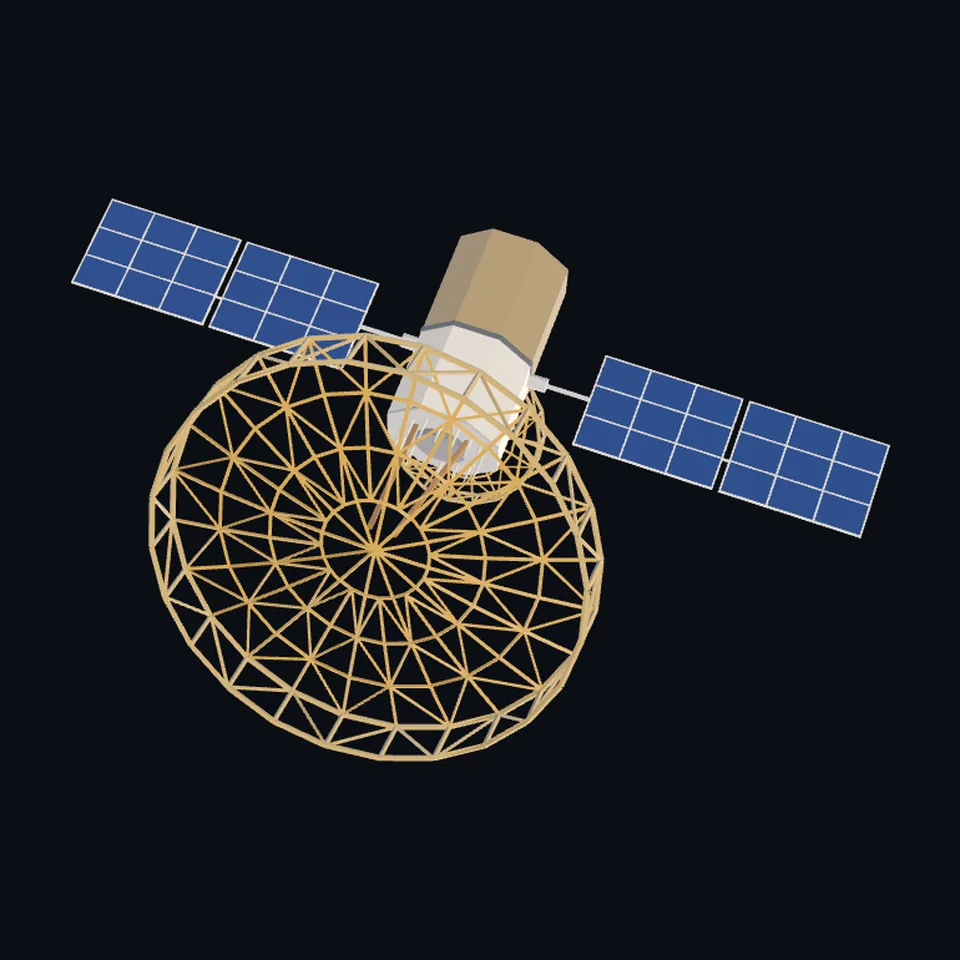 From above
About this model
MUOS is one of the 203 3D models Space Radar made itself: a satellite, built in code from published dimensions and photographs, with no image-to-3D generator and no one else’s mesh.
Shape built from published dimensions and pictures; details simplified. It has 9,546 triangles in a 82 kB glTF file, and is 28 m across at full scale.
It is part of the map’s library; no object on the live map is drawn with it today.
Dimensions and their sources
| Measure | Value |
|---|---|
| Span | 28 m |
| Bus width | 4.3 m |
| Bus height | 7.9 m |
| Reflectors | 14 × 5.4 m |
Naval Technology's project page, naval-technology.com/projects/mobile-user-objective-system-muos…, read 2026-10-27: 'The MUOS module has a wingspan of 92ft, bus width of 14ft and bus height of 26ft.' (28.0 m, 4.3 m, 7.9 m); 'The module's antenna diameter is 46ft'. Harris's press release (aeroweb-fr.net copy of the 2012 release), read 2026-10-27: 'a 14-meter diameter' reflector 'for multiple-beam operation' and a 5.4-meter one 'for legacy mission operations', both 'fixed to the satellite by precision booms'. Lockheed Martin (news.lockheedmartin.com, 2014-01-13, via search): 16 UHF beams from a multi-beam assembly; A2100 bus. Shapes, the ring of antenna stubs on the top, two wings of two panels, the long boom and the two gold reflectors are read off the Navy's released art (Commons: 'MUOS new.jpg', 'MUOS.jpg', public domain). NO PAGE GIVES THE REFLECTORS' DISTANCE FROM THE BODY, a panel's size or the exact tilt of a reflector: those are OURS (a reflector about 0.7 diameters off its feed); the body is drawn as an eight-sided prism whose corners are the cited 4.3 m.
How it was made
Built in code from published dimensions and photographs, with no image-to-3D generator and no one else’s mesh. 3D model: built by Space Radar from public US Navy art and published numbers (public domain sources).
The full record
built by this project in code (the private tool model-from-images: assemble.py, from a yaml of primitives), from the cited dimensions and the pictures under `references`; no image-to-3D model was used, and no published mesh (NASA's 3D Resources has none of this craft and no agency model of it was found on 2026-10-27). ONLY PUBLIC, OFFICIALLY RELEASED PICTURES AND NUMBERS WERE USED: nothing beyond what the US Air Force, Space Force, Navy or the maker has released is drawn, and where a page does not say (the inside of a sensor, a payload's layout, the size of a part) the part is a plain closed shape or is left out, and the row says which.
Where the map uses it. the five Mobile User Objective System records (`MUOS-1` to `MUOS-5`, 5 in the live saved data of 2026-10-12), by number: the Navy's narrowband communications satellites on Lockheed Martin's A2100 bus, known by their two gold mesh reflectors. They wore the generic satellite; public #1098
Licence note. Public domain for the pictures read off (works of the US federal government, the Commons API's LicenseShortName, read 2026-10-27); the shape is this project's, under this repository's licence, built from published numbers (facts). NO LOGO AND NO LETTERING is on the mesh. NO MAKER'S PRESS-KIT PICTURE WAS COPIED OR PROJECTED: where one was looked at (named in `dimensions.source`) it is said so there.
References 2
What the shape was compared with. None of these pictures is in the file.


Use it
The model is under the MIT licence: use it, change it and share it, in any project, also a paid one. Keep the credit:
MUOS 3D model by Space Radar (spaceradar.ai), MIT LicenseAny glTF 2.0 loader that reads meshopt compression (EXT_meshopt_compression) opens the file: three.js with its MeshoptDecoder, Babylon.js, model-viewer. Tools such as glTF-Transform can write an uncompressed copy.
Or embed the viewer in your page:
<iframe src="https://www.spaceradar.ai/model/?id=muos" title="MUOS, 3D model by Space Radar" width="600" height="450" loading="lazy" style="border:0;max-width:100%"></iframe>Related models
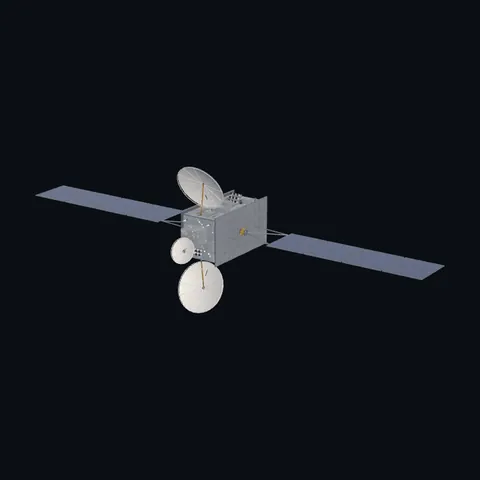
A2100AX satellite bus
Shape built from published dimensions and the maker’s renders; details estimated.
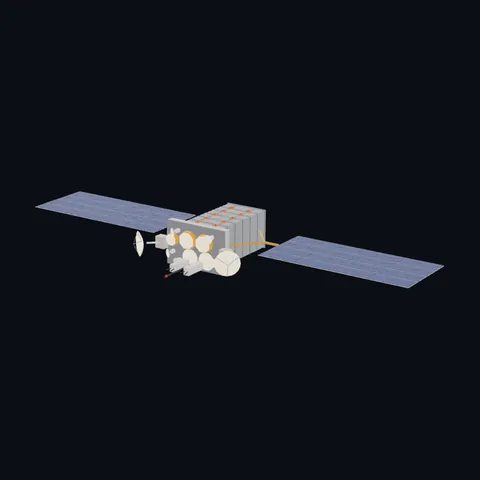
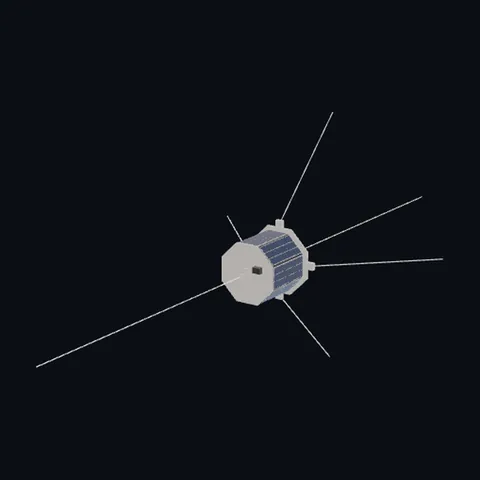
Boeing 702 satellite bus
Shape built from published dimensions and the maker’s renders; details estimated.