
Cygnus
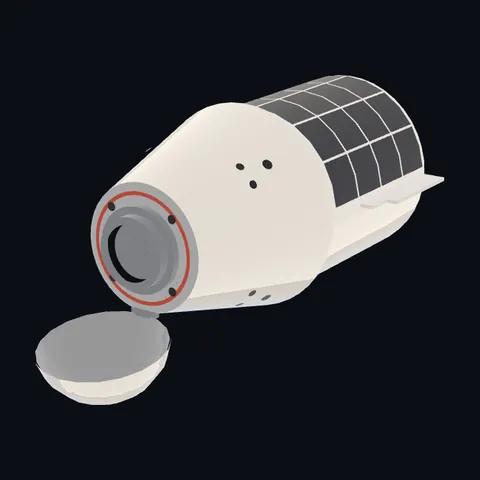
Shape built from photographs; proportions approximate.
Turn it in 3D
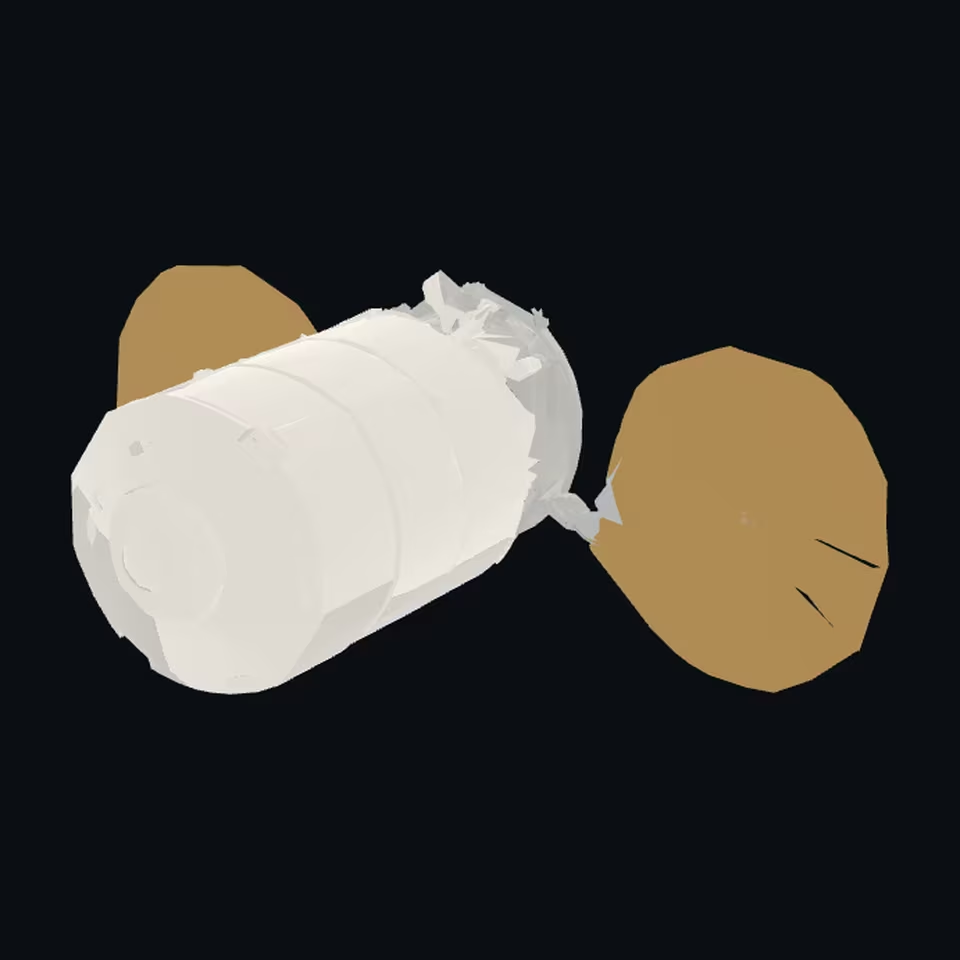
Open the 3D viewer (www.spaceradar.ai).
The viewer loads when you ask: about 700 kB the first time (three.js and the model), much less after.
Pictures 4
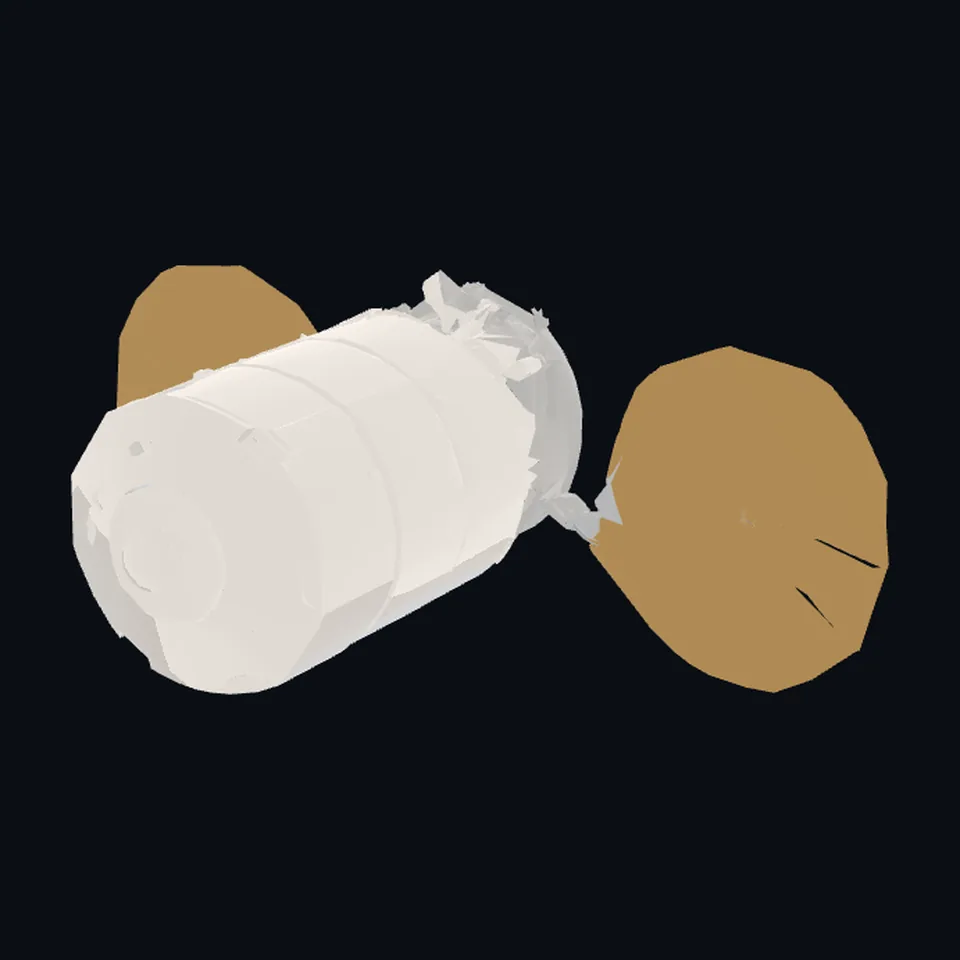 Three-quarter view
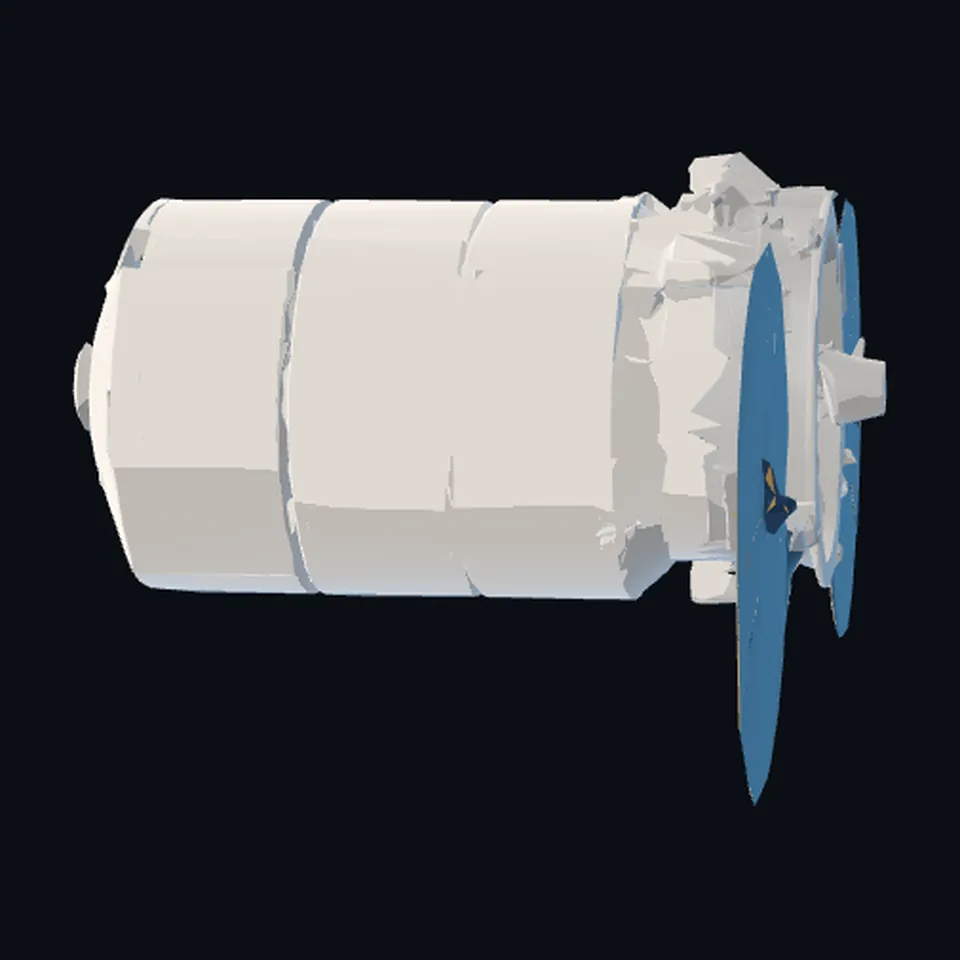 From the side
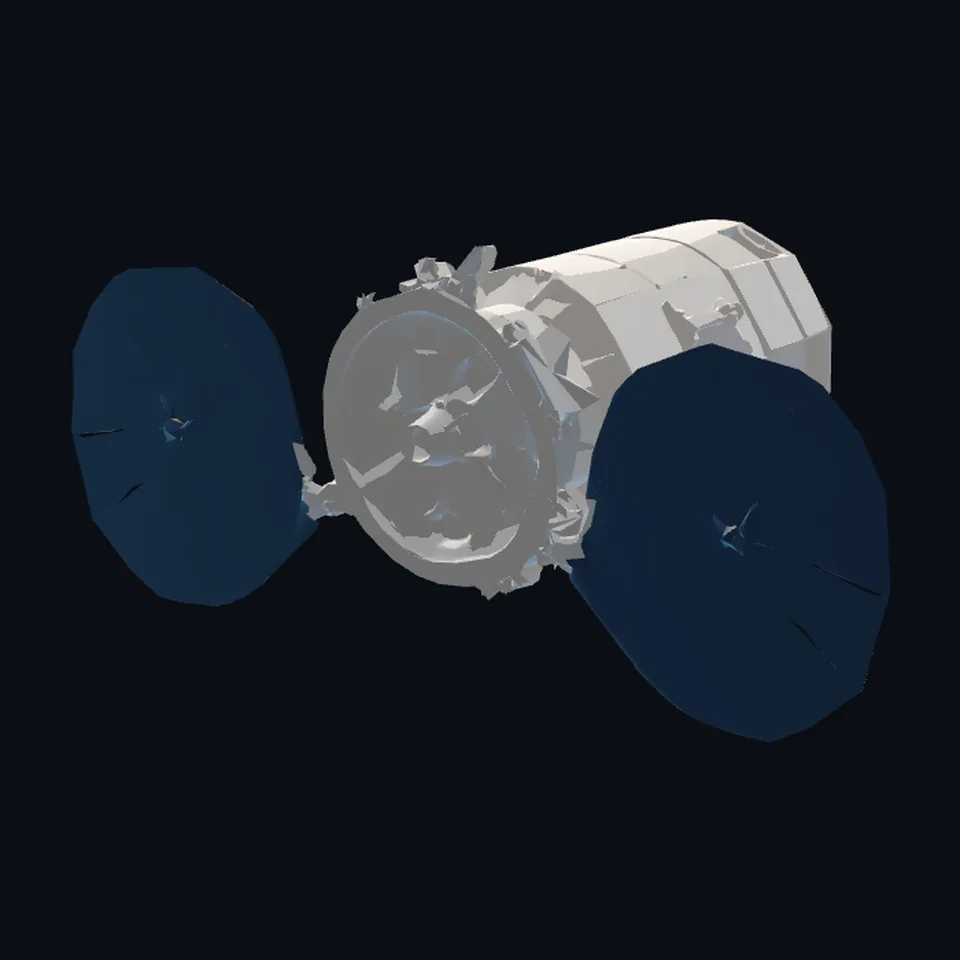 From behind
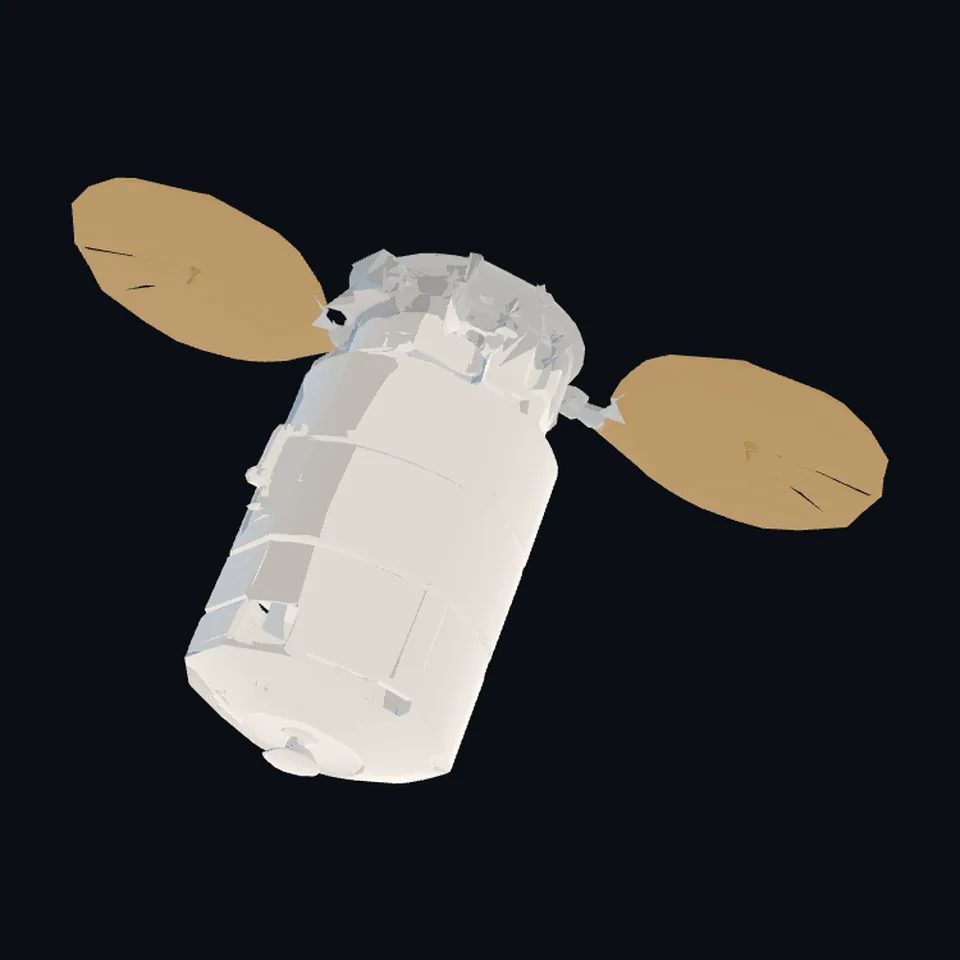 From above
About this model
Cygnus is one of the 203 3D models Space Radar made itself: a crewed craft or station, generated from a public-domain picture with TRELLIS (Microsoft Research, MIT licence), then repaired, measured and completed in code.
Shape built from photographs; proportions approximate. It has 12,000 triangles in a 141 kB glTF file, and is 6.4 m across at full scale.
On Space Radar’s live map it is drawn for the object with NORAD catalogue number 68689, where its published orbit puts it now. Open it on the map.
Dimensions and their sources
| Measure | Value |
|---|---|
| Length | 6.39 m |
| Diameter | 3.07 m |
| Array | 3.7 m |
length and diameter: en.wikipedia.org/wiki/Cygnus_(spacecraft) infobox, Enhanced variant, read 2026-10-12 (the page cites Spaceflight101, which answered 404 that day, not a Northrop Grumman sheet). Two fixed arrays: Northrop Grumman's Cygnus fact sheet DS-57a, northropgrumman.com/wp-content/uploads/Cygnus-Fact-Sheet.pdf, read 2026-10-12: '2 fixed wing UltraFlex solar arrays'; it prints no dimensions. Array width: NOT READ ON A PRIMARY PAGE. 3.7 m is the figure scene/models.js has carried since spec 0027; a web search on 2026-10-12 reported a NASA blog post of 2015-12-06 as saying each circular array is more than 12 feet (3.66 m) across, and that post's address (blogs.nasa.gov/northrop-grumman/2015/12/06/cygnus-to-deploy-solar-arrays-later-today) now redirects to NASA's blog index, so nobody here has read it. It is the least-sourced number in this row (read 2026-10-12)
How it was made
Generated from a public-domain picture with TRELLIS (Microsoft Research, MIT licence), then repaired, measured and completed in code. 3D model: generated from a NASA photograph with TRELLIS (Microsoft Research, MIT), cleaned and coloured by Space Radar.
The full record
github.com/microsoft/TRELLIS — generated on 2026-10-12 by the TRELLIS image-to-3D model (image-large weights, through the Hugging Face Space trellis-community/TRELLIS, one picture, seed 0) from the NASA photograph named first under `references`
Where the map uses it. catalogue names with the word CYGNUS on a station or satellite record (CYGNUS NG-24 today, NORAD 68689): Northrop Grumman's cargo ship, as the kind of thing. The procedural shape (scene/models.js buildCygnus) is drawn while this file is on its way
Licence note. Public domain (the NASA photograph it was generated from); MIT (TRELLIS, code and weights, whose licence makes no claim on what the model outputs); the cleaning, proportions and colours are this project's, under this repository's licence
References 3
What the shape was compared with. None of these pictures is in the file.
- ISS-61 Cygnus NG-12 approaching the ISS (4)NASAPublic domain (NASA photograph, ISS Expedition 61)
- ISS-47 Cygnus OA-6 approaching the ISS (1)NASAPublic domain (NASA photograph, ISS Expedition 47)
- ISS-55 Cygnus OA-9E approaching the ISS (6) (cropped)NASAPublic domain (NASA photograph, ISS Expedition 55)


Use it
The model is under the MIT licence: use it, change it and share it, in any project, also a paid one. Keep the credit:
Cygnus 3D model by Space Radar (spaceradar.ai), MIT LicenseAny glTF 2.0 loader that reads meshopt compression (EXT_meshopt_compression) opens the file: three.js with its MeshoptDecoder, Babylon.js, model-viewer. Tools such as glTF-Transform can write an uncompressed copy.
Or embed the viewer in your page:
<iframe src="https://www.spaceradar.ai/model/?id=cygnus" title="Cygnus, 3D model by Space Radar" width="600" height="450" loading="lazy" style="border:0;max-width:100%"></iframe>Related models
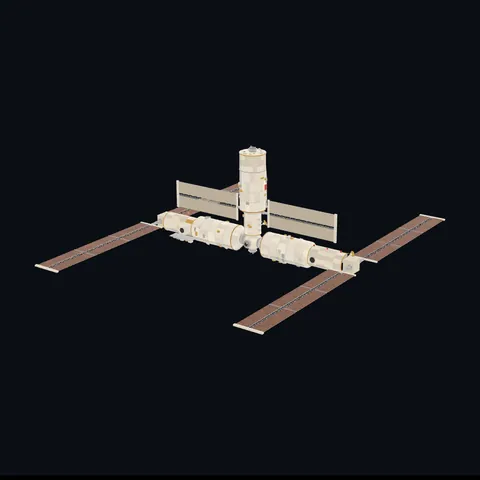
Tiangong (core module)
Shape built from published dimensions and pictures; details simplified.
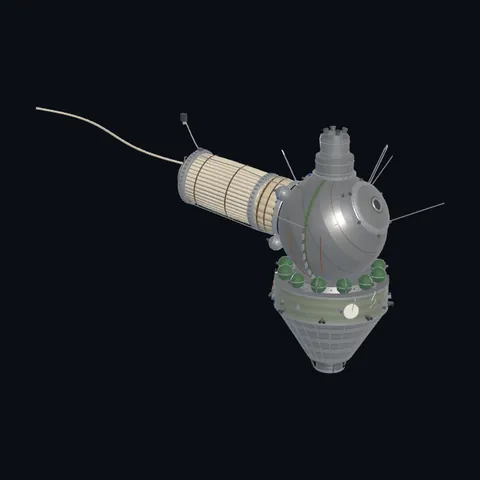
Voskhod 3KD
Shape built from published dimensions and pictures; details simplified.
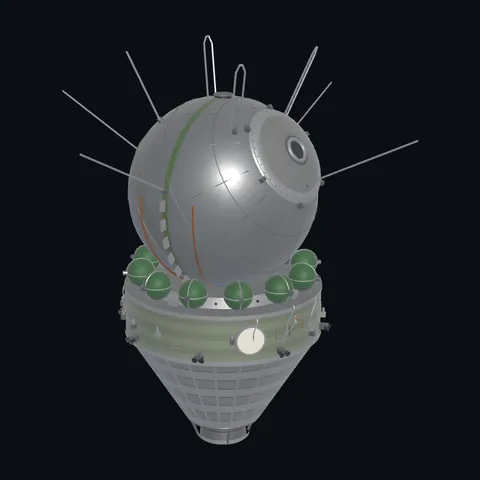
Vostok 3KA
Shape built from published dimensions and pictures; details simplified.
Cargo Dragon
Shape built from published dimensions and pictures; details simplified.